OutdoorCompass.net – Planning food for a multi-day trip is a different exercise than packing snacks for a few hours on the trail — you’re planning for sustained energy needs across several days, while also keeping weight manageable. This guide covers how to think about quantity, what types of food actually work well for backpacking, and how to store it safely.
Key Principles
- Plan for higher energy needs — Backpacking generally requires more calories per day than typical daily activity because of sustained physical exertion.
- Prioritize calorie-to-weight efficiency — Choose foods that provide plenty of calories without adding unnecessary weight to your pack, rather than choosing based only on taste.
- Plan meals by day and time — Organize what you’ll eat for breakfast, lunch, dinner, and snacks each day instead of simply packing a general pile of food.
- Pack a small buffer — Bring a little more food than your calculated minimum to account for delays, extra exertion, or a longer-than-expected day. You don’t need to calculate the quantity exactly to the gram.
How Many Calories Do You Actually Need?
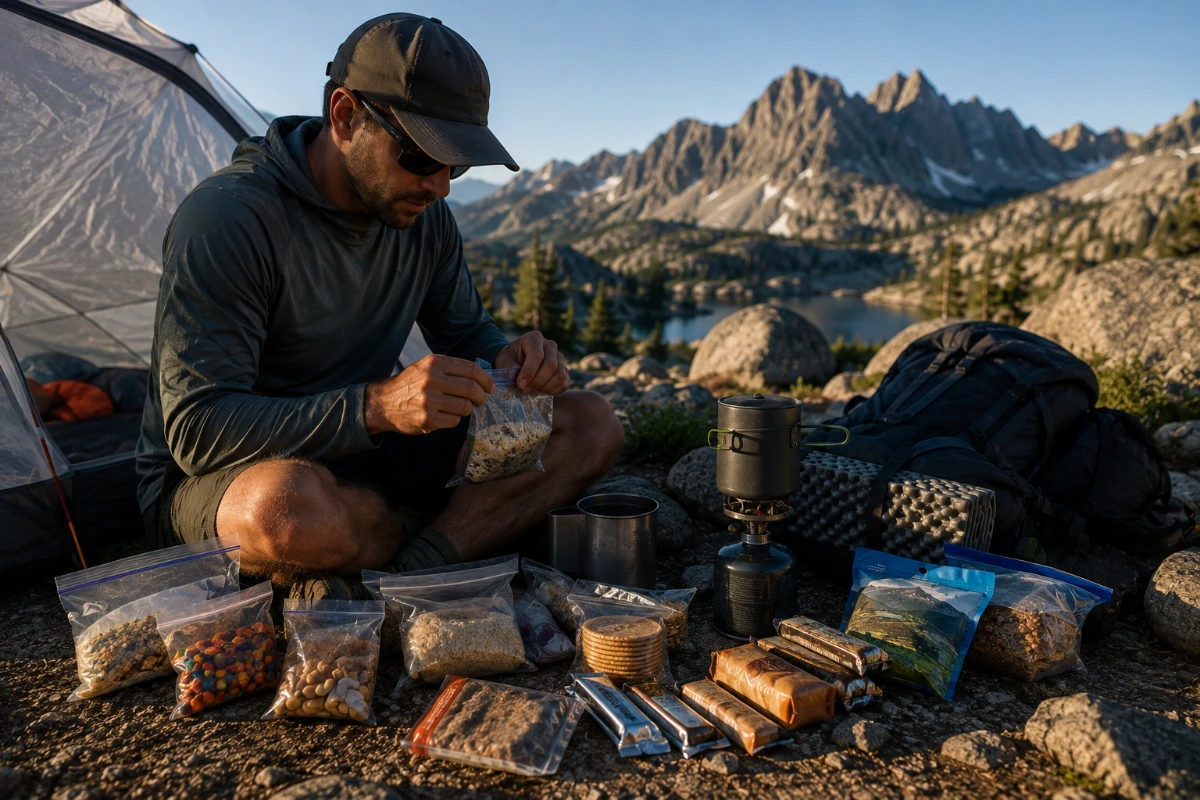
Backpacking can require substantially more energy than a typical day because of sustained hiking, carrying a loaded pack, and repeated exertion across multiple days. Individual calorie needs vary substantially based on body weight, hiking intensity, terrain, and weather, so there’s no single “correct” number that applies universally — general backpacking guidance often points to a meaningfully higher daily calorie intake than typical sedentary or lightly active days, but the right figure for you depends on your own body and trip conditions.
Rather than fixating on an exact number, a practical approach is: pack generously relative to a normal day’s eating, monitor how you feel on shorter trips, and adjust your planning for future trips based on that experience.
Calorie-to-Weight Ratio: Why It Matters
This connects directly to the weight principles covered in the ultralight gear guide — food can become a significant part of your pack weight on a multi-day trip, so prioritizing calorie-dense food (more calories per gram) lets you carry adequate energy without adding excessive weight.
This is part of why dehydrated and freeze-dried foods are popular for backpacking — removing water weight significantly increases the calorie-to-weight ratio compared to fresh or canned alternatives.
Read More → Ultralight Backpacking Gear Basics: Why Weight Matters and How to Start Reducing It
Types of Backpacking Food
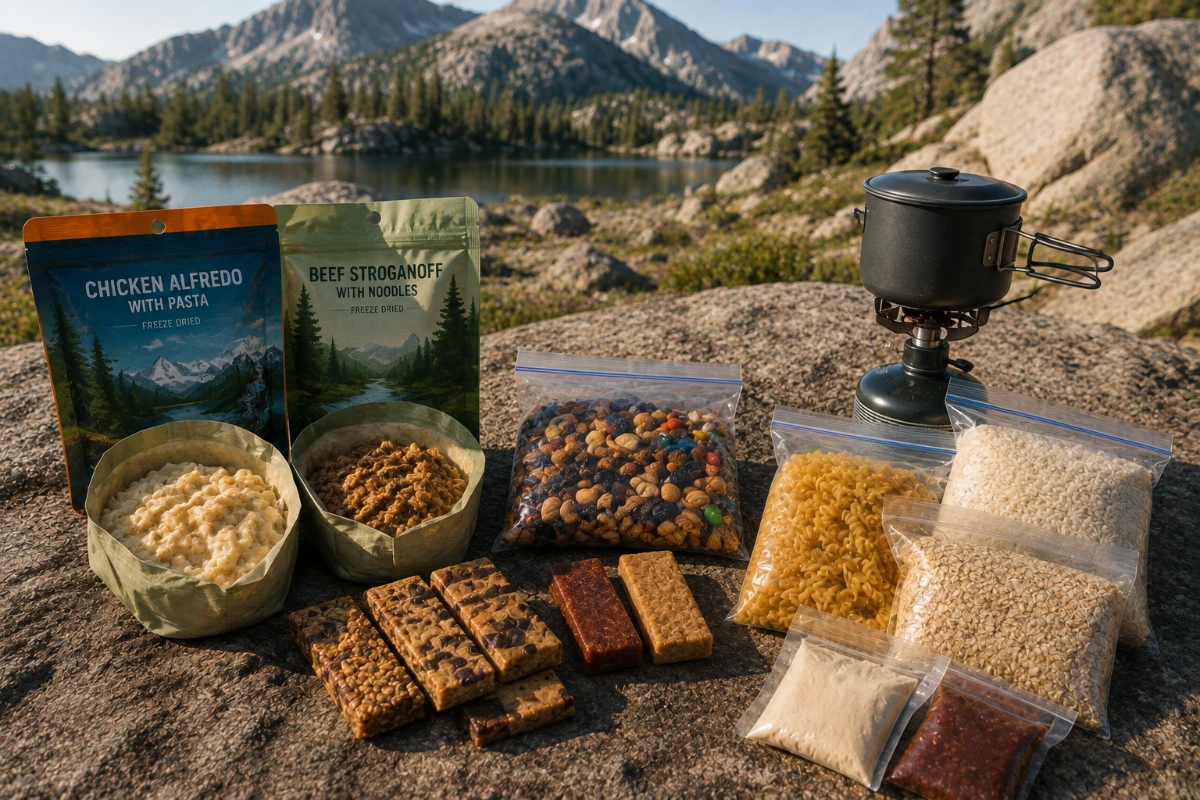
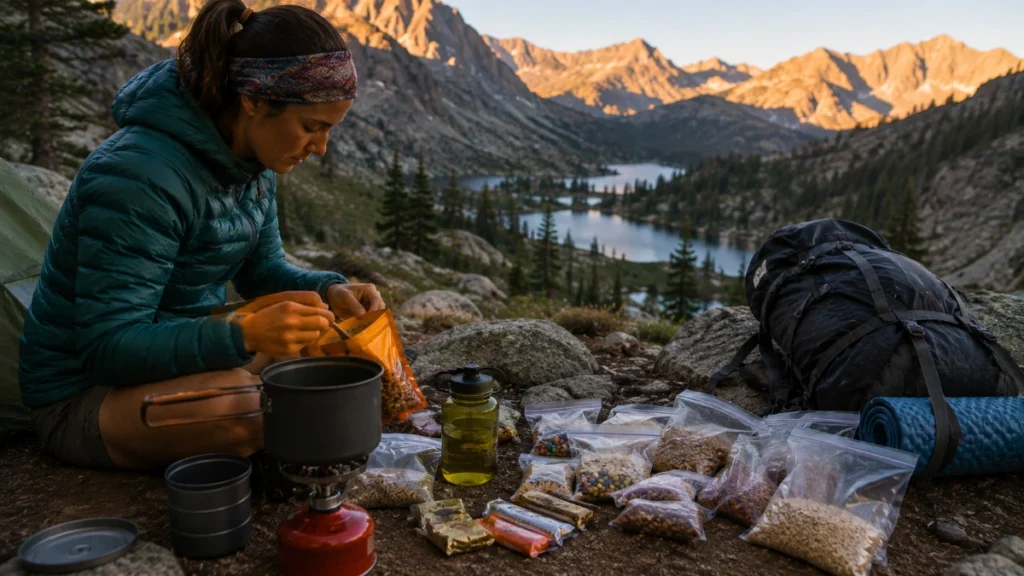
Dehydrated or freeze-dried meals are lightweight and shelf-stable, typically requiring just boiling water to prepare. They’re convenient for backpacking, though calorie density varies by product.
Trail mix, energy bars, and similar no-cook snacks provide quick energy without requiring any preparation, making them useful for on-the-move snacking between meals.
Lightweight staples like pasta, rice, instant oatmeal, and similar dry goods are generally more affordable than pre-packaged backpacking meals and offer flexibility, though they typically require more preparation time and sometimes more cooking fuel.
Most backpackers use a mix of these categories rather than relying on just one, balancing cost, convenience, and variety across a multi-day trip.
Planning Meals by Day
A simple structure for daily planning:
- Breakfast — something that provides sustained energy to start hiking, whether that’s a hot meal (oatmeal) or a quicker no-cook option.
- Lunch — often a no-cook option eaten during a midday break, prioritizing convenience since you’re typically not setting up a full cooking system mid-hike.
- Dinner — usually the main hot meal of the day, eaten at camp where you have time to prepare it properly.
- Snacks throughout the day — steady energy between meals, since backpacking’s sustained exertion benefits from more frequent smaller intake rather than just three large meals.
It’s generally better to slightly overpack food than to plan exactly to your calculated minimum — unexpected delays, colder-than-expected conditions, or simply being hungrier than anticipated are common, and a bit of extra food is a manageable amount of extra weight compared to running short.
Read More → Multi-Day Trip Planning Checklist: From Permits to Packing
Food Storage and Wildlife Safety
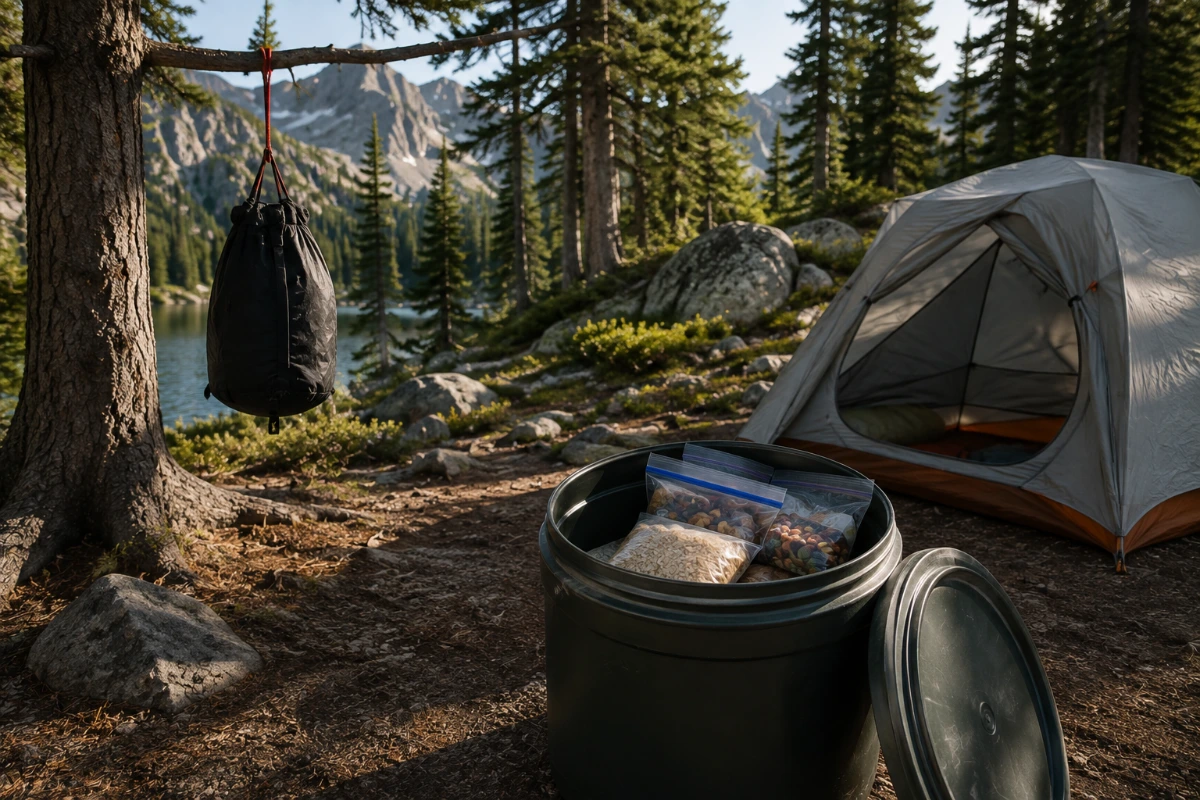
Properly storing food overnight matters for both your safety and local wildlife — food odors can attract animals to your campsite, which creates risk for you and can also be genuinely harmful to the wildlife involved once they associate campsites with an easy food source.
General principles that apply broadly:
- Store food away from your sleeping area, not inside your tent.
- Keep food properly contained according to local wildlife-storage requirements.
- Pack out all food waste and scraps, not just wrappers.
Specific storage requirements — such as whether a bear canister or hang system is required or recommended — vary significantly by region and are often set by the specific park or land management agency. This is worth checking directly for your destination well before your trip, since requirements in some areas are mandatory rather than optional.
How to Estimate Food for a Backpacking Trip
A practical starting point is to plan your food by day rather than by total trip weight:
- Estimate how much you normally eat in a day.
- Adjust upward for sustained hiking and a loaded pack.
- Plan breakfast, lunch, dinner, and snacks separately.
- Consider the trip length and expected conditions.
- Add a small buffer for delays or increased hunger.
- Weigh the final food load so you understand how much weight you’re carrying.
After the trip, note what you actually ate and what you brought home. That information can make your next food plan much more accurate.
Water Needs Alongside Food
Food and water planning are connected in a couple of practical ways: rehydrating dehydrated meals requires water beyond your normal drinking needs, and the hydration principles already covered for hiking still apply as a baseline — with the addition of extra water for cooking on multi-day trips.
If reliable water sources are available along your route, remember to account for cooking water when planning where and when you’ll refill and treat water.
Read More → Hiking Water Bottles and Hydration Systems: A Beginner’s Guide
Frequently Asked Questions
How much food is reasonable for a 3-day backpacking trip?
It depends heavily on your individual calorie needs and the intensity of the trip, so there is no fixed amount that works for everyone. A practical approach is to plan generously based on your normal eating habits, adjusted for increased exertion. After the trip, note how much you actually ate and what you had left so you can fine-tune your food planning for future trips.
Do I need to cook all my food on the trail, or can it all be no-cook?
Either approach can work. Some backpackers prefer entirely no-cook meals to reduce the weight and hassle of carrying a stove system, while others prefer at least one hot meal each day for comfort and morale. The choice is largely a matter of personal preference rather than a requirement.
How do I safely store food from wildlife overnight?
General principles include storing food away from your sleeping area, keeping it properly sealed, and packing out all food scraps. However, specific requirements vary by location and may include equipment such as bear canisters. Always check the regulations and recommendations from the local land management authority before your trip.
How much food should I bring per day for backpacking?
There is no single amount that works for everyone. Start with your normal eating habits and adjust upward based on the physical demands of the trip, including its length, terrain, weather, and your individual appetite. On a first trip, tracking what you actually eat and what you have left over can help you plan more accurately next time.
Plan Generously, Prioritize Calorie Density
Backpacking food planning comes down to two practical principles: pack enough calories for sustained multi-day exertion, and prioritize foods that deliver those calories without excessive weight. Beyond that, the specific food choices are largely personal preference — balance convenience, cost, and variety in a way that works for your trip and your taste.
OutdoorCompass
Explore More. Pack Smarter.