OutdoorCompass.net – How you pack your backpack can have a significant effect on comfort and stability on the trail. A poorly organized pack can feel unbalanced, unstable, or leave you digging through everything to find something you need mid-hike. This guide covers the core principles for packing efficiently, once you already know what gear you’re bringing.
Key Principles
- Organize your pack into three general zones: bottom, core, and top.
- Keep heavier items close to your back and centered vertically for better balance.
- Plan what needs to be quickly accessible before you start packing, not while you’re already on the trail.
The Three-Zone Packing Principle
A simple, widely used approach to organizing a backpacking pack:
Bottom zone — items you won’t need until you reach camp, like your sleeping bag and any extra layers you won’t wear during the day. These go at the bottom because they’re generally among the last things you’ll need during the day and can be accessed when you set up camp.
Core/middle zone — your heaviest items: food, water (if not carried in external bottle pockets), and your cooking system. Place these heavier items toward the middle of the pack and as close to your back as practical, which helps keep the load stable.
Top zone — items you’ll want quick access to throughout the day without fully unpacking: rain layer, snacks, map or phone, first aid kit, and anything else you might need on short notice.
Weight Distribution: Why It Affects Balance
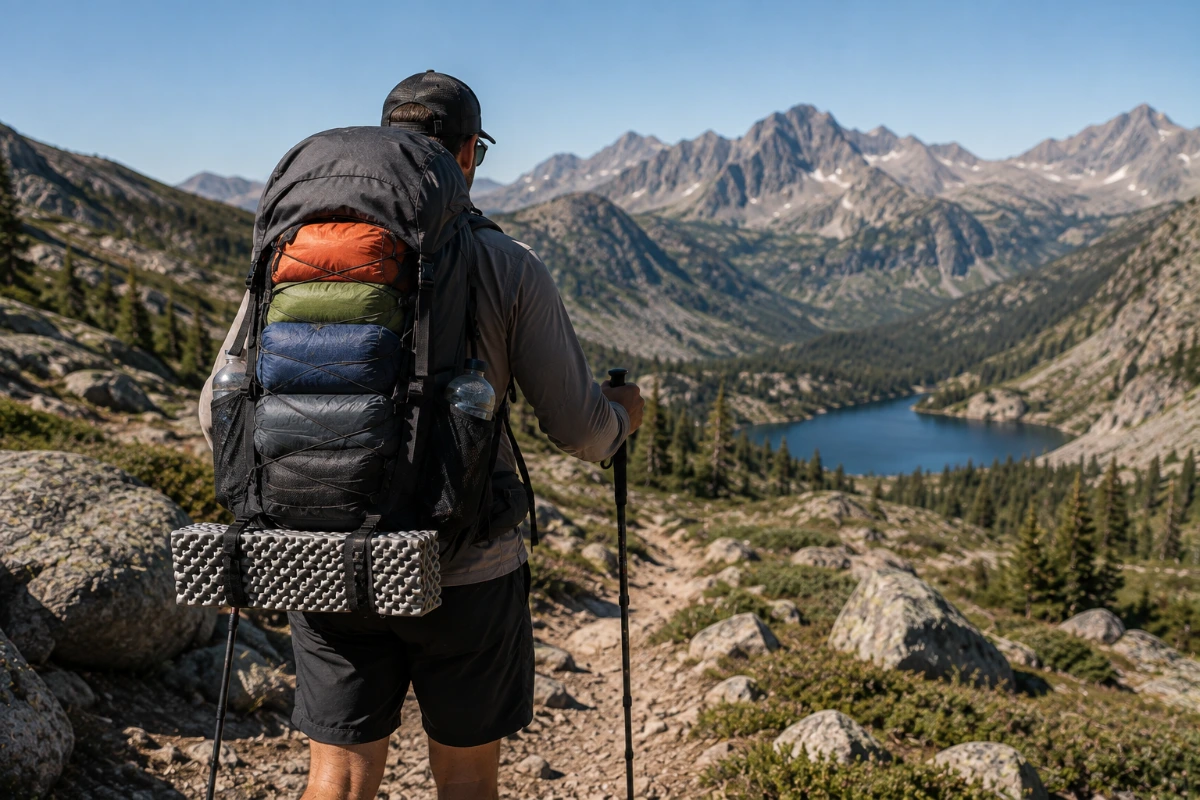
As a general starting point, place heavier items close to your back and around the middle of the pack, rather than concentrating them at the very top, bottom, or farthest from your body. Keeping heavier items close to your body can help reduce the feeling of the pack pulling away from you and make the load feel more stable as you move.
A poorly distributed pack tends to show up as a noticeable “pull” backward, or a side-to-side wobble as you walk — both make hiking more tiring than necessary, independent of the total weight you’re carrying. Getting distribution right won’t make a heavy pack feel light, but it makes the weight you are carrying feel more manageable and stable.
Accessibility: What Should Be Within Reach
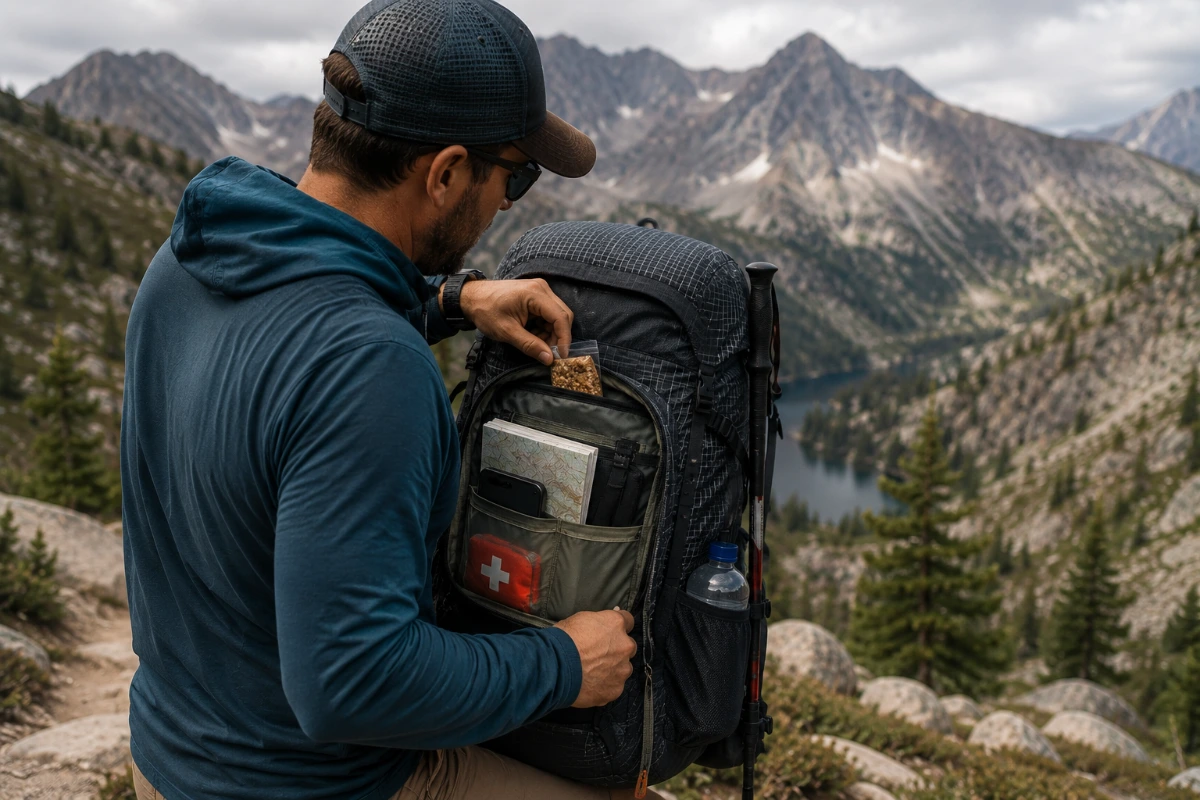
Before you start packing, it’s worth deciding what you’ll realistically need without fully stopping and unpacking:
- Rain layer, in case weather shifts suddenly
- Snacks for on-the-move energy
- Map, phone, or navigation tool
- First aid kit essentials
Planning this in advance — rather than figuring it out mid-hike when you’re already digging through your pack in the rain — is a small step that saves real frustration on the trail.
Compression and Space Efficiency
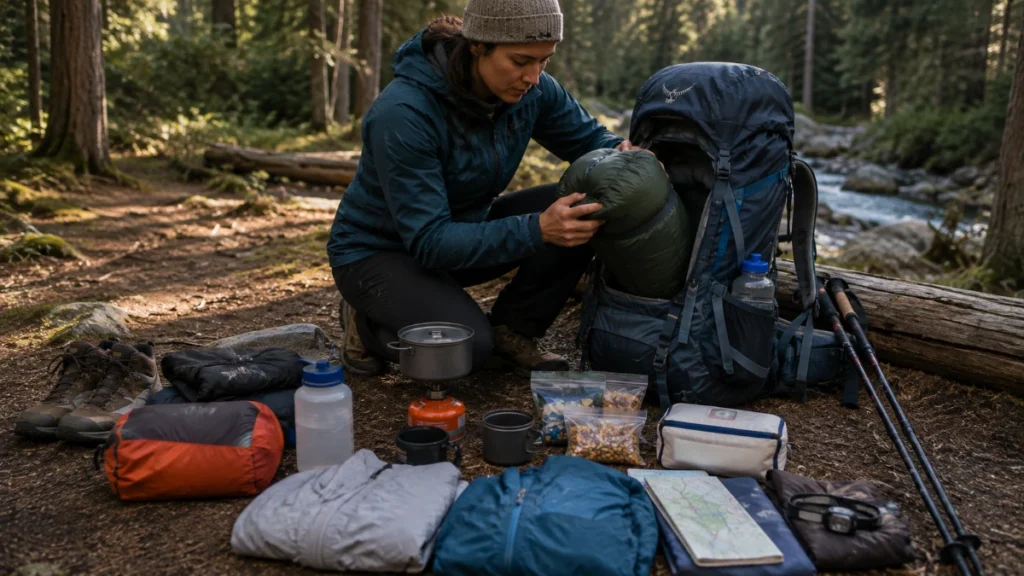
Stuff sacks can help organize soft items, while compression sacks can reduce the packed volume of items such as sleeping bags or clothing when appropriate. This can make it easier to organize the rest of your gear within the available space.
This is general packing practice rather than something tied to a specific brand or product, and it’s a low-cost way to make better use of your pack’s total volume.
Common Packing Mistakes
- Putting heavy items at the very top or very bottom rather than centered — this is one of the most common causes of a pack that feels unstable or tiring to carry.
- Burying frequently needed items at the bottom, forcing you to unpack everything just to reach your rain jacket or snacks.
- Overloading external attachment points, which can throw off balance more than it saves in internal packing effort.
How to Pack Your Backpack Step by Step
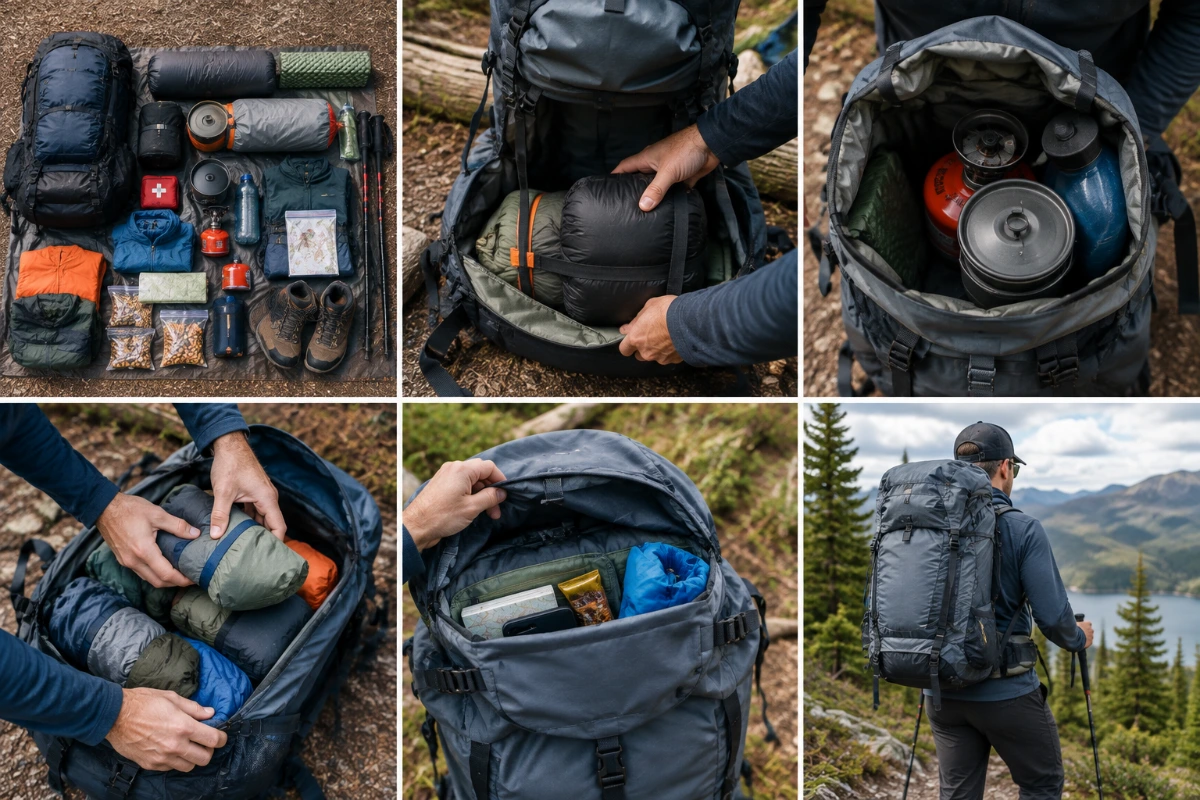
- Lay out everything first — Start with the complete gear list rather than packing items randomly.
- Pack camp-only gear first — Put your sleeping system and other items you won’t need during the day toward the bottom.
- Place heavier items in the core — Keep food, cooking gear, and internally carried water close to your back.
- Fill gaps with soft items — Use clothing and other flexible gear to reduce empty spaces.
- Keep essentials accessible — Put rain gear, snacks, navigation, and other frequently needed items where you can reach them easily.
- Check the balance — Lift the pack and walk around briefly before finalizing your setup.
Frequently Asked Questions
Does my sleeping bag need to go at the bottom?
It often makes sense to place your sleeping bag near the bottom because you typically won’t need it until camp. However, the exact position depends on your pack design and how you organize your gear.
How do I know if my pack is balanced correctly?
A reasonably well-packed bag should feel stable when you walk, without a noticeable pull backward or side-to-side wobble. If it feels unstable, check whether your heaviest items are centered close to your back rather than sitting too high, too low, or too far out.
Do I need compression sacks for every trip?
Not strictly, but they can be a low-cost, reusable way to make soft items such as a sleeping bag and clothing more space-efficient. Their usefulness becomes greater as your total gear volume increases on longer trips.
Where should I put water in my backpack?
Water is relatively heavy, so when carried inside the pack it generally makes sense to keep it toward the middle of the pack and close to your back. If you’re using external bottle pockets, keep the load balanced from side to side and make sure the bottles are secure.
Packing Well Is a Skill, Not a One-Time Setup
Efficient packing is something most backpackers refine over a few trips rather than getting perfectly right the first time. Start with the three-zone principle and weight distribution basics above, pay attention to what actually feels unbalanced or hard to access on your first trip, and adjust from there.
OutdoorCompass
Explore More. Pack Smarter.