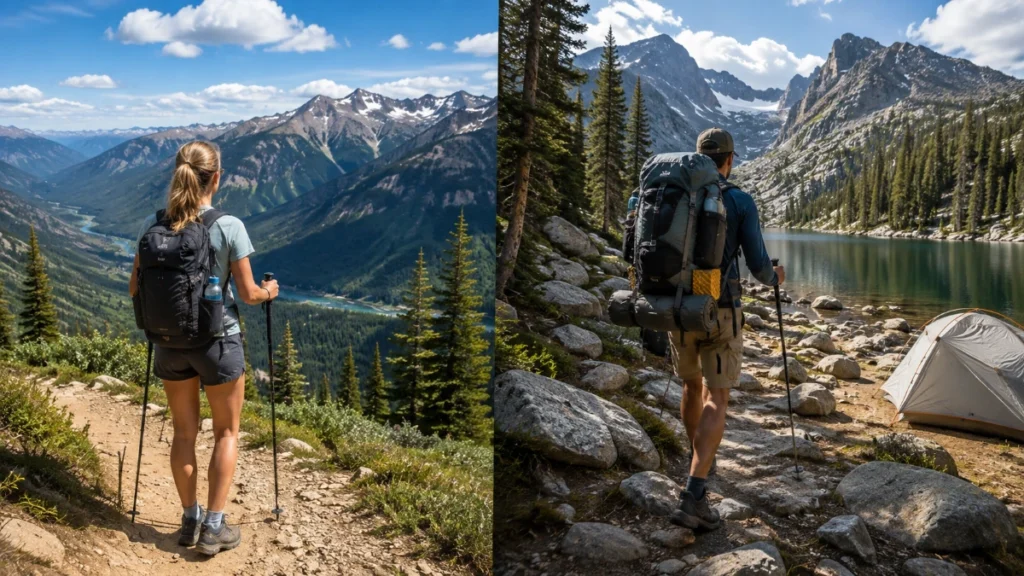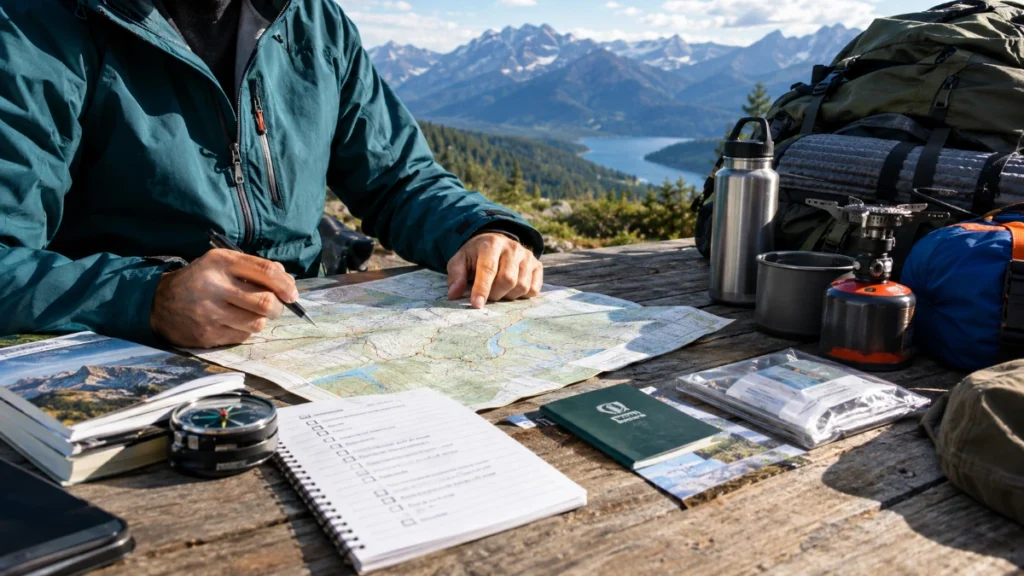
OutdoorCompass.net – Backpacking isn’t just a longer version of day hiking — it adds an entire layer of preparation on top of the skills you already use on shorter hikes. You’ll need an overnight gear system, more involved navigation, multi-day food and water planning, and often permits or advance reservations. This guide is designed for beginners who are already reasonably comfortable with day hiking basics.
Key Takeaways
- Backpacking means carrying everything you need to sleep, eat, and stay safe overnight on the trail, not just for a few hours.
- The core new gear categories are shelter, a sleep system, and a cooking setup, on top of your existing day-hiking gear.
- Multi-day food and water planning, and often permits, require more advance preparation than a typical day hike.
- Your first trip should be short, familiar, and forgiving — not an ambitious route.
What Is Backpacking?
Backpacking is hiking while carrying the gear, food, and other supplies needed to spend one or more nights away from your starting point. It typically involves camping along the route rather than returning to the trailhead the same day. Backpacking overlaps with what’s sometimes called multi-day hiking, although terminology varies by region and hiking style.
Read more: Day Hiking vs Multi-Day Hiking: What’s the Real Difference
Are You Ready for Your First Backpacking Trip?
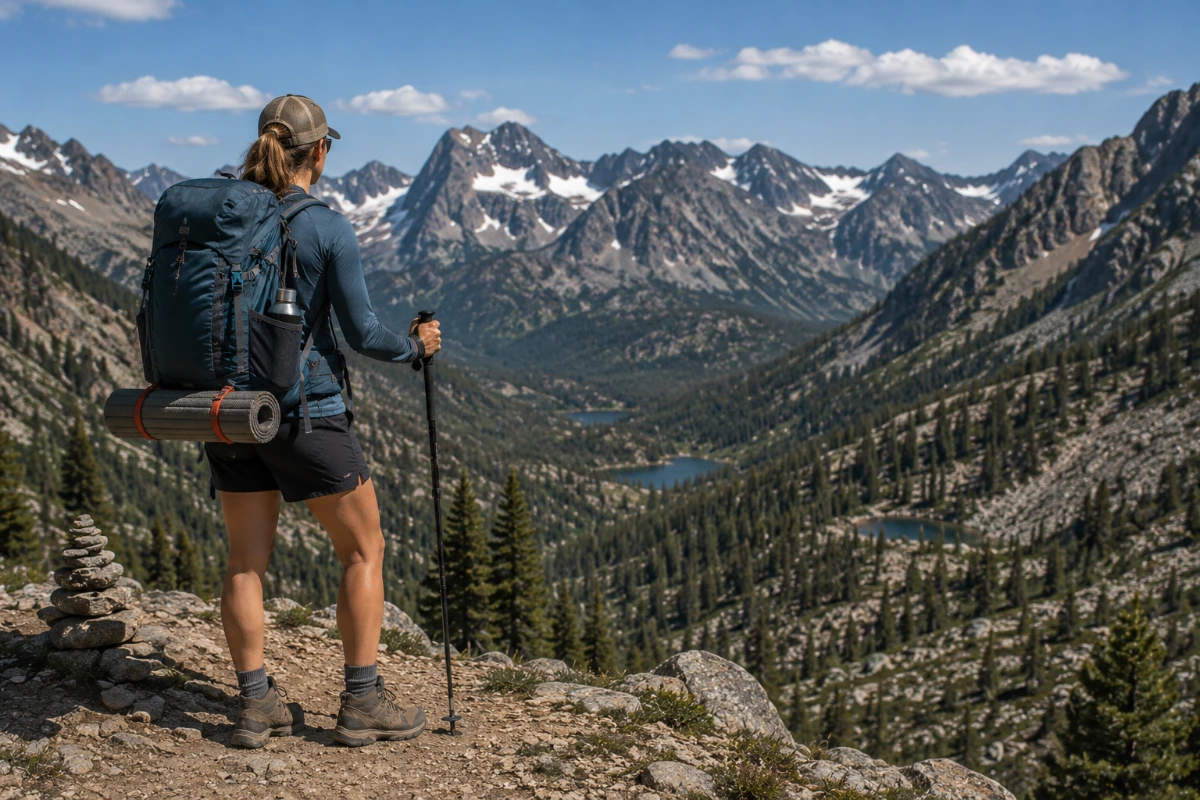
If you’ve been hiking regularly, it’s worth honestly assessing your readiness before jumping in. A few good signals: you’re comfortable with longer, more demanding day hikes; you’ve hiked with a loaded backpack and found the extra weight manageable; you’ve handled unexpected weather on a day hike without it becoming a real problem; and you’re comfortable navigating without the safety net of returning to a known trailhead partway through.
These are useful readiness signals to consider before choosing your first overnight route.
Essential Gear Categories
Backpacking gear builds directly on your day-hiking gear, with a few major additions. This is an overview — each category is covered in much more depth in its own guide.
A backpacking backpack (often around 40–65L) A typical daypack is generally designed for shorter trips and lighter loads, while backpacking requires a larger-capacity pack designed to carry more gear and distribute weight comfortably over multiple days.
Shelter A tent (or an equivalent shelter system) suited to backpacking is generally lighter and more packable than a typical car-camping tent, since you’re carrying it on your back for the entire trip.
Sleep system A sleeping bag or quilt and sleeping pad should be appropriate for the overnight conditions and temperatures you expect on the trip.
Cooking system A compact stove and basic cookware for preparing food on the trail, along with enough fuel for your trip length.
Water treatment Depending on the route, backpacking may require you to refill from natural water sources along the way, which means you’ll need an appropriate way to filter or treat that water safely.
General gear principles Weight becomes more important in backpacking because you’re carrying your shelter, sleep system, food, water, and other supplies for much longer periods. This is where understanding lightweight gear principles can make a noticeable difference in overall pack weight.
Food and Water Planning for Multi-Day Trips
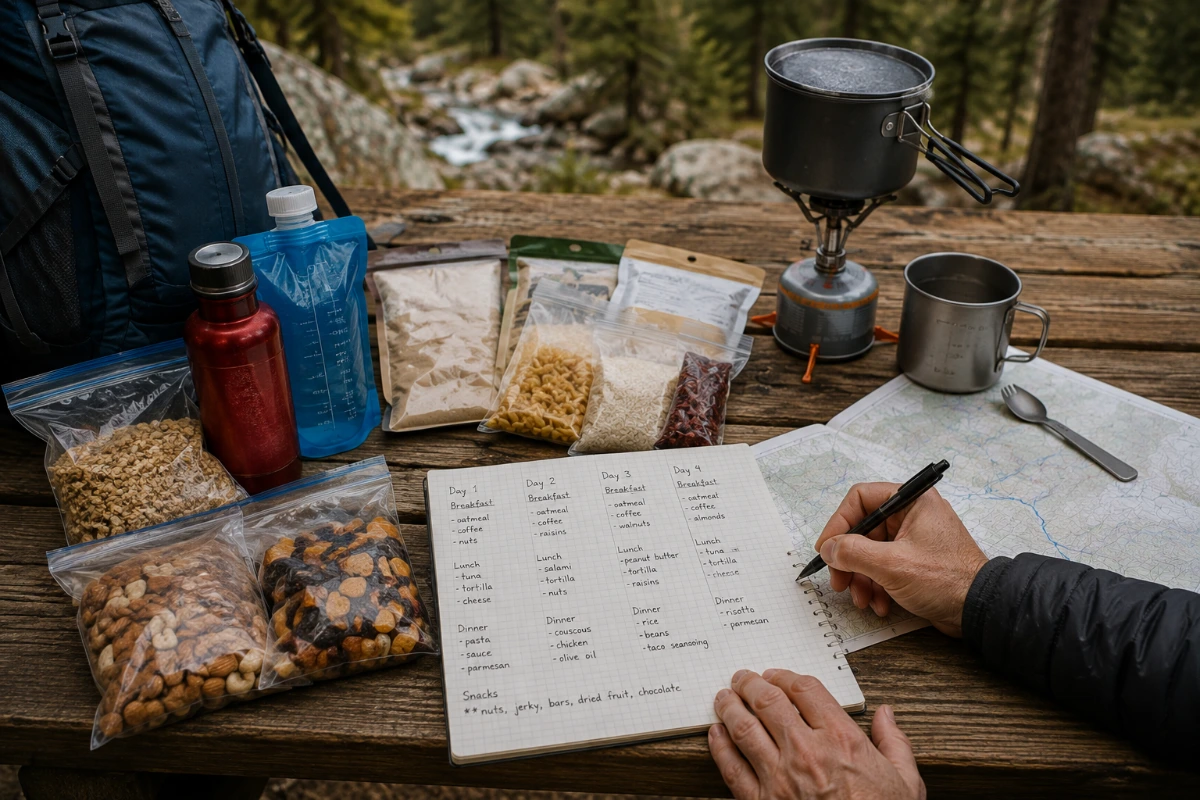
Multi-day food planning is a different exercise than packing snacks for a few hours — you’re calculating how much food you need for each day, considering weight and packability, choosing food that holds up without refrigeration, and often planning meals around a lightweight cooking setup. Water planning also needs to account for where reliable water sources are available and how much water you may need to carry between them.
How to Pack Efficiently
With significantly more gear and weight than a day pack, how you pack — weight distribution, organization, accessibility of frequently used items — has a real impact on comfort over multiple days on the trail.
Safety Considerations Specific to Backpacking
Backpacking safety builds on everything covered in the hiking safety guide, but adds overnight-specific risks: managing nighttime temperature drops, the increased consequences of being farther from help without a same-day return option, and navigating routes where you can’t simply retrace your steps back to a known trailhead within a few hours.
Emergency planning also becomes more important because you may be farther from a trailhead or outside easy access to help. Before leaving, know your route, exit options, communication plan, and what you would do if weather, injury, or equipment problems changed your plans.
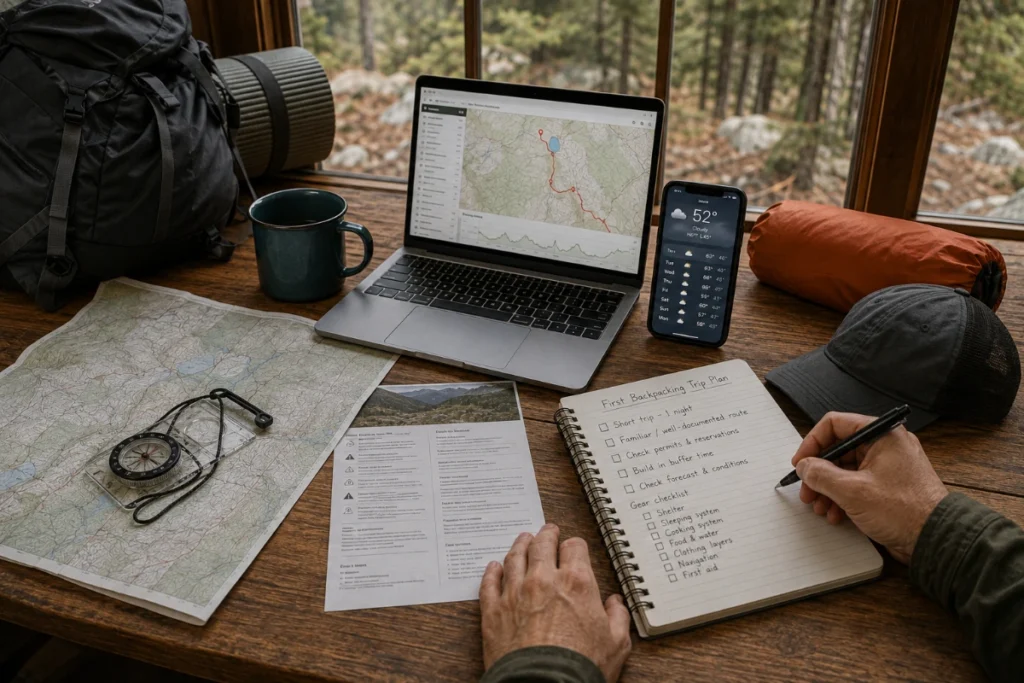
Planning Your First Trip: Practical Steps
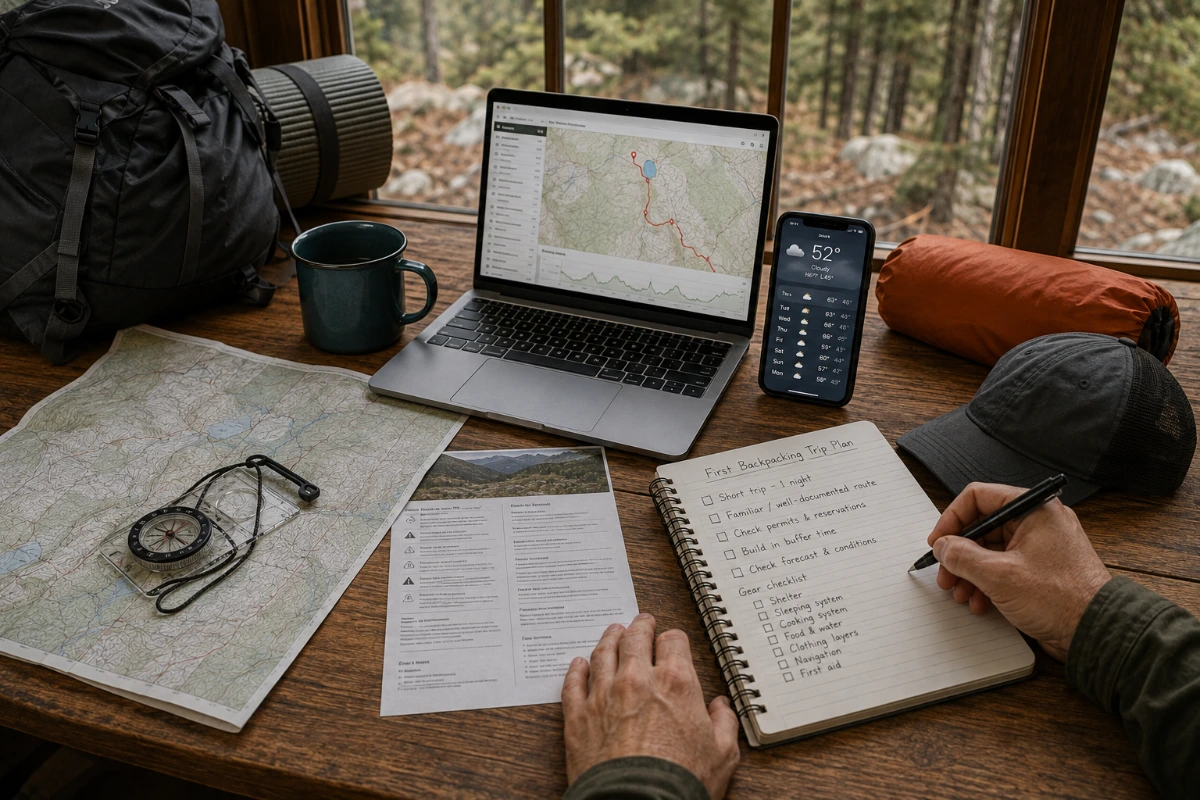
A few principles for a sensible first backpacking trip:
- Choose a short trip — a single overnight is a reasonable starting point, rather than a multi-day route.
- Pick a familiar or well-documented route, ideally one with good trail information and, if possible, cell coverage at least part of the way.
- Check permit and reservation requirements for your specific destination well in advance — many popular backpacking areas require permits for overnight camping, and requirements vary significantly by location, so this needs to be checked directly for wherever you’re planning to go.
- Build in buffer time rather than planning an ambitious itinerary for a first trip.
- Check the forecast and route conditions — look at the expected weather for both the hiking period and overnight conditions, and check for closures or trail advisories before leaving.
Frequently Asked Questions
Do I need entirely new gear to start backpacking, or can I reuse my hiking gear?
Much of your day-hiking gear carries over directly, including footwear, clothing layers, navigation tools, and a first aid kit. The main additions are overnight-specific gear such as a larger backpack, shelter, sleep system, and cooking setup.
How long should a first backpacking trip be?
A single overnight, or one night on the trail, is a sensible starting point. It gives you a chance to experience the full gear system and trip logistics without committing to multiple consecutive days before you know how your body and gear perform overnight.
Do I need a lot of hiking experience before trying backpacking?
It helps significantly. Being comfortable with longer day hikes, loaded-pack hiking, and basic navigation can make the transition to backpacking smoother. This means you are not learning those fundamentals for the first time while also managing overnight logistics.
What should I bring on my first backpacking trip?
Your first trip generally needs the same core safety and hiking gear you would carry on a day hike, plus an appropriate backpack, shelter, sleep system, food, water, and cooking or water-treatment equipment as required by the route. The exact list depends on the destination, weather, and trip length.
Is one night enough for a first backpacking trip?
Yes. A single overnight is often a sensible way to learn how your backpack, shelter, sleep system, food, and other gear work together before committing to a longer trip.
Where to Go From Here
The best next step depends on where you are in your planning:
- If you’re still deciding whether backpacking is right for you, Backpacking vs. Hiking breaks down the activity in more detail.
- If you’re actively planning a first trip, the Multi-Day Trip Planning Checklist is the practical next stop.
- If you’re still building your gear list, start with the backpack and shelter guides, since those are the two biggest and most trip-defining purchases.
Backpacking adds real complexity on top of day hiking, but it builds directly on skills you likely already have. Approach your first trip with a short, forgiving plan, and the gear and logistics knowledge will come together with experience.
OutddorCompass
Explore More. Pack Smarter.