OutdoorCompass.net – Your tent is the centerpiece of your camping gear — it’s where you’ll actually sleep, and getting the right one makes a real difference in comfort. This guide covers what actually matters when choosing a tent for car camping, without getting into specific products.
Key Decision Factors
- Capacity — and why the labeled number rarely means what it sounds like
- Tent type (dome, cabin, tunnel)
- Seasonality rating
- Ease of setup
- Vestibule and extra space
- Ventilation and weather protection
- Weight and packed size (much less critical for car camping than backpacking)
Tent Capacity: Why “2-Person” Rarely Means 2 People Comfortably
Tent capacity ratings are typically based on fitting the stated number of people with sleeping pads placed edge to edge, with minimal to no room for gear. In practice, this makes most capacity-rated tents feel tighter than the number suggests.
For car camping, tent weight is usually less important than it is for backpacking. A common approach is to choose a tent one capacity level larger than your actual group size, especially if you want extra room for gear and a more comfortable sleeping area. If you’re camping as a couple, a “3-person” or “4-person” tent will generally feel much more comfortable than a tent rated for exactly two, giving you room for gear storage inside without feeling cramped.
Read more → Best Camping Tents for Beginners
Tent Types for Car Camping
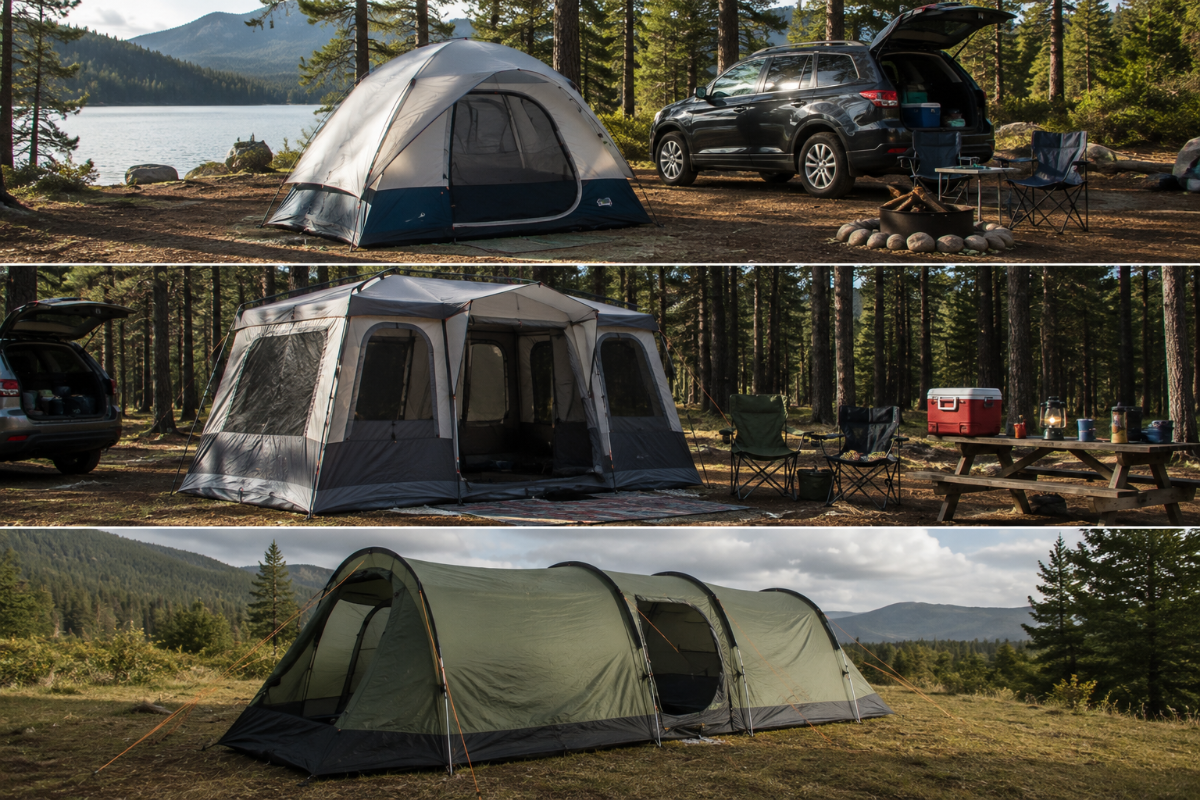
- Dome tents — the most common style, using crossed poles to create a freestanding, curved structure. Generally easy to set up and reasonably stable in wind, making them a solid default choice for beginners.
- Cabin tents — designed with more vertical walls, often providing more usable interior space and sometimes standing height, which many families and groups value for comfort. They tend to be bulkier and can be less wind-stable than a dome design.
- Tunnel tents — use parallel pole arches to create an elongated shape, often maximizing interior space efficiently, but typically require guy lines for stability and aren’t usually freestanding.
For many beginner car campers, a dome tent is a practical starting point because its design is familiar and many models are relatively straightforward to set up. Cabin tents are worth considering when interior space and standing room are higher priorities, although stability varies by design, construction, and weather conditions.
Seasonality Rating
- 3-season tents are designed for spring, summer, and fall conditions, with more mesh panels for ventilation and lighter overall construction. This covers the vast majority of beginner car camping trips.
- 4-season tents are built for winter or high-wind conditions, with sturdier pole structures and less mesh, at the cost of reduced ventilation in mild weather.
For most beginner car campers planning trips in mild spring, summer, or fall conditions, a 3-season tent is generally the more practical choice. A 4-season tent is designed for more demanding conditions, but its suitability depends on the specific model and the weather you expect to encounter.
Ease of Setup
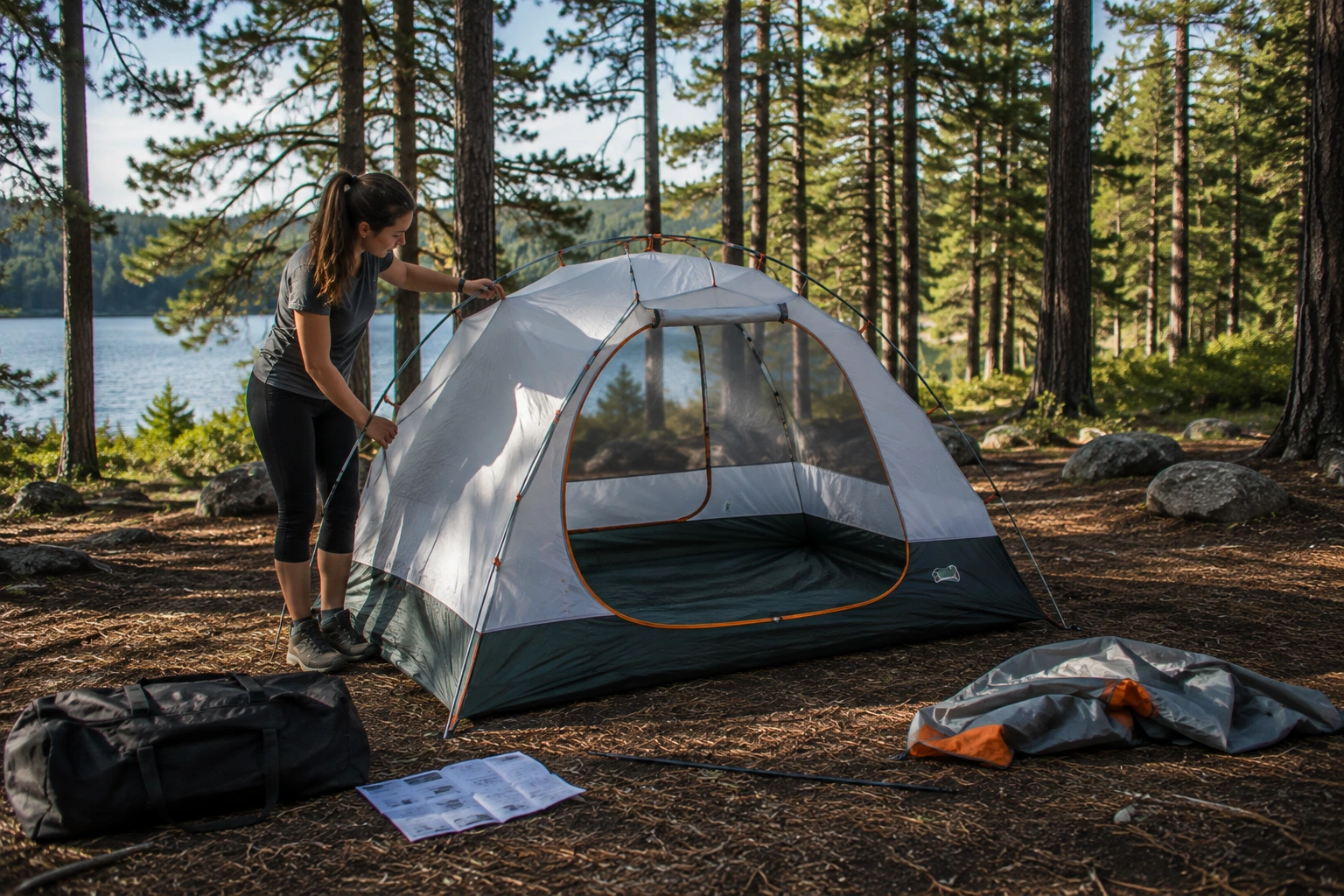
Setup difficulty varies between tent designs and models, so it’s worth checking how a tent is assembled before buying, especially if you’ll often set it up alone or arrive at the campsite late in the day.
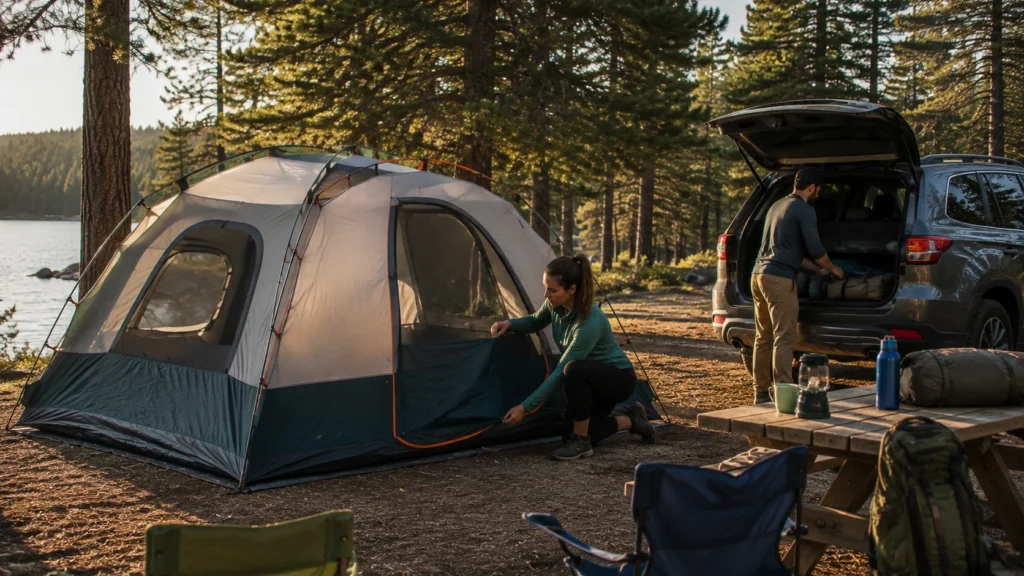
Look for practical details such as the number of poles, color-coded attachment points, whether the tent is freestanding, and how the rainfly attaches. Some designs are easier to handle with two people, while others can be set up by one person with less effort.
Product reviews and setup demonstrations can help you understand the process, but practicing at home before your first trip is still one of the most useful ways to avoid frustration.
Read more → How to Set Up a Tent Properly
Vestibule and Extra Space
A vestibule is a covered area, typically formed by the rainfly extending beyond the tent door, that provides sheltered space outside the main sleeping area — useful for storing muddy shoes, wet gear, or a backpack without bringing it into your sleeping space. This is a feature beginners often overlook when comparing tents, but it makes a meaningful practical difference, especially in wet conditions. Not every tent includes a vestibule, and the size and coverage can vary significantly between models.
Ventilation and Weather Protection
Mesh panels in the tent body improve airflow and help reduce condensation buildup inside the tent overnight. A well-designed rainfly helps protect the tent body from rain, but coverage alone doesn’t determine weather protection. Material, seam construction, door design, and correct setup also matter. Check how the rainfly covers the tent and whether the design suits the weather conditions you expect.
Weight and Packed Size (Less Critical for Car Camping)
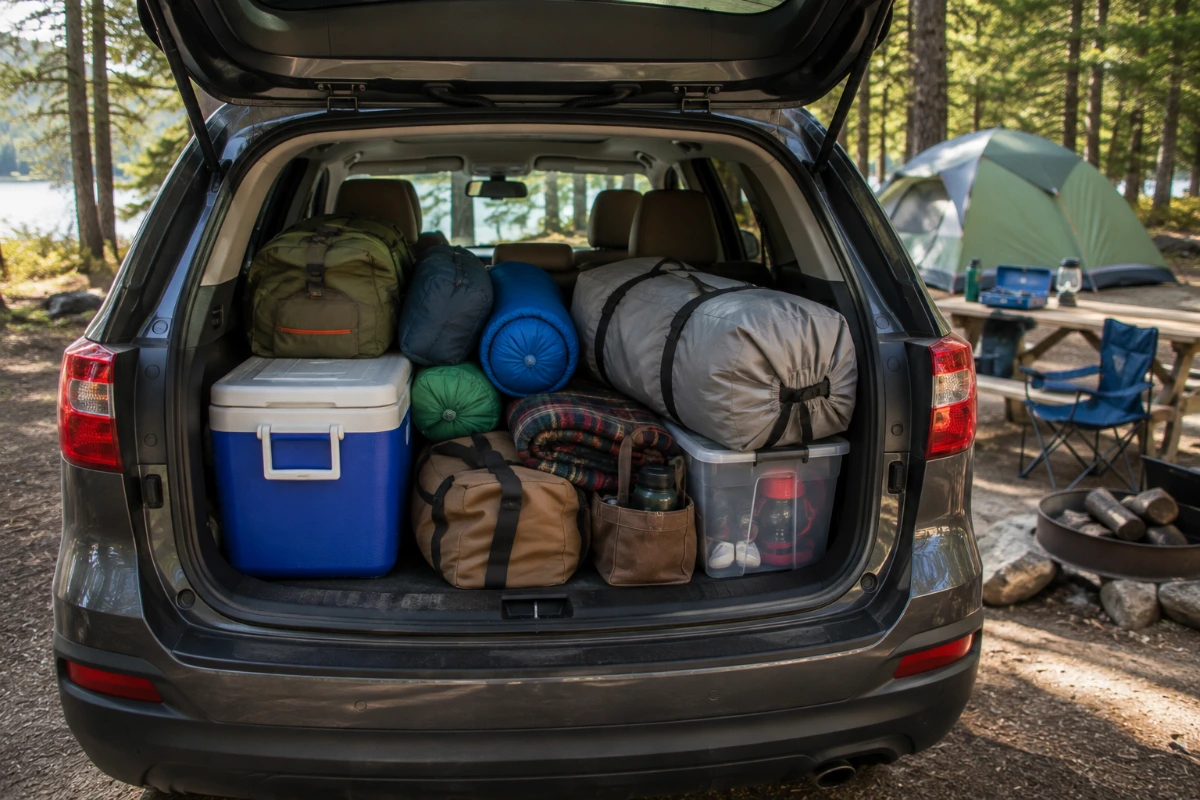
This is where car camping tent selection differs clearly from backpacking tent selection: since you’re carrying gear by vehicle rather than on your back, weight and packed size are minor considerations rather than primary decision factors. The main practical question is simply whether it fits in your car alongside the rest of your gear — beyond that, prioritize space, features, and ease of setup over minimizing ounces.
Read more → Backpacking Tent vs. Camping Tent
Frequently Asked Questions
What tent size is right for a family of four?
Following the “size up” principle above, a tent rated for 5–6 people generally gives a family of four more comfortable room for sleeping and gear than a tent rated for exactly four.
Do I need a 4-season tent for regular camping?
No, for most beginners camping in typical spring-through-fall conditions, a 3-season tent is the appropriate and more comfortable choice, since it offers better ventilation for mild weather. A 4-season tent is only worth the ventilation trade-off if you’re specifically planning winter or severe-weather trips.
Should beginners buy a cheap tent or invest in a more expensive one?
Focus on the features that matter for your trips rather than price alone. A suitable tent should have enough room for your group, offer appropriate weather protection, and be manageable to set up. A more expensive model isn’t automatically a better fit, while the cheapest option may lack features that matter for your expected conditions.
Choose Based on How and Where You’ll Actually Camp
The right tent depends on your typical group size, how much you value interior space versus wind stability, and whether you’re camping in mild or more extreme conditions. Use the criteria above to narrow down a type and size, then compare specific models against these factors once you’re ready to look at actual products.
OutdoorCompass
Explore More. Pack Smarter.