OutdoorCompass.net – If you’ve done a few day hikes and started wondering about multi-day trips, it’s worth understanding that the difference isn’t just “the same thing, but longer.” Multi-day hiking changes what you carry, what skills you need, and how you plan — often more than people expect going in. This guide breaks down the real differences, so you can honestly assess whether you’re ready, rather than guessing.
Key Differences at a Glance
- Duration: Day hiking is a single day, returning to your starting point or a set endpoint. Multi-day hiking involves camping overnight on the trail, often for several days in a row.
- Gear: Multi-day hiking adds a full overnight system — shelter, sleep system, cooking setup — on top of everything you’d already bring for a day hike.
- Skill: Multi-day hiking demands more from your navigation, logistics planning, and ability to handle unexpected conditions overnight.
- Physical demand: Carrying significantly more weight, day after day, creates a different kind of fatigue than a single strenuous day hike.
- Planning: Multi-day trips often require more advance planning — permits in some areas, food and water logistics across days, and a longer weather window to monitor.
What Counts as Day Hiking vs. Multi-Day Hiking
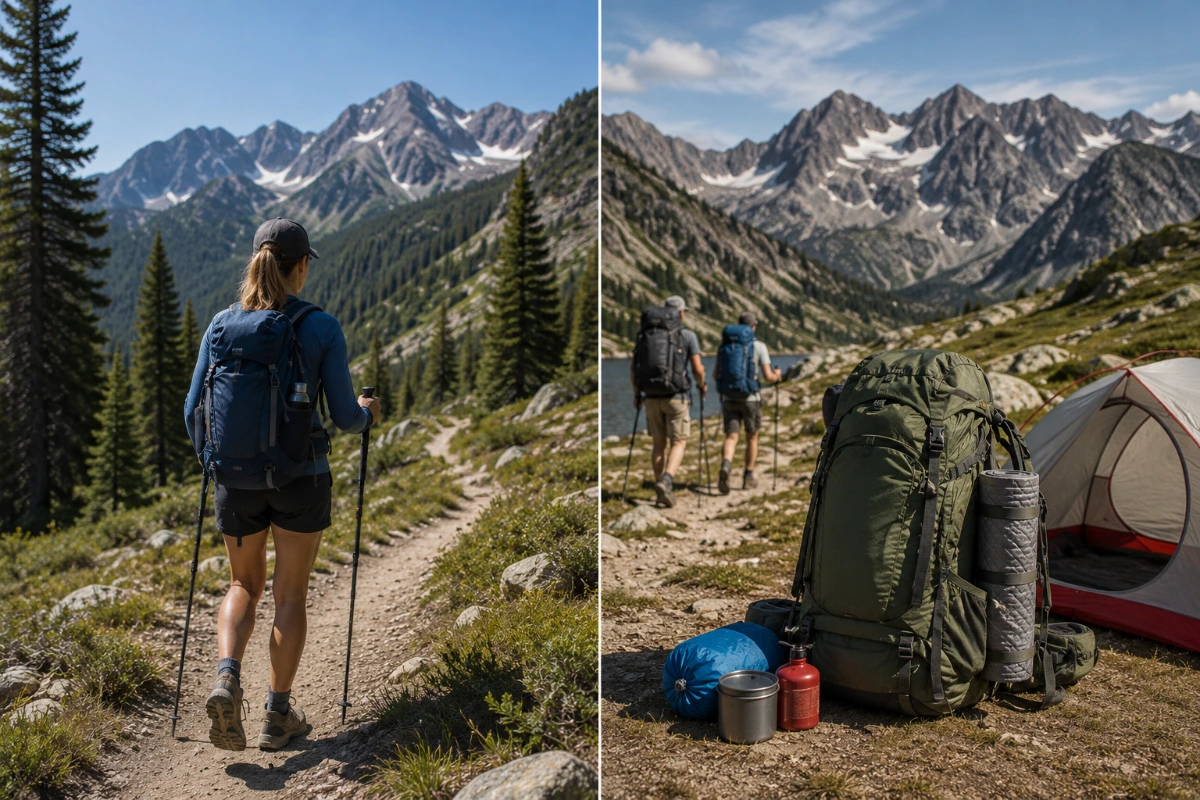
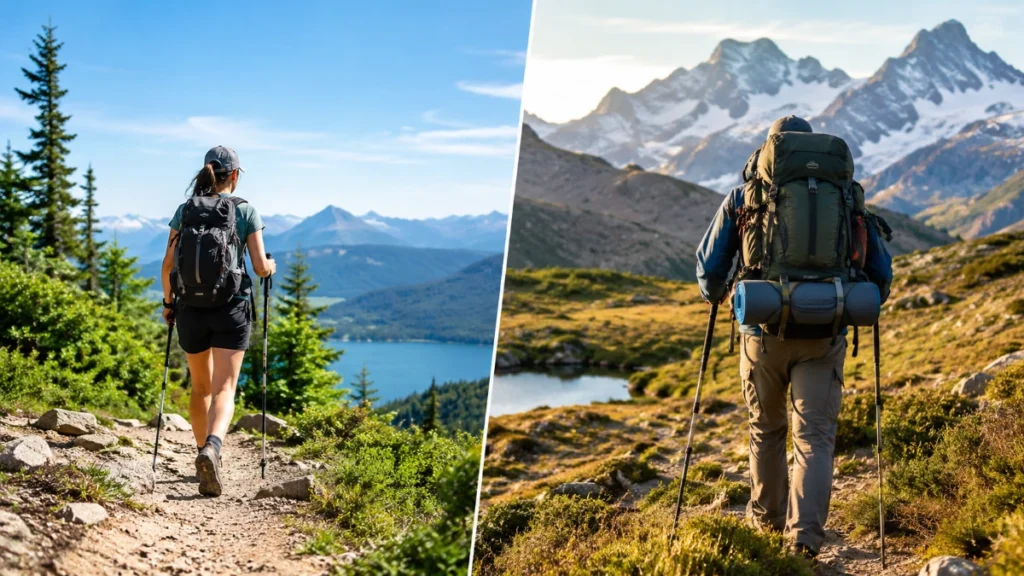
Day hiking is exactly what this entire guide series has covered: a single-day trip on a trail, typically returning to your car or a set point the same day, without needing to sleep outdoors.
Multi-day hiking means spending one or more nights away from your starting point while carrying the gear, food, and other supplies needed for the trip. It often overlaps with backpacking, although the exact terminology varies by region and hiking style.
The line between “a long day hike” and “a short multi-day trip” isn’t always sharp, but the moment you’re carrying overnight gear and planning to sleep on the trail, you’ve crossed into multi-day territory in terms of what’s actually required of you.
Gear Differences
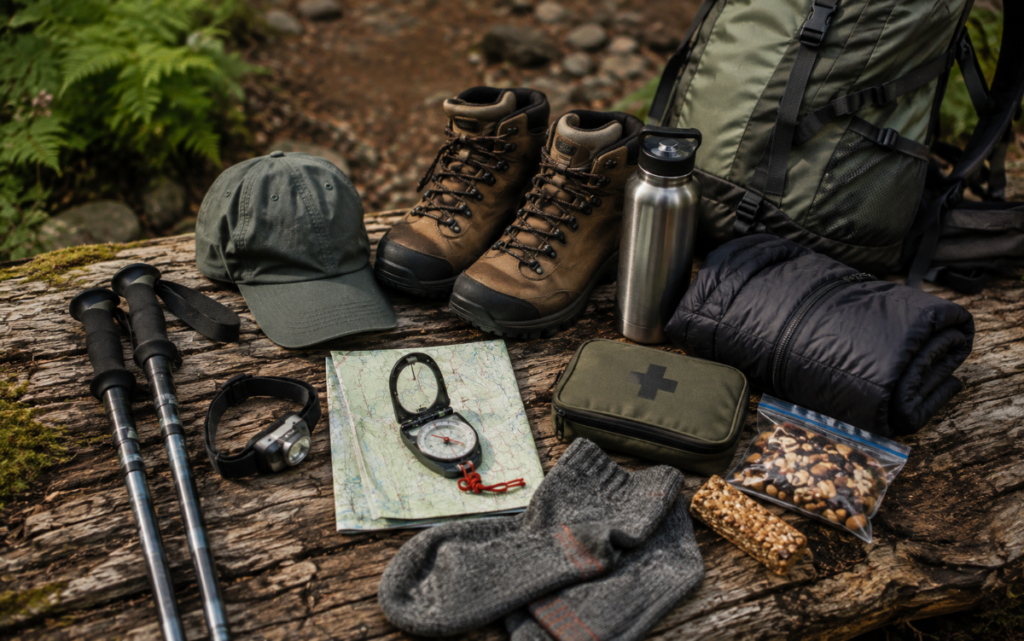
Day hiking gear — covered throughout this guide series — centers on a daypack with water, food, layers, navigation, and basic safety items.
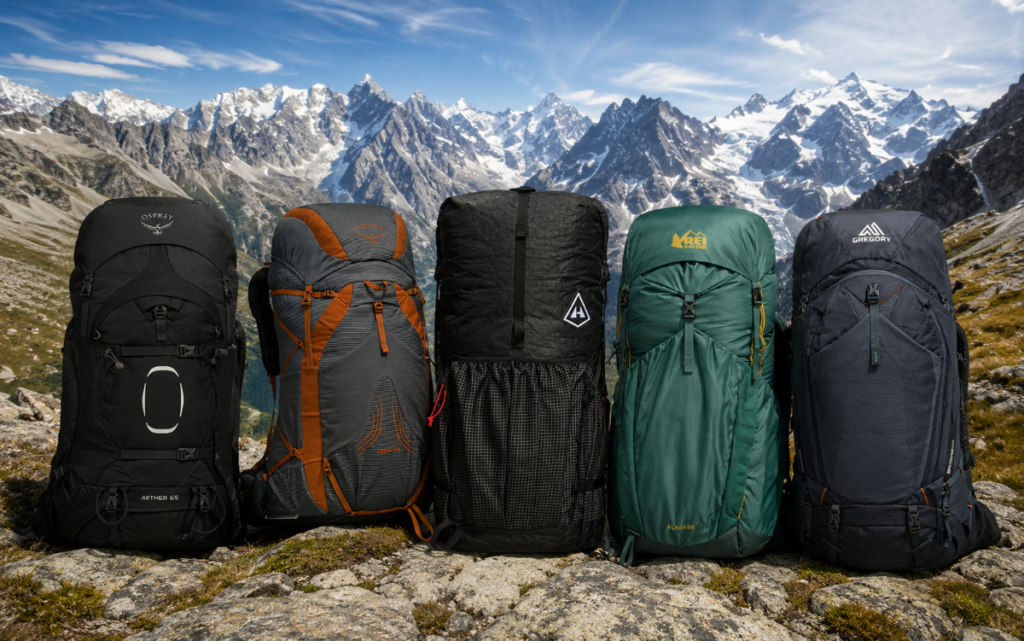
Multi-day hiking adds an entire additional layer on top of that: a shelter (tent or equivalent), a sleep system (sleeping bag and pad), a way to cook or prepare food, and enough food and water capacity to cover multiple days rather than a few hours.
This guide won’t go deep into the specifics of that gear here — that’s a more detailed topic on its own — but it’s worth understanding upfront that multi-day hiking isn’t just “bring your day-hike bag, but bigger.” It’s a meaningfully larger and heavier gear list.
Skill and Experience Differences
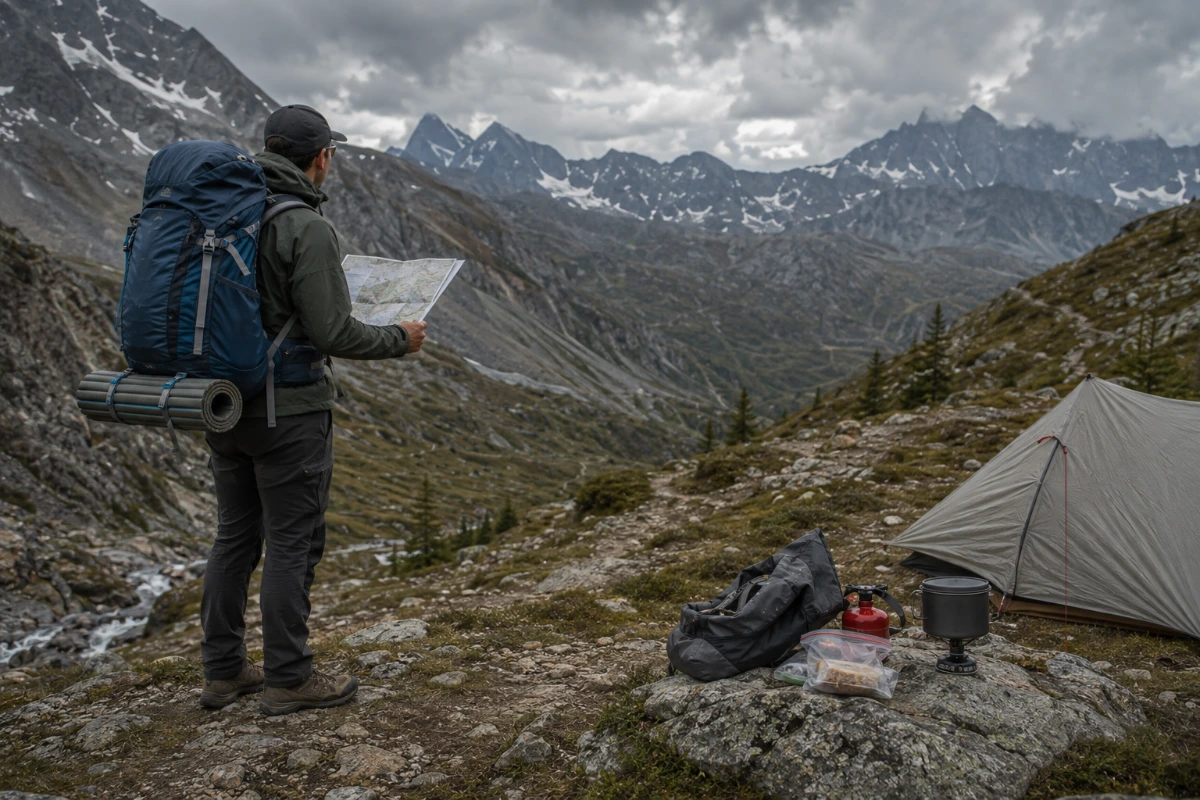
Multi-day hiking asks more of you in a few specific ways:
- More demanding navigation — you’re often covering more varied terrain over multiple days, sometimes without the benefit of returning to a known trailhead each night.
- Multi-day logistics — planning food, water resupply (if applicable), and pacing across several days is a different kind of planning than a single outing.
- Handling unexpected conditions overnight — weather, temperature drops, or gear issues that would just mean “a rough afternoon” on a day hike can become a genuine overnight challenge on a multi-day trip.
This is why multi-day hiking is generally considered a step up in experience level, not simply a longer version of what you’ve already been doing.
Physical Demands Compared
The physical challenge of multi-day hiking isn’t just “more of the same effort.” Two things change:
- Carried weight — a loaded overnight pack is substantially heavier than a day pack, which changes your balance, pace, and how your body fatigues over the course of a hike.
- Cumulative fatigue — day hiking fatigue resets overnight in your own bed. Multi-day fatigue builds across consecutive days, which is a different kind of physical demand than a single strenuous outing, even one longer than usual.
If you’ve been building fitness through regular hiking and training with a loaded pack, as covered in the training guide earlier in this series, you already have a meaningful head start — but it’s worth recognizing that multi-day carrying and cumulative effort are still a step beyond that.
Planning and Logistics Differences
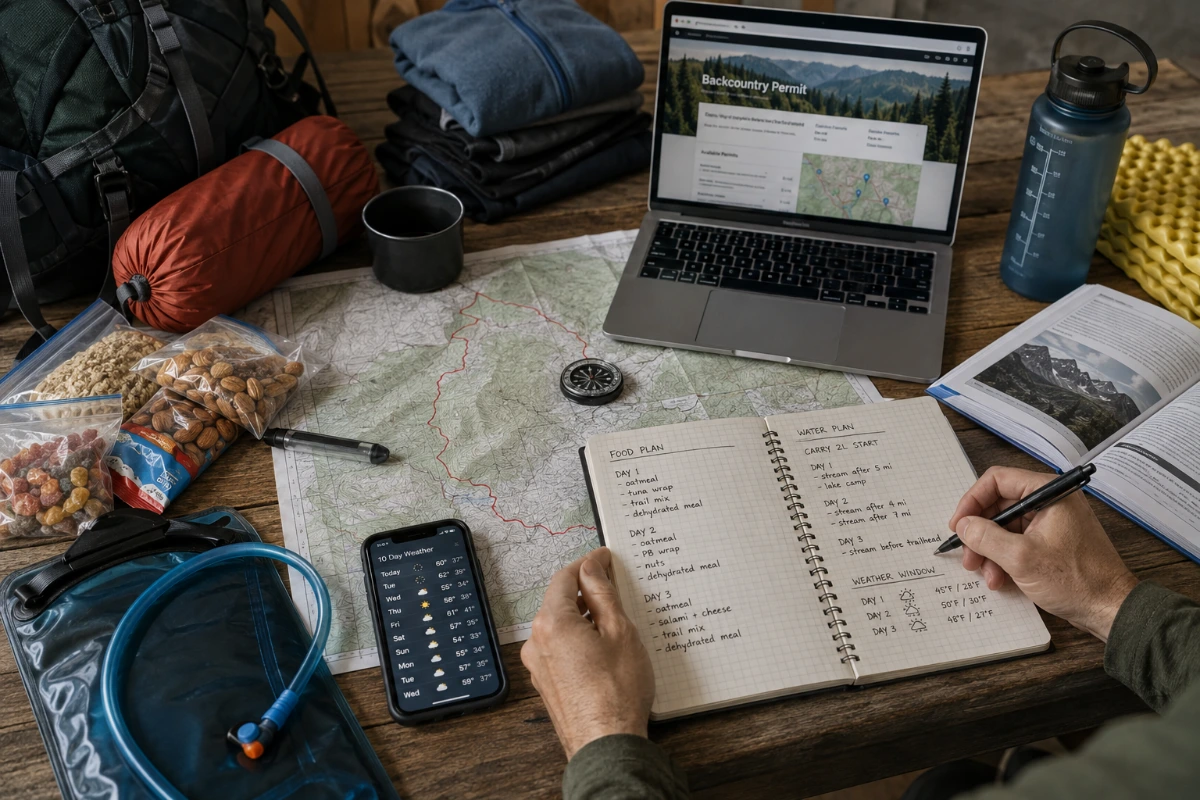
Day hikes are relatively flexible — many can be planned with just a day or two of notice, weather permitting. Multi-day trips generally require more:
- Permits — some trails and areas require permits or reservations for overnight camping, which vary significantly by location and need to be checked well in advance.
- Extended weather monitoring — you’re now planning around a weather window of several days rather than a single day, which is harder to predict with confidence.
- Food and water planning across days — figuring out how much to carry, or whether water resupply points exist along the route, becomes a real logistics exercise rather than a quick estimate.
- Emergency planning — a multi-day trip gives you fewer opportunities to simply turn around and return to the trailhead, so knowing your exit options, communication plan, and emergency procedures becomes more important.
How to Know You’re Ready for Multi-Day Hiking
Rather than a strict checklist, a few honest questions can help you gauge readiness:
- Are you comfortable with longer, more demanding day hikes, including ones with meaningful elevation gain?
- Have you hiked with a loaded backpack and found the added weight manageable, not just tolerable?
- Have you handled unexpected weather or conditions on a day hike calmly, without it turning into a crisis?
- Are you comfortable navigating without needing to return to a known trailhead partway through?
If most of these feel comfortable rather than aspirational, you’re probably ready to start considering a short, well-supported multi-day trip. If several feel like a stretch, that’s useful information too — it points to specific areas worth building experience in first, rather than a reason multi-day hiking isn’t for you eventually.
Frequently Asked Questions
Can a beginner go straight from no hiking experience to multi-day hiking?
It’s possible, but it means taking on several new skills at once, including overnight gear, extended navigation, and multi-day logistics. Building a base of day-hiking experience first generally makes the transition smoother and safer.
What’s a reasonable hike length to “level up” from day hiking?
There’s no fixed number. A common progression is to gradually extend day hike distance and elevation gain, then try carrying a loaded pack on day hikes before attempting an overnight trip. The goal is to become comfortable at each stage rather than reach a specific distance milestone.
Do I need completely different gear, or can I reuse my day-hiking gear?
Much of your day-hiking gear can carry over, including footwear, clothing layers, navigation tools, and a first aid kit. The main additions are overnight-specific gear such as a shelter, sleep system, and cooking setup, along with a larger backpack to carry it.
Is multi-day hiking the same as backpacking?
Multi-day hiking and backpacking overlap closely, but the terms aren’t always used identically. Multi-day hiking generally means spending one or more nights away from your starting point, while backpacking usually emphasizes carrying the gear and supplies needed for the trip. Terminology can vary by region and hiking community.
How many days should a beginner hike for their first multi-day trip?
There is no universal number, but a short one- or two-night trip can be a manageable way to gain experience with overnight gear, food planning, navigation, and carrying a loaded pack. A route with straightforward logistics and reliable exit options can also make a first trip easier to manage.
Day Hiking Is a Complete Activity on Its Own
It’s worth saying clearly: day hiking isn’t a stepping stone you’re obligated to move past. Plenty of hikers spend years enjoying day hikes without ever feeling the need to go multi-day, and that’s a completely valid way to hike.
If multi-day hiking does interest you, though, it builds directly on the skills and gear knowledge covered throughout this guide — you’re not starting from zero, just adding a meaningful new layer on top of what you already know.
OutdoorCompass
Explore More. Pack Smarter.