
OutdoorCompass.net – A good camping lantern makes the hours after sunset far more livable — for cooking, playing cards, or just not fumbling around in the dark. This guide covers what actually matters when choosing one, then compares five widely available options.
Affiliate Disclosure: This article contains affiliate links. As an Amazon Associate, OutdoorCompass earns from qualifying purchases. If you purchase through one of our links, we may earn a small commission at no additional cost to you. This helps support OutdoorCompass and our continued outdoor content.
Quick Picks
1. Best Overall: Goal Zero Lighthouse 600 Camping Lantern
2. Best for Car Camping: Coleman Classic Rechargeable LED Lantern
3. Best Lightweight: Black Diamond Moji R+
4. Best for Warm Ambient Light: BioLite AlpenGlow 500
5. Best Budget Pick: Etekcity LED Camping Lanterns (4-Pack)
Comparing Camping Lanterns
Specifications below are drawn from product listings. Pricing was included for only one of the five products and should be checked directly for the rest before purchasing. A couple of fields in the source data appear inconsistent or implausible, flagged below rather than silently corrected.
| Feature | Goal Zero Lighthouse 600 | Coleman Classic Rechargeable | Black Diamond Moji R+ | BioLite AlpenGlow 500 | Etekcity (4-Pack) |
|---|---|---|---|---|---|
| Power source | “Solar Powered,” but includes a lithium-ion battery | Rechargeable lithium-ion | Battery powered (non-standard battery) | Rechargeable lithium-ion | 3 AA batteries per lantern |
| Max brightness | 600 lumens | 800 lumens | 150 lumens | 500 lumens | 154 lumens (per lantern) |
| Battery life | 25.5 hours | 5 hours | Not listed | Up to 200 hours (low setting; 5 hours on high, per listing) | 50 hours |
| Weight | 1.1 lb | 2.16 lb | 4.2 oz | 7.4 oz | 9.1 oz per lantern |
| Water resistance | IPX6-rated water resistance | Water resistant | Water resistant | IPX4-rated splash resistance | Water resistant |
| Price | $79.95 | $59.99 | $49.95 | $79.95 | $27.99 |
Note: Specifications, runtime, weight, and prices may vary by model version and retailer listing. Verify current details before purchasing.
Our Top Camping Lantern Picks
1. Goal Zero Lighthouse 600 Camping Lantern
- Price: $79.95
- Item Weight: 1.1 lb
- Best for: Overall camping use
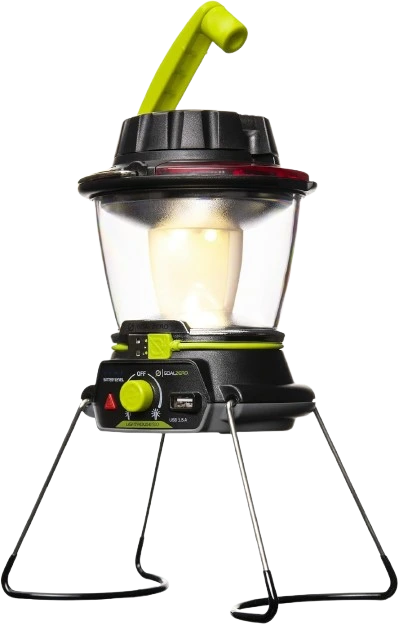
The Goal Zero Lighthouse 600 Camping Lantern is a 600-lumen tabletop lantern with a rechargeable lithium-ion battery and a listed 25.5-hour battery life, with a 3500 Kelvin (warm-white) color temperature and adjustable output.
Key Features
- 600 lumens maximum output
- 25.5-hour listed battery life
- Adjustable brightness
- 3500K color temperature
- Aluminum construction
Pros
- Long listed battery life relative to its brightness
- Strong review base (4.7★ across 1,259 reviews)
- Relatively light at 1.1 lb
- Warm color temperature, easier on the eyes than a cool-white light
Cons
- Not water resistant, per the listing — worth factoring in if you camp in wet conditions
- The listing describes it as “Solar Powered” but also lists a standard lithium-ion battery with no solar panel details — confirm how charging actually works before assuming solar capability
- The listing’s wattage fields show 600 watts, which is implausible for a portable LED lantern and appears to be a data error rather than an actual power draw — don’t rely on it
Why We Recommend It
The Goal Zero Lighthouse 600 is worth considering if you want a versatile camping lantern with up to 600 lumens of listed brightness, adjustable output, and a reported runtime of 25.5 hours. Its 3500K warm-white color temperature may also appeal to campers who prefer softer lighting around the campsite. At 1.1 lb, it offers a balance of brightness and portability for general camping use.
However, the available listing contains inconsistent information about solar charging and wattage, so verify the exact model specifications and charging options before purchasing.
Check Today’s Price on Amazon → Goal Zero Lighthouse 600 Camping Lantern
Coleman Classic Rechargeable LED Lantern
- Price: $59.99
- Item Weight: 2.16 lb
- Best For: Car camping
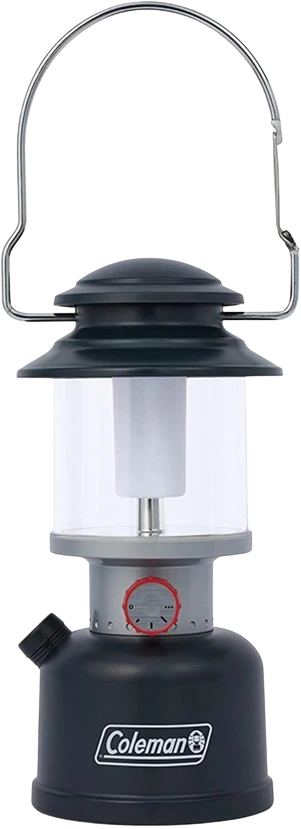
An 800-lumen rechargeable lantern with a listed 5-hour battery life at presumably its brightest setting, impact-resistant and water-resistant construction, and a USB to USB-C charging cord included.
Key Features
- 800 lumens maximum output (highest of the five compared here)
- Impact-resistant and water-resistant
- USB to USB-C charging cord included
- 3-year manufacturer warranty (longest listed here)
Pros
- Bright 800-lumen output
- Rechargeable design
- Suitable for car camping
Cons
- Reported runtime is relatively short
- Less suitable for weight-conscious trips
Why We Recommend It
The Coleman Classic Rechargeable LED Lantern is a practical option for car campers who prioritize bright campsite lighting over minimizing pack weight. Its listed maximum output of 800 lumens makes it the brightest option in this comparison, while its rechargeable design and water-resistant construction offer useful features for outdoor use. The main trade-off is its reported five-hour runtime, which may require more frequent charging when used at high brightness. Check the current product listing to confirm runtime conditions, charging details, and weather-resistance specifications before buying.
Black Diamond Moji R+
- Price: $49.95
- Item Weight: 4.2 oz
- Best For: Lightweight use
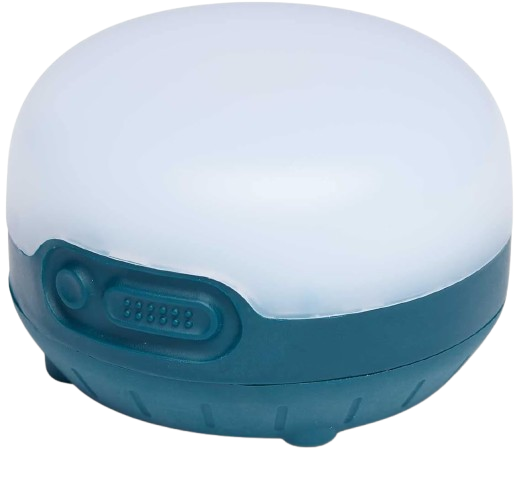
A compact, 150-lumen lantern with hanging and tabletop mounting options, multiple color and light modes (including a “campfire” mode and color cycling), and a water-resistant polycarbonate build.
Key Features
- 150 lumens maximum output
- Hanging and tabletop mounting options
- Multiple light modes (full spectrum color, campfire, rainbow cycle, strobe)
- Water resistant
- 4.2 oz — lightest option in this comparison by a wide margin
Pros
- Lightweight and compact
- Multiple light modes
- Hanging and tabletop use
Cons
- Lower 150-lumen output
- Less suitable for lighting large campsites
Why We Recommend It
The Black Diamond Moji R+ stands out for its low listed weight of 4.2 oz and compact design, making it worth considering when portability is a priority. Its hanging and tabletop options provide flexibility for lighting a tent interior or a small campsite area, while its multiple light modes offer additional versatility. With a maximum output of 150 lumens, it is better suited to close-range lighting than illuminating a large group campsite. Confirm the battery type and runtime for the exact model before purchasing.
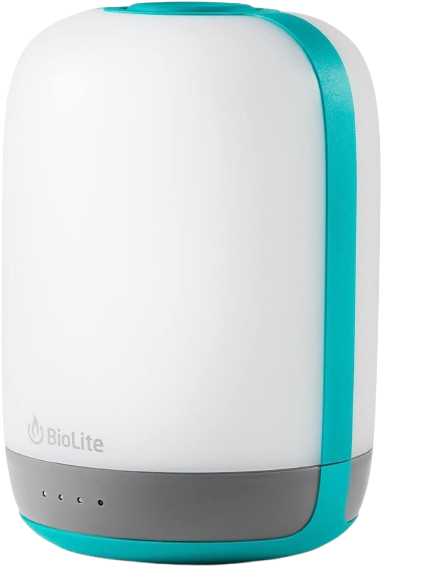
BioLite AlpenGlow 500
- Price: $79.95
- Item Weight: 7.4 oz
- Best For: Warm ambient light
A 500-lumen lantern with IPX4 waterproofing, a built-in charging port for other devices, and a listed runtime of 5 hours on high and 200 hours on its lowest setting.
Key Features
- 500 lumens maximum output
- IPX4 waterproof rating
- Built-in charging port (can charge other small devices)
- ChromaReal LED technology with multiple lighting modes
- Runtime: 5 hours (high) to 200 hours (low), per listing
Pros
- Adjustable ambient lighting
- Multiple lighting modes
- USB device-charging feature
Cons
- Runtime drops at high brightness
- IPX4 protects against splashes, not immersion
Why We Recommend It
The BioLite AlpenGlow 500 is worth considering if you want adjustable campsite lighting with a focus on ambient use. Its listed 500-lumen maximum output, multiple lighting modes, and reported runtime of up to 200 hours on the lowest setting offer flexibility for different situations, from evening relaxation to overnight low-level lighting. The built-in charging feature may also be useful when you need to top up a small device. Keep in mind that the listed runtime drops to five hours on high, and its IPX4 rating indicates protection against water splashes rather than immersion. Verify the current specifications and price before purchasing.
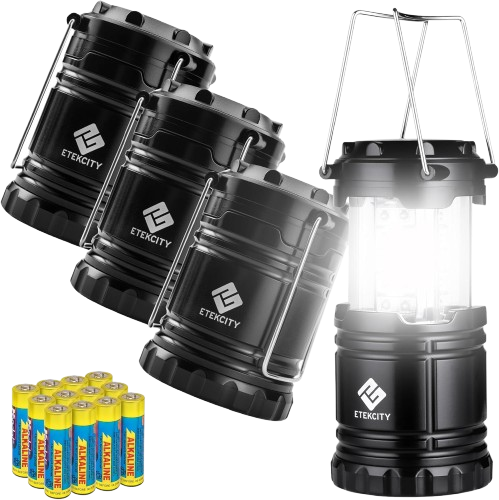
Etekcity LED Camping Lanterns (4-Pack)
- Price: $27.99
- Item Weight: 9.1 oz (per lantern)
- Best For: Budget-conscious campers
A pack of four battery-powered lanterns (3 AA batteries each, 12 batteries included total), each rated at 154 lumens with a listed 50-hour battery life and a collapsible design.
Key Features
- Sold as a 4-pack, with 12 AA batteries included
- 154 lumens per lantern
- 50-hour listed battery life
- Collapsible design
- 360-degree wide-angle illumination
Pros
- Four lights in one pack
- Collapsible, space-saving design
- Useful for lighting multiple areas
Cons
- Requires AA batteries
- Weight and current price need verification
Why We Recommend It
The Etekcity LED Camping Lanterns 4-Pack is worth considering if you want several separate lights for different areas of a campsite. Each lantern is listed at 154 lumens, runs on three AA batteries, and has a collapsible design that can help save storage space. Having four lanterns in one pack also provides flexibility for lighting a tent, picnic table, or other nearby areas. However, the available data does not confirm the current price or clarify whether the listed 9.1 oz weight applies to one lantern or the entire pack. Check the current listing for pricing, weight, and specifications before deciding whether it offers good value.
Power Source: Battery vs. Rechargeable vs. Fuel
- Disposable batteries (like the AA-powered Etekcity lanterns) are easy to find and replace almost anywhere, but they create ongoing cost and waste over time.
- Rechargeable lithium-ion (used by the Goal Zero, Coleman, and BioLite options here) avoids repeated battery purchases, but requires charging before your trip and doesn’t help if you run out of power mid-trip without a way to recharge.
- Fuel-based lanterns (propane or liquid fuel) aren’t represented among the five compared here, but are common in camping — they can be very bright, but require ventilation and should never be used inside a tent, which ties directly into the safety guidance in Camping Safety Tips.
Brightness: Lumens Explained
Lumens measure total light output — higher numbers mean a brighter light. For context among the options compared here, 150 lumens (Black Diamond Moji R+) suits close-up tasks like reading or a small tent interior, while 500–800 lumens (BioLite, Goal Zero, Coleman) is enough to light a picnic table or common area for a group. Brighter settings generally drain battery faster, which is part of why several of these lanterns list very different runtimes at high versus low brightness.
Lantern vs. Headlamp vs. Flashlight: Different Jobs
- A lantern lights up an area — a tent interior, a table, a common space — and is meant to sit in place rather than be carried around.
- A headlamp provides hands-free, directional light for tasks like cooking, setting up camp, or walking, and is the better choice when you need to see exactly where you’re looking. This is covered in more depth in the hiking navigation guide.
- A flashlight gives you a focused, aimable beam, useful for quickly checking something specific or as a backup light source.
Most car camping setups benefit from at least a lantern for the site and a headlamp or flashlight for hands-free or directional tasks — none of the five products above fully replace the other two categories.
Battery Life Considerations
For multi-day trips, check whether a lantern’s listed battery life applies at full brightness or a lower setting — several of the lanterns above show a big gap between the two (the BioLite AlpenGlow 500, for example, lists 5 hours on high versus 200 hours on low). Bringing a backup power source — spare batteries for battery-powered models, or a portable charger for rechargeable ones — is worth planning for on trips longer than a single night.
Safety Notes for Fuel-Based Lanterns
None of the five lanterns compared in this guide use fuel, but if you’re considering a propane or liquid-fuel lantern instead, the same core safety principles from Camping Safety Tips apply: use it with adequate ventilation, never inside a tent, and keep it a safe distance from flammable materials.
Frequently Asked Questions
How many lumens is enough for a camping lantern?
For lighting a table or small group area, 300–500 lumens is generally sufficient. Higher brightness (700+) is more useful for larger areas or added flexibility with dimmer settings, while lower brightness (150 lumens or under) suits close-range tasks like reading in a tent.
Do I need both a lantern and a headlamp?
They serve different purposes. A lantern lights an area, while a headlamp provides hands-free, directional light for tasks and walking. Most campers benefit from having both rather than relying on just one.
Is it safe to use a gas or propane lantern near my tent?
Fuel-based lanterns should never be used inside a tent because of the risk of carbon monoxide poisoning. Keep them a safe distance from tents and other flammable materials, and follow the fire safety guidance in Camping Safety Tips. The electric lanterns compared in this guide do not produce carbon monoxide through fuel combustion.
How long should a camping lantern battery last?
Battery life depends on the lantern’s brightness setting, battery capacity, and operating conditions. Check the manufacturer’s runtime figures at the brightness level you expect to use, and bring spare batteries or a backup power source for longer trips.
Are rechargeable camping lanterns better than battery-powered lanterns?
Rechargeable lanterns can reduce the need for disposable batteries, while models with replaceable batteries are convenient when charging isn’t available. The better choice depends on trip length, access to power, and whether you can carry spare batteries.
Match the Lantern to How You’ll Use It
The right lantern depends on whether you need maximum brightness for a group site, a lightweight option to pack light, or a long runtime for multi-day trips. Use the comparison above to narrow down your priorities, then verify current pricing and the flagged data points directly before buying.
OutdoorCompass
Explore More. Pack Smarter.