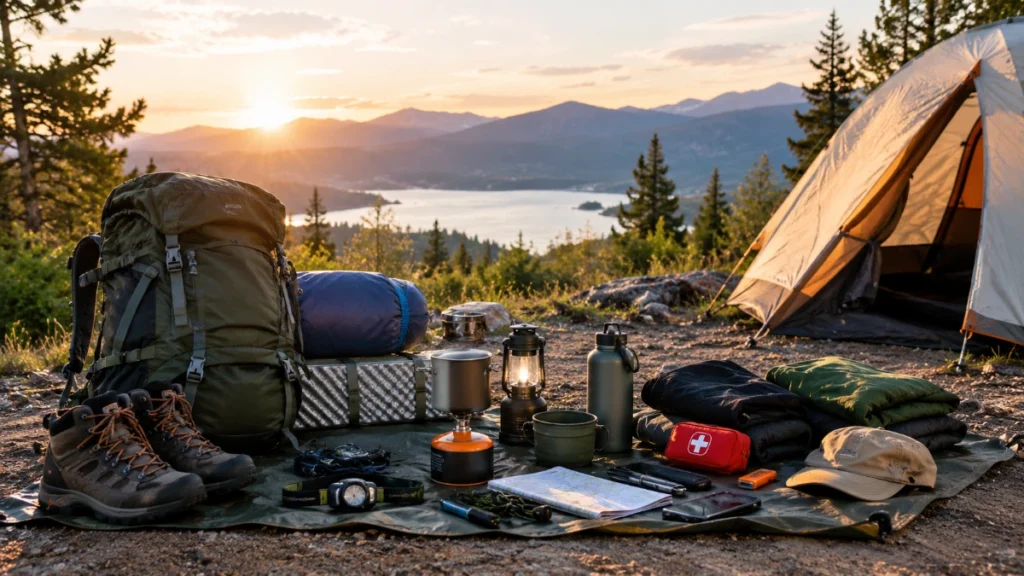
OutdoorCompas.net – Packing for car camping is refreshingly different from packing for a backpacking trip — since you’re loading everything into a vehicle rather than carrying it on your back, weight is much less of a concern. This is a complete list, organized by category, covering what to bring for a comfortable first camping trip.
Quick Checklist Summary
- ✅ Shelter & sleep system
- ✅ Cooking & food supplies
- ✅ Lighting & power
- ✅ Clothing & personal items
- ✅ Camp comfort items
- ✅ Safety & tools
Details on each below.
Take the checklist with you
A simple, print-ready checklist to help you plan your multi-day backpacking trip from permits to packing.
Shelter & Sleep
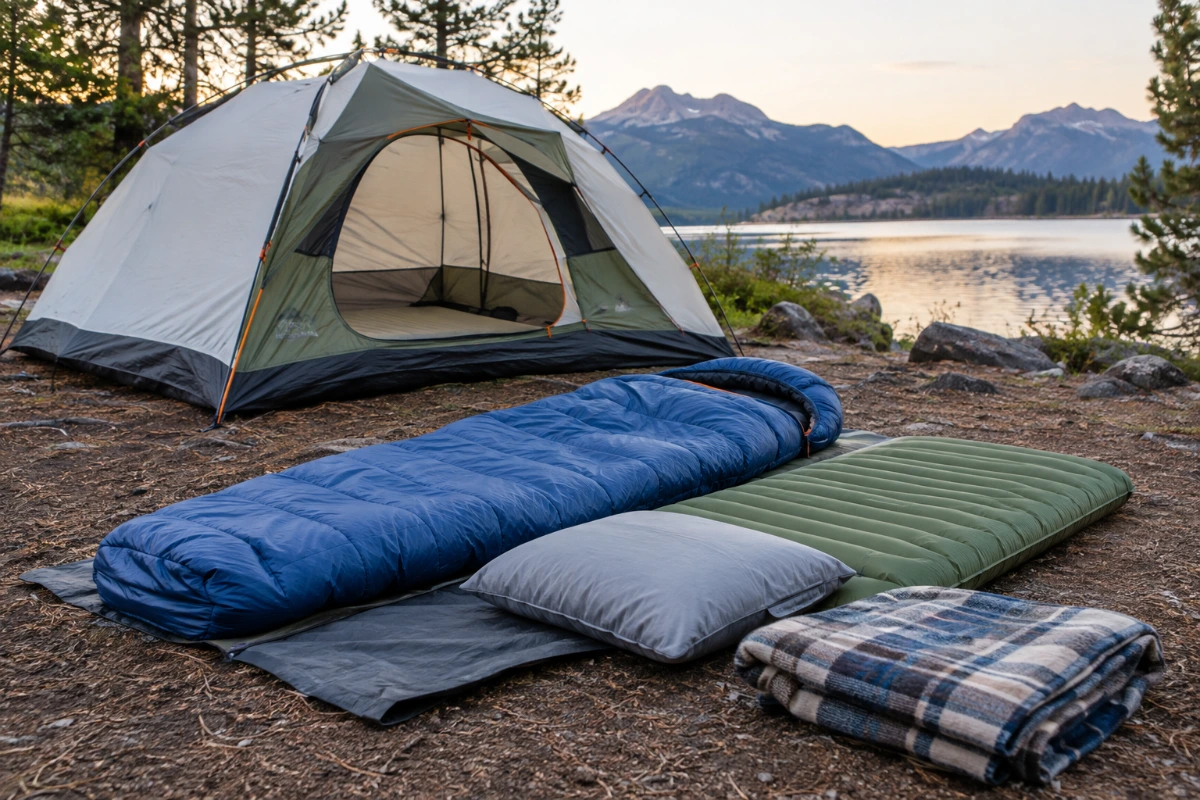
- Tent appropriately sized for your group, plus a groundsheet or footprint if you have one
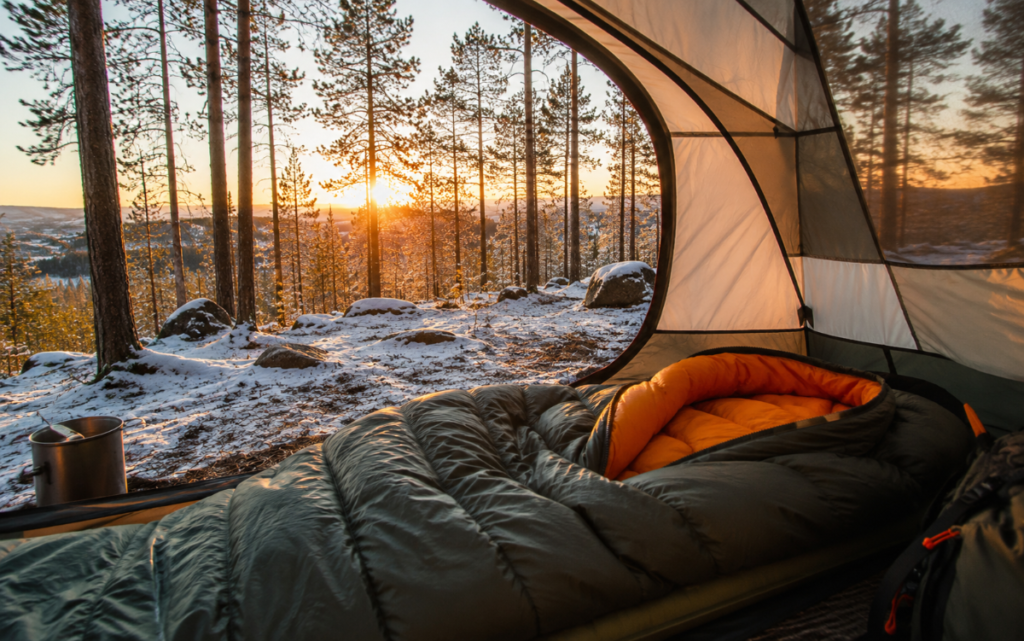
- Sleeping bag rated for the expected overnight temperature
- Sleeping pad or air mattress — Since weight is much less of a concern for car camping, a thicker or more comfortable option than you’d typically use for backpacking can be a practical choice
- Pillow — a regular pillow from home works fine; this is one of the small comforts car camping allows that backpacking generally doesn’t
- Extra blanket can provide additional warmth and comfort, and car camping makes it easier to bring one.
Cooking & Food
- Camp stove (or plan to cook over a campfire, where permitted)
- Cookware — pots, a pan, and cooking utensils
- Cooler with ice for perishable food
- Food and snacks for the full trip, plus a reasonable buffer
- Water — even if the campground has a water source, bringing some of your own supply provides a backup in case the source is unavailable
- Plates, cups, and utensils (reusable or disposable, depending on preference)
- Trash bags for packing out waste
Lighting & Power
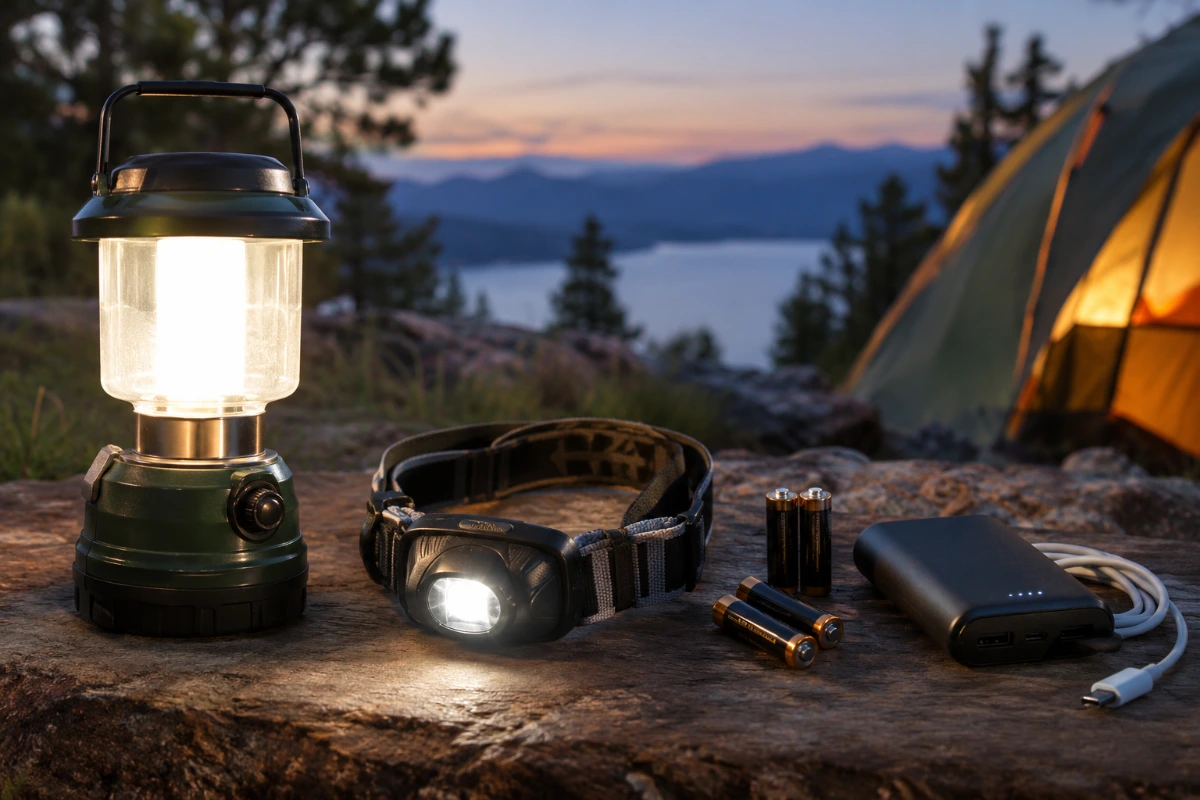
- Lantern for general campsite lighting after dark
- Headlamp or flashlight for hands-free use walking around camp
- Extra batteries for anything battery-powered
- Portable power bank, if you’ll want to charge a phone or other devices
Clothing & Personal Items
- Weather-appropriate layers — the same layering principles used for hiking can also help when camping, with the advantage that car camping gives you more room to bring extra options
- Comfortable closed-toe shoes for walking around the site
- Toiletries and any personal medications
- Sunscreen and insect repellent
Camp Comfort and Convenience
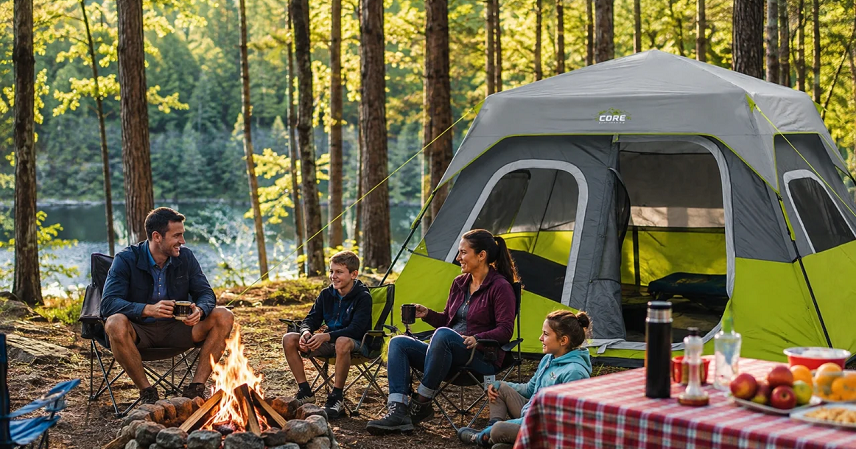
This is where car camping genuinely differs from backpacking or hiking — Since you’re not carrying everything on your back, you have more flexibility to bring items that improve comfort:
- Camp chairs for sitting around the site
- A folding table, if your site doesn’t have a picnic table
- A tarp or shade shelter, useful for sun or light rain coverage over a common area
- Games or entertainment — cards, a frisbee, or anything else that adds to the experience, especially useful for kids
Safety and Tools
- First aid kit — bring basic supplies appropriate for your group and the activities you’ll be doing.
- Multi-tool or basic tool kit
- Rope or cord — useful for tasks such as securing a tarp or organizing gear
- Fire starter (matches, a lighter, or fire starter sticks), even if you plan to cook with a stove
What Not to Forget
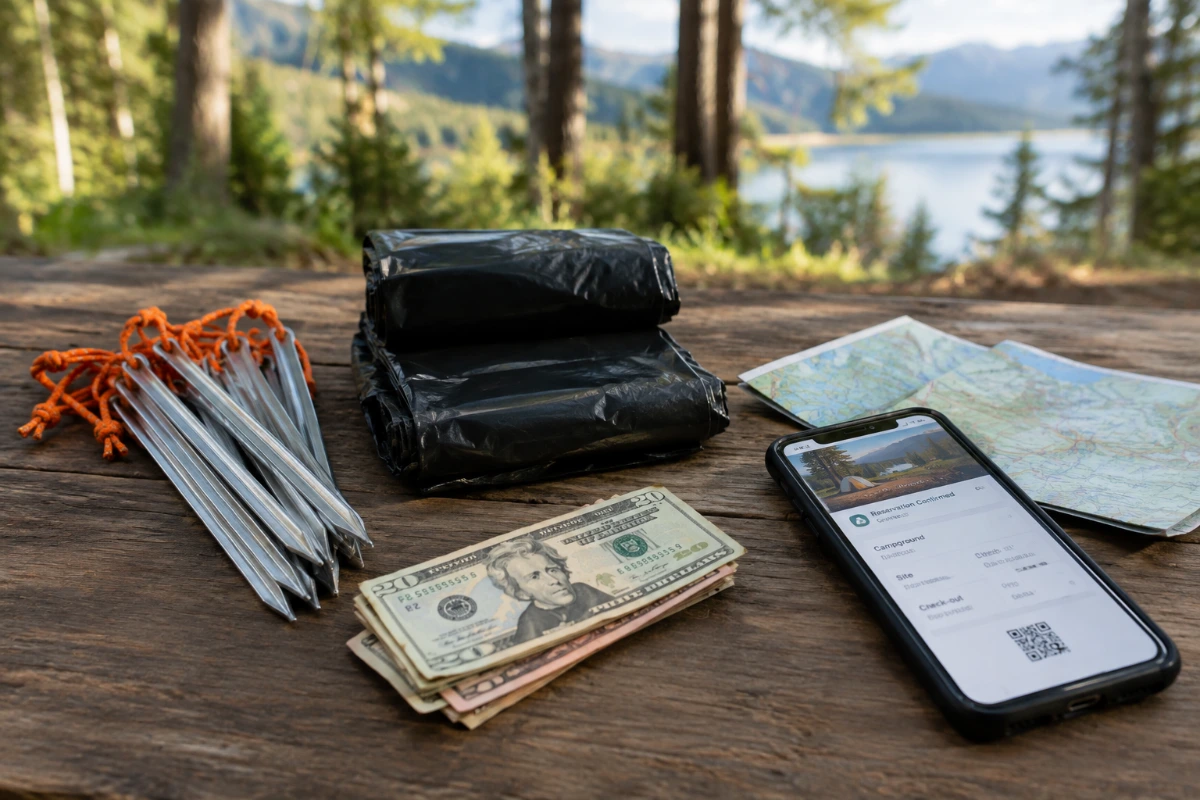
A few items that don’t fall neatly into the categories above, but are commonly forgotten by beginners:
- Extra tent stakes — useful to have in case one is lost or damaged
- Extra trash bags — you’ll generally use more than expected
- Cash, for campgrounds that charge fees on-site or don’t accept cards
- A physical copy or screenshot of your campground reservation, in case you lose signal on arrival
Printable Checklist
Shelter & Sleep
- Tent (plus groundsheet/footprint)
- Sleeping bag
- Sleeping pad or air mattress
- Pillow
- Extra blanket
Cooking & Food
- Camp stove or fire plan
- Cookware and utensils
- Cooler with ice
- Food and snacks
- Water supply
- Plates, cups, utensils
- Trash bags
Lighting & Power
- Lantern
- Headlamp or flashlight
- Extra batteries
- Portable power bank
Clothing & Personal
- Weather-appropriate layers
- Comfortable shoes
- Toiletries and medications
- Sunscreen and insect repellent
Camp Comfort
- Camp chairs
- Folding table (if needed)
- Tarp or shade shelter
- Games or entertainment
Safety & Tools
- First aid kit
- Multi-tool
- Rope or paracord
- Fire starter
Easy to Forget
- Extra tent stakes
- Extra trash bags
- Cash for site fees
- Reservation confirmation (physical or saved offline)
Frequently Asked Questions
Is this checklist different for backcountry camping?
Yes, significantly. This list assumes car camping, where weight isn’t a concern. Backcountry or backpacking-style camping requires much more attention to gear weight and packed size — the backpacking gear guides cover that in more depth.
What do beginners forget most often?
Extra tent stakes and enough trash bags are two of the more common oversights, along with underestimating how much water to bring even when a campground has a water source.
Do I need to bring my own water if the campground has a water source?
It’s a good idea to bring some water regardless, as a backup — water sources can occasionally be unavailable or under maintenance, and having your own supply removes that uncertainty.
What should I pack for camping in cold weather?
For colder conditions, prioritize an appropriate sleeping bag or other sleep system, warm layers, extra insulation, and weather-appropriate footwear. Check the expected overnight conditions before leaving and adjust your gear accordingly.
Pack for Comfort, Not for Weight
Car camping is one of the few outdoor activities where you’re genuinely encouraged to bring more rather than less — use that flexibility to make the trip comfortable, not just functional. Once you’ve done a trip or two, you’ll have a clearer sense of what you actually use and can adjust your list accordingly.
OutdoorCompass
Explore More. Pack Smarter.