OutdoorCompass.net – Camping safety looks different from hiking or backpacking safety because you’re generally based at one campsite for the duration of your stay. That changes which risks matter most: fire safety, food storage around a fixed site, and weather planning take priority over navigation or distance-from-help concerns. Here’s what actually matters for a safe first camping trip.
Key Safety Principles
- Fire safety is one of the most important, and most avoidable, risk areas in camping.
- Food storage matters even at a developed campground, not just in the backcountry.
- Check the weather before you go, and have a plan for what to do if it changes while you’re already at your site.
- Where you pitch your tent within your site matters, not just which campground you chose.
Read More → Camping for Beginners: The Complete Guide to Your First Trip
Read More → What to Bring Camping: The Complete Beginner’s Packing List
Fire Safety
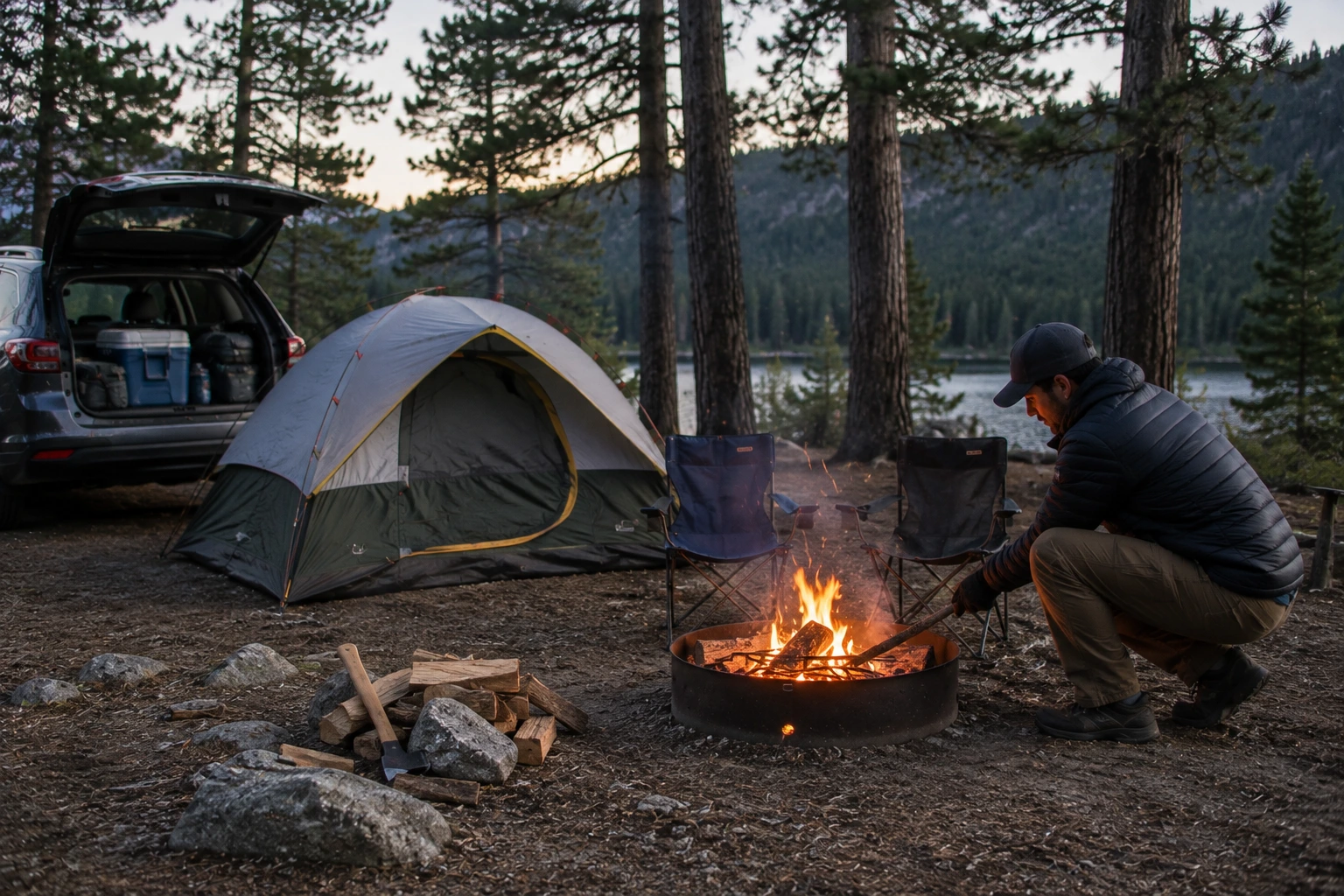
Campfires are an important source of camping risk, and one that can often be reduced with a few consistent habits:
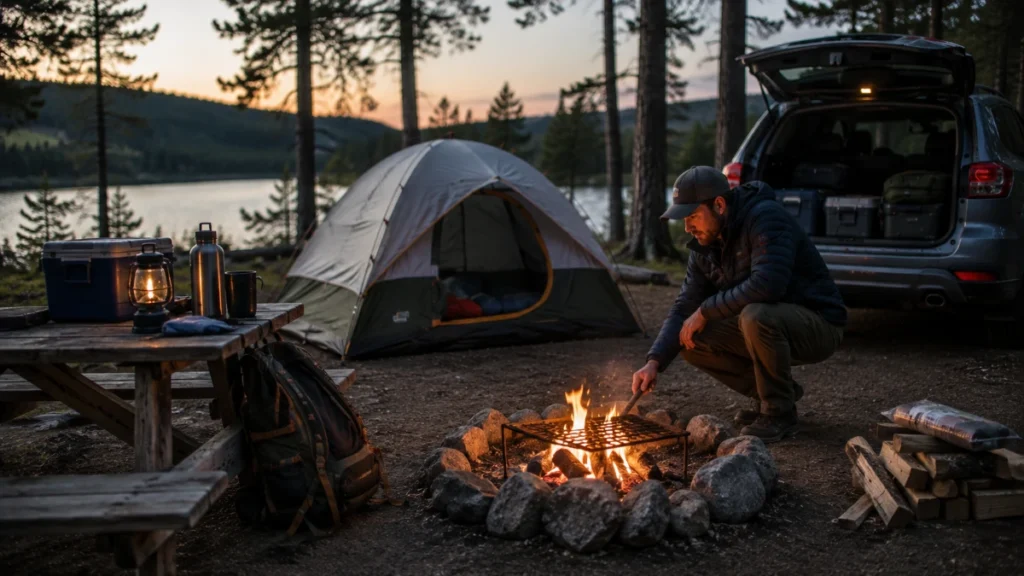
- Keep a safe distance between your fire and your tent or any flammable gear.
- Never leave a fire unattended, even briefly.
- Fully extinguish your fire before sleeping or leaving the site — a fire that looks out is not necessarily out; pour water on it, stir the ashes, and confirm there’s no remaining heat before walking away.
- Check for fire bans or restrictions before your trip. These are set by local authorities and campground management, vary significantly by location and season (especially during dry conditions), and need to be checked directly for your specific destination rather than assumed either way.
Food Storage and Wildlife at Campsites
Even at a developed, car-accessible campground, food storage matters — wildlife in or near popular camping areas can become habituated to human food, which creates risk for campers and is often genuinely harmful to the animals involved.
The general principles here are the same ones covered for backpacking: store food away from your sleeping area, keep it sealed rather than left out, and pack out all food waste. The difference at a campground is that many locations provide specific infrastructure for this — such as designated food storage lockers — and some areas have official requirements rather than just recommendations. Check what applies to your specific campground before your trip.
For the fuller reasoning behind these food safety principles, see the wildlife and food safety section of the backpacking safety guide — the same logic applies here.
Weather Awareness Overnight
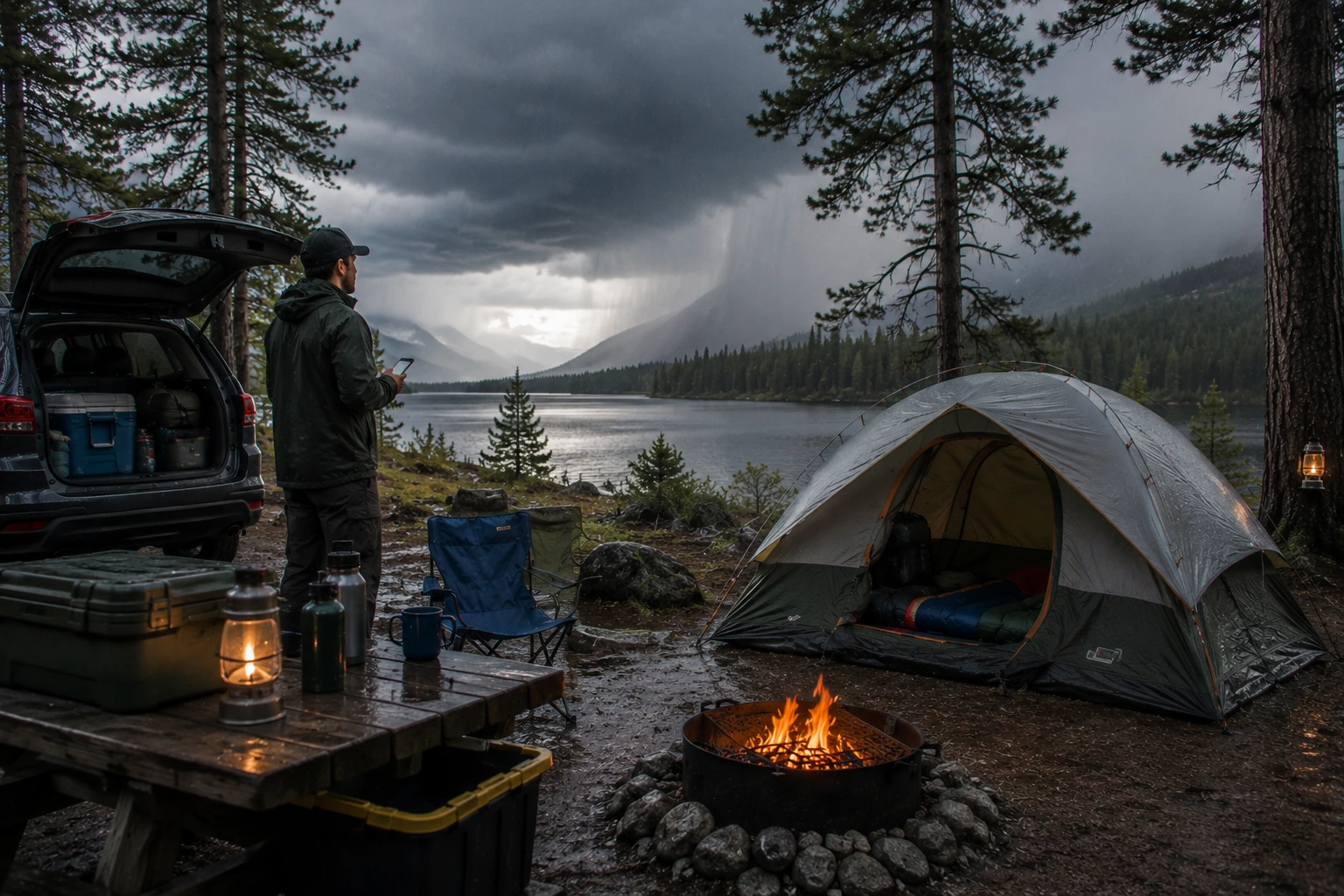
Check the forecast before you leave, the same way you would for any outdoor trip. What’s different about camping is what happens if weather turns after you’ve already arrived and set up — The difference is that once you’ve arrived and set up camp, changing weather may require you to decide whether to stay, secure your campsite, or pack up and leave rather than simply turning around on the trail.
Have a rough plan for what you’d do if conditions worsen: know where your car is relative to your tent, understand your tent’s weather limits, and don’t hesitate to pack up early if conditions become genuinely unsafe (significant storms, high winds) rather than uncomfortable.
Campsite Selection Safety
Even within a campground where your general site is already assigned or chosen, where exactly you pitch your tent within that site matters:
- Avoid low points in your site where water could pool during rain.
- Look up before you pitch — the same caution about dead or damaged trees overhead that applies to backcountry camping applies here too, if your site has trees nearby.
- Avoid areas with obvious signs of flooding, unstable ground, or falling debris.
- Keep a reasonable distance from fire rings and cooking areas when positioning your tent.
General Campground Safety
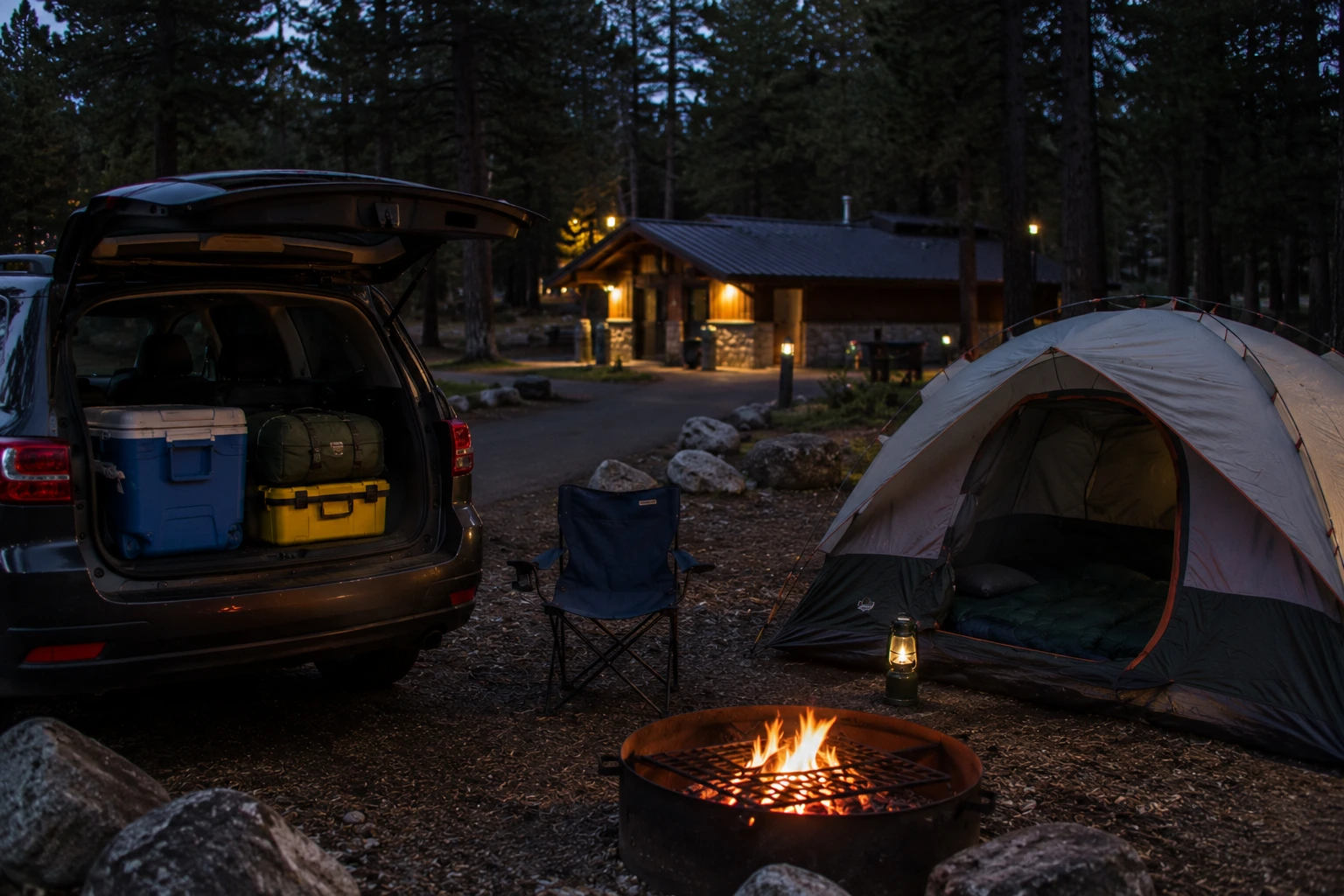
- Keep valuables secured, particularly overnight, the same way you would anywhere else you’re not constantly present.
- Familiarize yourself with restroom and facility locations before dark, so you’re not navigating an unfamiliar path at night.
- Keep a general awareness of your surroundings, as you would in any shared public space — most campgrounds are safe, routine environments, but basic situational awareness still applies.
Stove and Cooking Safety
- Keep stoves and grills a safe distance from your tent and any flammable materials, including dry grass or overhanging branches.
- Never operate a fuel-burning stove inside a tent, due to carbon monoxide risk — this applies even in bad weather when cooking outside feels less appealing.
- Keep a way to extinguish flames nearby (water or sand) whenever you’re cooking with an open flame.
Frequently Asked Questions
Do I need to worry about wildlife at a regular campground?
Some awareness is still worthwhile, even at developed campgrounds, since human food can attract animals to popular camping areas. Following basic food-storage principles and the specific guidance provided by your campground or local land manager can significantly reduce the risk of attracting wildlife — this isn’t a reason to avoid camping, just a reason to store food properly.
What should I do if the weather turns bad after I’ve already set up camp?
Assess conditions honestly — minor rain or wind is often just uncomfortable, while significant storms or dangerous conditions are a reason to pack up and head home early, or move to a safer location if your car is easily accessible. Knowing your tent’s weather limits and your exit route in advance makes this decision much easier in the moment.
Is it safe to have a campfire close to my tent?
No — keep a meaningful distance between your fire and your tent or any flammable gear, and always fully extinguish your fire before sleeping or leaving your site.
Can I use a camping stove inside my tent?
No. Fuel-burning stoves should not be used inside a tent or other enclosed sleeping space because they can create carbon monoxide and fire hazards. Cook outdoors in a suitable area and follow the stove manufacturer’s instructions and campground rules.
Simple Habits Make Camping Safer
Camping safety comes down to a manageable list: manage fire carefully, store food properly, watch the weather, and choose your tent spot thoughtfully. These habits don’t require advanced outdoor skills, but they do require attention before and during your trip.
OutdoorCompass
Explore More. Pack Smarter.