
OutdoorCompass.net – Kawah Ijen is one of the most unusual hikes in Indonesia. A pre-dawn climb brings you to a crater rim above a turquoise acid lake, and, when conditions allow, down to the crater floor to see the “blue fire” of burning sulfur gas. It’s a short, accessible hike compared with the multi-day treks elsewhere in this guide series, but it comes with serious practical details: an early start, toxic gas, and access that can close at short notice.
Current Access Status — Read This First
Access to Ijen Nature Park (TWA Kawah Ijen) can change due to forest fires, volcanic activity, sulfur gas conditions, severe weather, and safety decisions by the conservation authority (BBKSDA Jawa Timur). The park or specific areas may be temporarily closed when conditions pose a risk to visitors.
It is also important to understand that opening the park for hiking does not automatically mean that visitors can descend to the crater floor to see the blue fire. Access to the crater rim and access to the blue fire viewing area may be subject to different restrictions.
Before planning your visit, keep these points in mind:
- Check for park closures: Forest fires, hazardous gas conditions, severe weather, or emergency response activities may lead to temporary closures. Confirm the latest access information with BBKSDA Jawa Timur before traveling.
- Confirm blue fire access separately: Do not assume that the crater floor or blue fire viewing area is open just because the main hiking trail is accessible. Ask the park authority or your tour operator whether the descent is permitted on your planned visit date.
- Check current ticketing rules: Follow the latest reservation and payment procedures through the official Ayo ke Taman Nasional website . Visitor quotas, ticket prices, and booking requirements may change.
- Follow the park’s safety procedures: Visitors must comply with current standard operating procedures (SOP), including requirements for safety equipment, appropriate clothing, and restrictions on activities such as lighting campfires.
- Recheck conditions before departure: Access can change at short notice, particularly when there are wildfire risks, strong winds, or hazardous sulfur gas conditions.
Overview and Difficulty
- Elevation: about 2,368 m at the crater rim, according to Indonesia’s tourism board.
- Location: On the border of Banyuwangi and Bondowoso regencies, East Java. The usual trailhead is Paltuding.
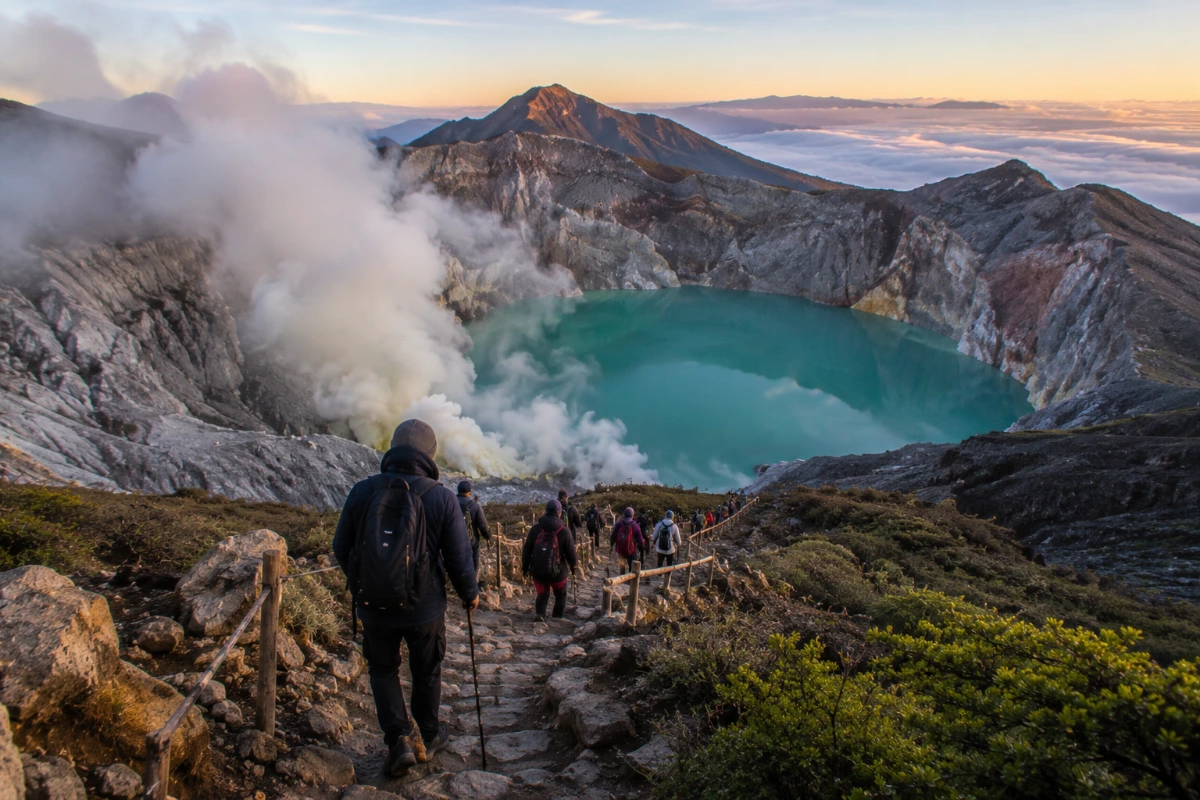
- Difficulty: Easy to moderate. The trail is about 3 km from Paltuding to the crater rim, with a steep early section. The tourism board estimates about 1–1.5 hours each way, while tour sites say 2 hours or more depending on fitness, so allow extra time.
- Temperature: Cold in the early hours, around 2–10°C according to the tourism board.
- Hazard: The crater releases sulfur gas, and the wind can blow it onto the path and the crater floor.
If you’re after a short, accessible hike in this series, Ijen is a good companion to Mount Bromo, and a gentler introduction than the trekking peaks. Mount Prau is the more traditional beginner hike.
What the Hike Looks Like
The schedule below is an illustrative itinerary based on common tour arrangements. Actual departure times, park entry hours, and access to the crater floor may change according to current park regulations and conditions.
Typical tour itineraries describe:
Arrive at Paltuding, where your ticket is checked.
Climb to the crater rim in the dark.
Descend a steep, rocky path into the crater to see the flames, which are only visible in the dark.
Watch the acid lake turn turquoise from the rim as the sky brightens.
Walk back to Paltuding by roughly 06:30–08:30.
Tickets and Practicalities

- Book online at the official Ayo ke Taman Nasional site. Don’t rely on buying at the gate.
- Fees differ for domestic and foreign visitors and weekdays and weekends, and have been updated before (a regulation from 2024 set tariffs). Check the current amount when you book.
- Tours: Many visitors join a tour from Banyuwangi that includes transport, entry, and a local guide. A guide is especially useful if you plan to enter the crater.
Best Season
The dry season usually brings clearer skies and drier trails, but 2026 shows the trade-off: dry conditions raise wildfire risk, and the park closed for more than three weeks in September.
The park can also close at short notice for gas or storms. Book flexible tours with free cancellation if you can.
What to Bring
The basics in What to Bring Hiking apply. For Ijen:
- A proper mask. The park’s SOP requires one. Sulfur gas near the crater is irritating and can be dangerous, so ask your operator which type they recommend or provide. Many Ijen guides suggest a respirator designed for acid gases, but check that with your operator rather than assuming a basic mask is enough.
- Warm layers and a windproof jacket. See the Hiking Clothing Layering Guide.
- A headlamp or flashlight, since the climb is in the dark.
- Sturdy shoes for loose rock and steep paths.
- Water, and nothing that could start a fire.
Safety Tips

- Move away from sulfur gas. If you notice strong gas exposure or experience eye, throat, or breathing irritation, leave the affected area immediately and follow your guide’s instructions. Do not continue toward the crater floor when gas conditions are unsafe. A mask does not make hazardous gas exposure safe.
- Check status before you go. The park closes at short notice for fire, gas, or storms, and your hotel or driver in Banyuwangi will usually know first.
- Be careful in the dark. The path to the crater floor is steep, rocky, and narrow, as covered in Hiking Safety Tips.
- Don’t light anything. Campfires are banned, especially after the September 2026 fire.
- Keep to the path and stay with your guide.
- Respect the sulfur miners, who work on the trail and crater floor and carry heavy loads.
Frequently Asked Questions
Is Kawah Ijen open right now?
According to the latest reports referenced in this guide, Kawah Ijen reopened on September 28, 2026, following a closure that began on September 4. However, the park can close at short notice due to changing conditions. Confirm the latest access information with the park authority before traveling.
Can I see the blue fire at Kawah Ijen?
It depends on weather conditions and current access restrictions. The blue fire is visible only in darkness, and visibility depends on wind and volcanic gas conditions. Access to the viewing point has also been closed at times, including for sulfur pipe renovation beginning in November 2025. The current status of access to the crater floor could not be confirmed, so ask your tour operator before booking.
Do I need to book Kawah Ijen tickets in advance?
Yes. Tickets are sold online rather than at the entrance gate. Arrange your booking through the official ticketing system before your visit and check the latest entry requirements.
How hard is the Kawah Ijen hike?
The hike is relatively short and does not require technical climbing skills, but the early start, steep sections, and cold conditions can make it tougher than it looks. The descent toward the crater floor is the hardest and riskiest part. Check current access restrictions and follow local safety guidance before attempting the descent.
An Easy Hike That Still Needs Respect
Ijen is one of the most accessible volcano hikes in Indonesia, and also one of the most unusual. Book flexibly, bring a proper mask, and confirm what’s open on your date, especially if the blue fire is the main reason you’re going.
OutdoorCompass.net
Explore More. Pack Smarter.