
OutdoorCompass.net – Indonesia is part of the Pacific Ring of Fire, a region known for its significant volcanic activity and dramatic mountain landscapes. This geological setting gives the country an extraordinary variety of hiking destinations, from crater lakes and rolling savanna ridgelines to volcanic landscapes, sunrise viewpoints, and the remarkable Blue Fire phenomenon. This guide explores seven of Indonesia’s most popular mountain destinations, highlighting what makes each one unique and helping you choose a hike that matches your experience, fitness level, and travel plans.
Before You Plan Your Hike: Access to Indonesia’s mountains and volcanoes can change due to volcanic activity, wildfire risk, severe weather, conservation measures, and local or religious ceremonies. Some routes may be temporarily closed, restricted, or subject to specific entry requirements. Conditions and regulations can also differ between routes on the same mountain. Always check the latest announcements from the relevant national park authority or local authorities before traveling, and confirm permit, guide, and booking requirements with authorized operators where applicable.
Quick Comparison
| Mountain | Island | Elevation | Difficulty | Typical Time | Best For | Hiking Experience |
|---|---|---|---|---|---|---|
| Rinjani | Lombok | 3,726 m | Hard | 2–4 days | Experienced trekkers | Multi-day trekking, crater lake views, and a challenging summit ascent |
| Bromo | Java (East) | ~2,329–2,392 m (sources differ) | Easy (viewpoint) | Half day | Sunrise views and non-technical adventures | Sunrise viewpoints, a walk across the Sea of Sand, and a visit to the crater rim |
| Semeru | Java (East) | 3,676 m | Hard | 2–3 days | Experienced high-altitude trekkers | A demanding multi-day mountain trek with high-altitude terrain and volcanic surroundings |
| Prau | Java (Central) | 2,590 m | Easy–Moderate | 2–4 hours | Beginner hikers | A relatively short ascent with sunrise views and open mountain scenery |
| Kerinci | Sumatra | 3,805 m | Hard | 2–3 days | Experienced trekkers | A remote, demanding volcanic trek through forested mountain terrain |
| Agung | Bali | 3,142 m | Moderate–Hard | 1 day (return) | Experienced hikers and sunrise summit seekers | A steep volcanic ascent with significant cultural and spiritual importance |
| Ijen | Java (East) | 2,368 m | Easy–Moderate | 3–4 hours round trip | Crater scenery and the Blue Fire phenomenon | An early-morning crater hike with views of a turquoise acidic lake and, when conditions and access allow, the Blue Fire |
Note: Elevations, difficulty ratings, and hiking times are approximate and may vary depending on the route, trailhead, weather, and individual fitness. Times are general planning estimates, not guaranteed schedules. Ijen’s Blue Fire viewing requires access to the crater floor and is not guaranteed.
Before You Go: Trail access, permits, guide requirements, and safety restrictions can change due to volcanic activity, weather, wildfires, conservation measures, or religious ceremonies. Always check the latest announcements from the relevant national park authority, local authorities, or authorized operators before planning your hike.
Mount Rinjani (Lombok) — For Experienced Trekkers

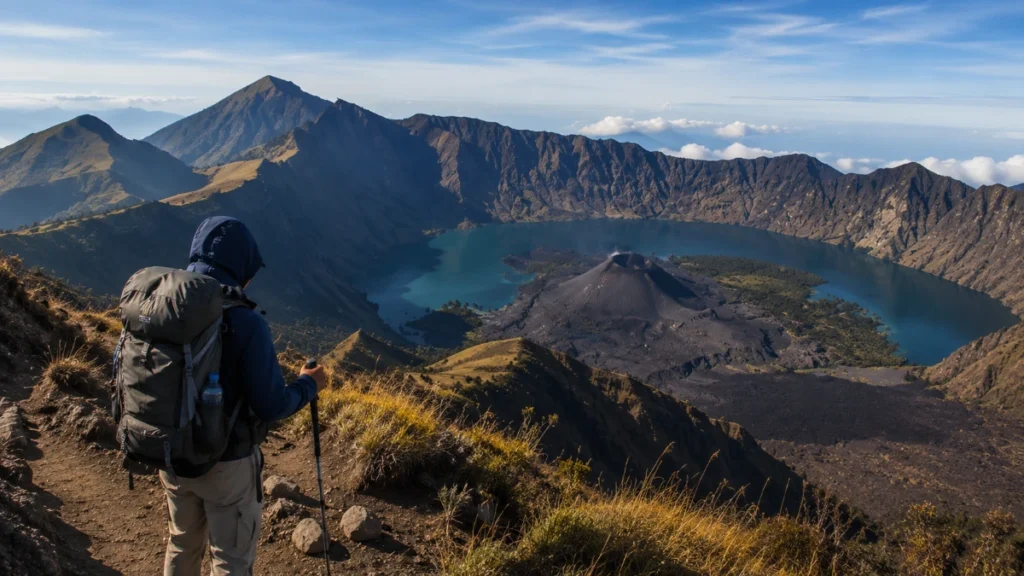
Mount Rinjani is one of Indonesia’s most iconic trekking destinations, known for its dramatic volcanic landscape, turquoise Segara Anak crater lake, natural hot springs, and challenging summit ascent. Located on Lombok Island, this 3,726-meter volcano offers a demanding multi-day trekking experience that combines steep climbs, exposed ridgelines, and spectacular mountain scenery.
Rinjani is best suited to hikers with good physical fitness and previous multi-day trekking experience. The length and difficulty of the journey require careful preparation, appropriate equipment, and enough time to recover along the route. Depending on the itinerary, trekkers may explore the crater rim, descend toward Segara Anak, or attempt the summit.
Before your trip, check the latest permit procedures, trekking regulations, guide requirements, and route availability through the official national park channels. These requirements can vary depending on the route and current regulations.
Rinjani is not an ideal first mountain for most beginners, but it can be a rewarding goal for trekkers who are ready for a more demanding adventure.
Full guide: Mount Rinjani Hiking Guide
Mount Bromo (East Java) — For Sunrise Views Without Technical Climbing
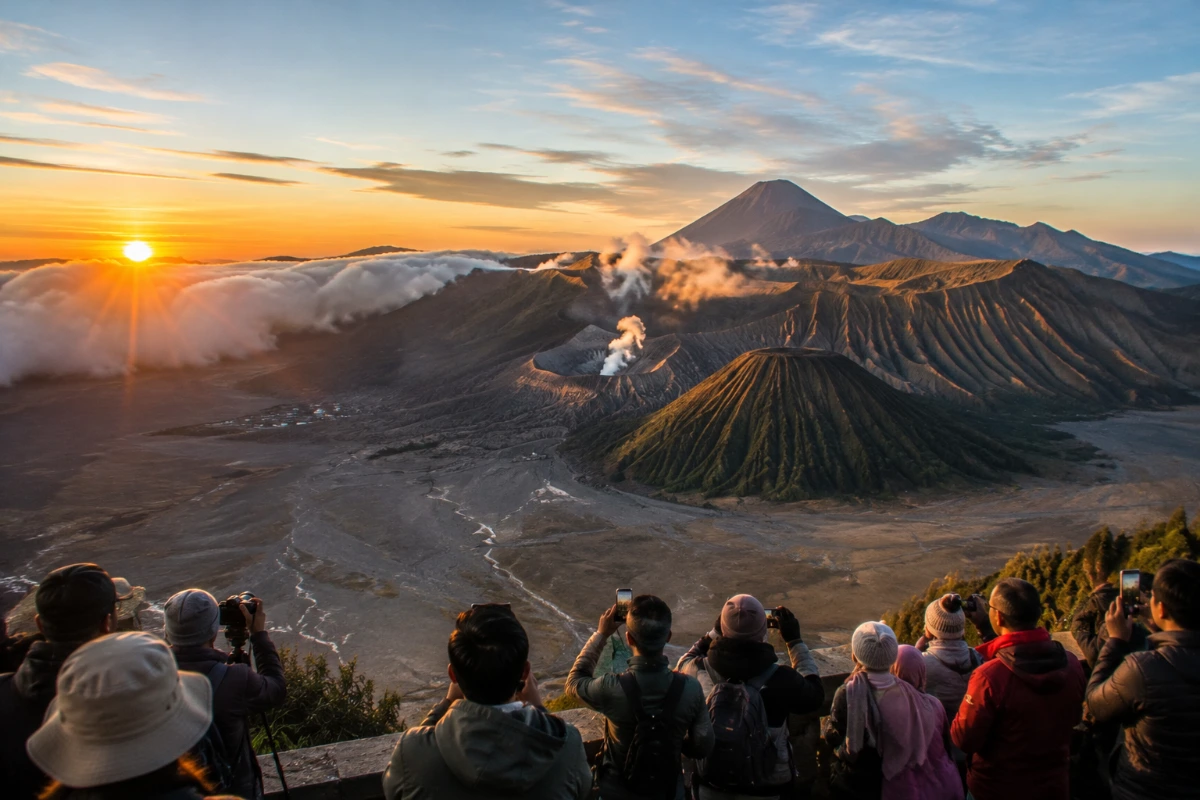
Mount Bromo offers a very different experience from Indonesia’s demanding summit treks. Rather than a traditional mountain climb, a visit to Bromo usually combines scenic viewpoints, a journey across the Sea of Sand, and a walk up the stairs to the crater rim.
One of its most famous experiences is watching sunrise from a viewpoint around Mount Penanjakan, where visitors can enjoy wide views of Bromo’s volcanic landscape and, when visibility allows, Mount Semeru in the distance.
The journey across the Sea of Sand and the climb to the crater rim are generally accessible to visitors without technical mountaineering experience. However, sandy terrain, volcanic dust, uneven surfaces, and stairways still require suitable footwear and basic preparation.
Bromo is a good choice for travelers who want to experience Indonesia’s volcanic scenery without committing to a demanding multi-day trek.
Full guide: Mount Bromo Guide
Mount Semeru (East Java) — For Experienced High-Altitude Trekkers
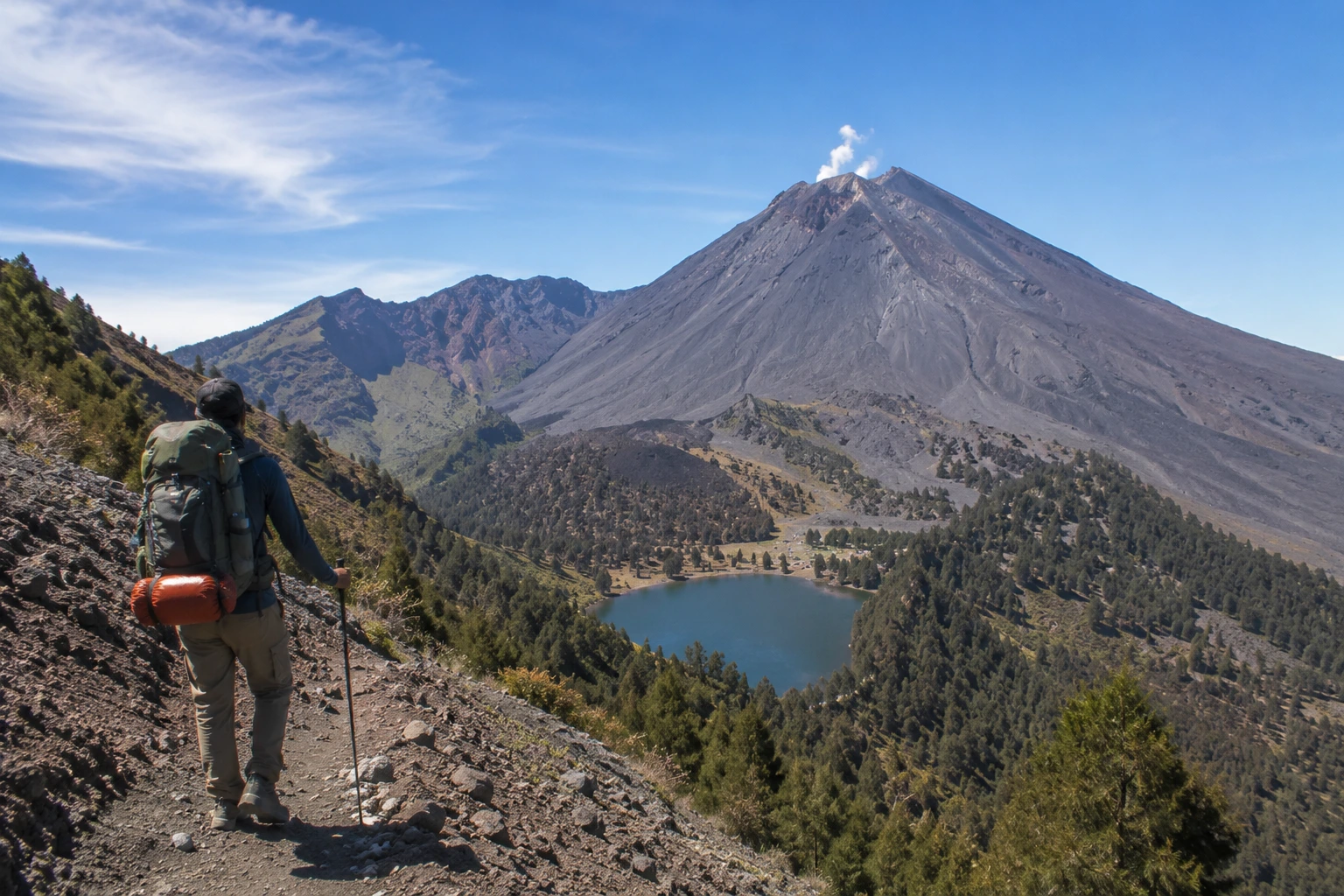
Mount Semeru, also known as Mahameru, is the highest mountain on Java, reaching approximately 3,676 meters above sea level. Its dramatic volcanic landscape, mountain forests, and high-altitude scenery make it one of Indonesia’s best-known trekking destinations.
Under permitted conditions, the Semeru trekking experience can include forest trails, open mountain terrain, and the scenic Ranu Kumbolo lake. The journey requires considerable physical preparation, particularly for hikers planning a multi-day itinerary at altitude.
Semeru is not a suitable choice for inexperienced hikers. Its terrain, elevation, weather exposure, and volcanic activity require careful attention to safety instructions and access restrictions.
Important: Access to Semeru’s trekking routes and summit areas is subject to volcanic activity, conservation regulations, weather, and decisions by the national park authority. Summit access may be restricted independently of access to other parts of the mountain. Always check the latest official announcements before planning a visit, and never enter a closed or restricted area.
Full guide: Mount Semeru Guide
Mount Prau (Central Java) — A Beginner-Friendly Mountain Hike
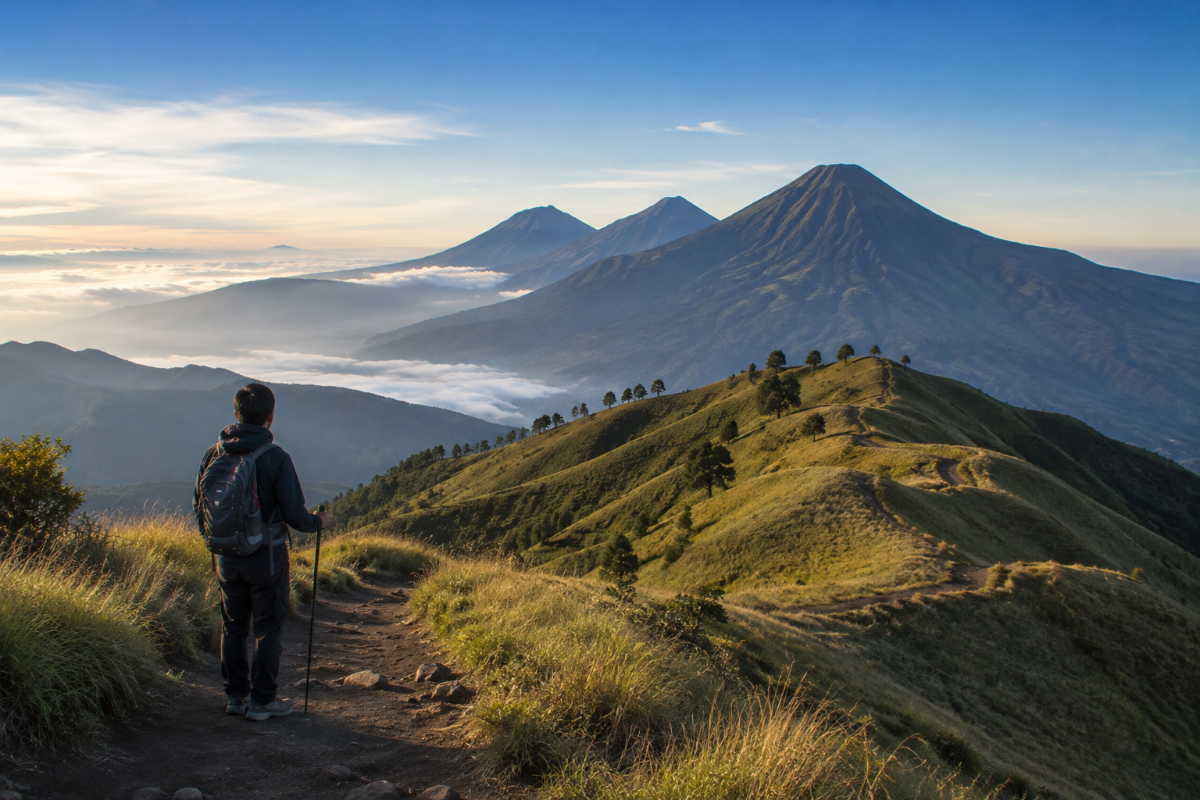
Mount Prau is a popular choice for hikers looking for a relatively short mountain trek with rewarding views. Located in the Dieng Plateau area of Central Java, it is known for its sunrise scenery, rolling grasslands, and panoramic views of surrounding volcanoes.
Many of its commonly used routes can be completed in a few hours, making Prau more approachable than Indonesia’s demanding multi-day mountains. The summit area also features open landscapes and grass-covered hills often nicknamed “Teletubbies Hill.”
Although Prau is considered beginner-friendly, it is still a mountain hike. Steep sections, changing temperatures, wind, and slippery trails during rainy conditions can make the experience more challenging than expected.
For first-time hikers, Prau can be a practical introduction to mountain trekking, provided they choose a suitable route, prepare adequately, and hike at a comfortable pace.
Full guide: Mount Prau Guide
Mount Kerinci (Sumatra) — For Challenging Volcanic Trekking

Mount Kerinci is the highest mountain in Sumatra, rising approximately 3,805 meters above sea level. Located within Kerinci Seblat National Park, it is surrounded by one of Indonesia’s most important areas of tropical forest and biodiversity.
The trek is a demanding multi-day undertaking through forested terrain, steep sections, and increasingly exposed mountain environments. Its remote location and challenging ascent make it better suited to hikers with previous trekking experience and good physical conditioning.
Kerinci offers a different experience from more accessible mountains such as Prau or Bromo. The combination of altitude, forest trails, variable weather, and a physically demanding ascent requires careful planning and suitable equipment.
Before traveling, check the national park’s latest requirements for permits, reservations, guide arrangements, and route access. Follow all conservation rules, including restrictions on lighting fires and activities that could damage the surrounding ecosystem.
Full guide: Mount Kerinci Guide
Mount Agung (Bali) — A Sacred Volcano with Challenging Routes

Mount Agung is Bali’s highest mountain, reaching approximately 3,142 meters above sea level. It is also one of the island’s most spiritually significant natural landmarks, closely connected to Balinese Hindu traditions and the Besakih temple complex.
The mountain offers different trekking experiences depending on the chosen route. The Pura Pasar Agung route generally leads toward the southern crater rim, while the longer route from the Besakih area is commonly associated with attempts to reach the true summit.
Both routes involve significant elevation gain and can be physically demanding. The summit-oriented trek is particularly challenging, often requiring an early start, good fitness, and preparation for steep and exposed terrain.
Agung’s cultural significance is an important part of the experience. Religious ceremonies and local customs can affect access to the mountain, and visitors should approach the area with respect for its sacred sites and traditions.
Mount Agung is best suited to hikers with suitable preparation and, where required, an experienced local guide. Before planning a climb, confirm route availability, guide arrangements, and any ceremony-related restrictions with the relevant local authorities or trusted operators.
Full guide: Mount Agung Guide
Ijen Crater (East Java) — Famous for Its Blue Fire Phenomenon
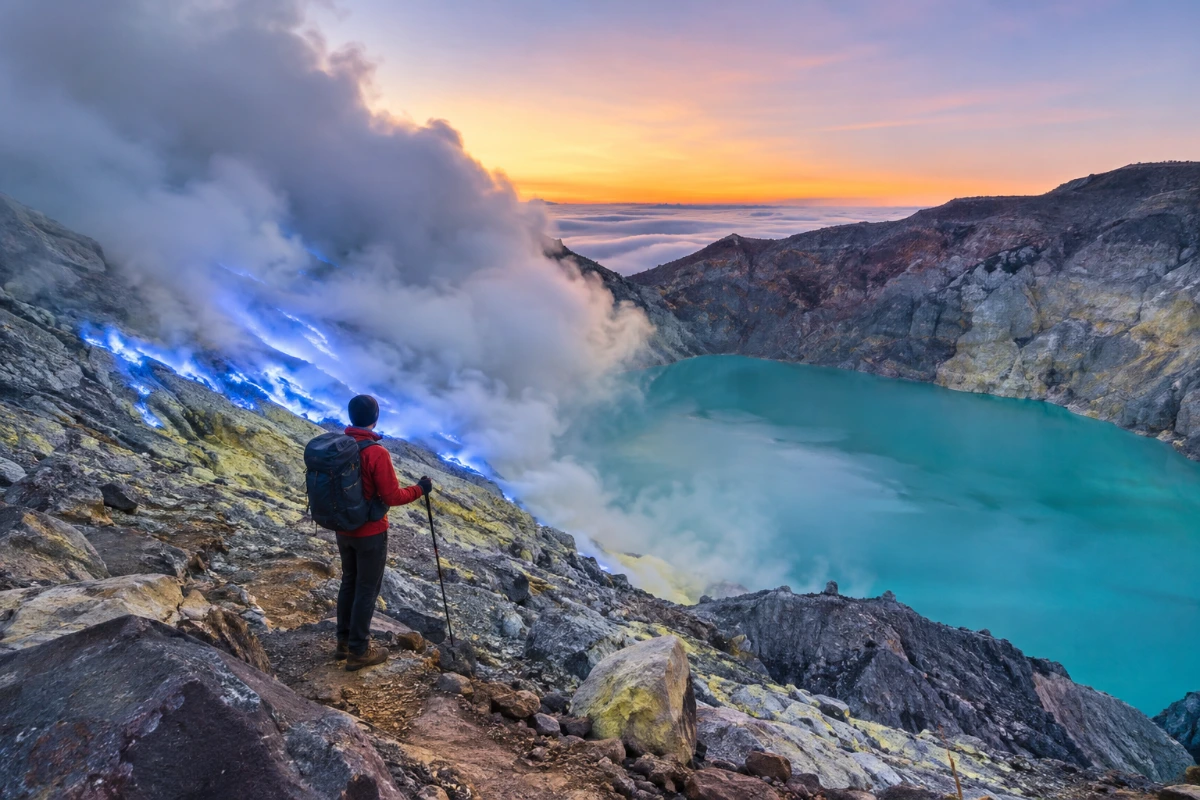
Ijen is a volcanic crater trek rather than a conventional mountain summit hike. Located in East Java, it is famous for its turquoise acidic crater lake and the rare Blue Fire phenomenon, which occurs when volcanic sulfur gases ignite as they emerge from cracks in the crater area.
The usual hiking route starts at Paltuding and climbs toward the crater rim. The ascent is relatively short compared with multi-day mountain treks, but the steady uphill trail and early-morning start still require reasonable fitness and preparation.
The Blue Fire can only be observed in darkness, and visibility depends on environmental conditions. Reaching the crater rim does not automatically mean that visitors are permitted to descend toward the crater floor or Blue Fire viewing area. Access to these areas can be subject to separate safety restrictions.
Ijen is a memorable destination for travelers interested in volcanic landscapes and unusual natural phenomena, but safety and current access conditions should always take priority over reaching the Blue Fire viewing area.
Safety warning: Sulfur gas is a serious hazard around the crater. Visitors should follow the park’s safety procedures, stay within permitted areas, and leave hazardous locations when instructed. Appropriate protective equipment does not eliminate the risks of gas exposure.
Full guide: Ijen Crater Guide
How to Choose the Right Mountain for You
The best mountain to climb in Indonesia depends on your experience, physical fitness, available time, and the kind of outdoor experience you want.
- For your first mountain hike: Mount Prau offers a relatively short ascent and rewarding sunrise views, making it a practical starting point for beginners.
- For scenic volcanic landscapes without a demanding summit trek: Mount Bromo combines sunrise viewpoints, the Sea of Sand, and a walk to the crater rim.
- For a unique volcanic experience: Ijen offers a crater hike, turquoise lake views, and the possibility of seeing the Blue Fire when conditions and access allow.
- For a challenging multi-day trek: Rinjani and Kerinci are better suited to hikers with previous trekking experience and good physical conditioning.
- For a demanding day hike with cultural significance: Mount Agung offers challenging routes and a close connection to Bali’s religious traditions.
- For a high-altitude volcanic trekking experience: Semeru is a demanding destination that requires careful preparation and strict attention to official access and safety restrictions.
Whichever mountain you choose, match the route to your actual experience rather than simply choosing the highest or most famous peak.
General Safety Reminders
Indonesia’s mountains offer diverse landscapes and rewarding hiking experiences, but volcanic terrain and tropical weather can create additional risks. Keep these basic precautions in mind:
- Check access conditions before traveling. Volcanic activity, wildfires, severe weather, conservation measures, and religious ceremonies can affect trail availability. Confirm the latest information with the relevant national park authority or local authorities.
- Understand permit and guide requirements. Booking procedures, permits, group rules, and guide requirements vary between destinations and may change. Check the applicable regulations before your trip.
- Prepare for the mountain’s actual conditions. Consider elevation, trail length, steepness, temperature, rainfall, wind, and the availability of water and facilities when selecting equipment.
- Take volcanic hazards seriously. Active volcanoes may produce hazardous gases, ash, eruptions, and other dangerous conditions. Follow official warnings and never enter restricted areas.
- Choose a route that matches your experience. A short hiking distance does not necessarily mean an easy trail. Consider elevation gain, terrain, exposure, and the total time required.
- Respect local communities and natural environments. Follow local customs, stay on designated trails, carry out your waste, and avoid lighting fires or disturbing wildlife.
Good preparation and responsible decisions are essential parts of every successful mountain adventure.
Frequently Asked Questions
Which mountain is best for beginner hikers in Indonesia?
Mount Prau is one of the most approachable choices for beginner hikers. Its relatively short routes and rewarding sunrise views make it a practical introduction to mountain trekking. Beginners should still prepare for uphill sections, changing weather, and basic mountain safety.
Do I need a guide to climb mountains in Indonesia?
Guide requirements vary by destination, route, and current regulations. Some mountains have specific guide or trekking arrangements, while others may offer different options. Even where a guide is not mandatory, an experienced local guide can help with navigation, local conditions, and safety. Always confirm the latest rules with the relevant mountain authority or official operator.
Which Indonesian mountain is the most challenging to climb?
Rinjani, Semeru, and Kerinci are among the more demanding trekking destinations in this guide. Their multi-day itineraries, elevation, steep terrain, and changing mountain conditions require good physical fitness and previous trekking experience. The actual difficulty depends on the route, weather, and the hiker’s preparation.
Are Indonesia’s mountains open for hiking throughout the year?
No. Access can vary depending on volcanic activity, weather, wildfires, conservation requirements, and local or religious events. Some destinations also have seasonal trekking schedules or periodic maintenance closures. Check official access announcements before making travel arrangements.
Can I see the Blue Fire at Ijen?
The Blue Fire is a natural phenomenon that can be visible in darkness when sulfur gases ignite under suitable conditions. However, visibility is not guaranteed, and access to the crater floor may be restricted even when the main hiking trail is open. Confirm current access and safety instructions before planning your visit around the phenomenon.
Start With the Mountain That Matches Your Experience
Indonesia’s mountains offer a wide range of outdoor experiences, from short sunrise hikes to demanding multi-day volcanic treks. Each destination has its own landscapes, challenges, and cultural significance.
Use this guide to identify the mountain that best matches your fitness, experience, and travel goals. Then explore the individual destination guides for more detailed information about routes, preparation, permits, and essential hiking gear.
Most importantly, remember that a rewarding mountain experience begins with responsible planning, respect for local regulations, and a willingness to put safety first.
OutdoorCompass
Explore More. Pack Smarter.