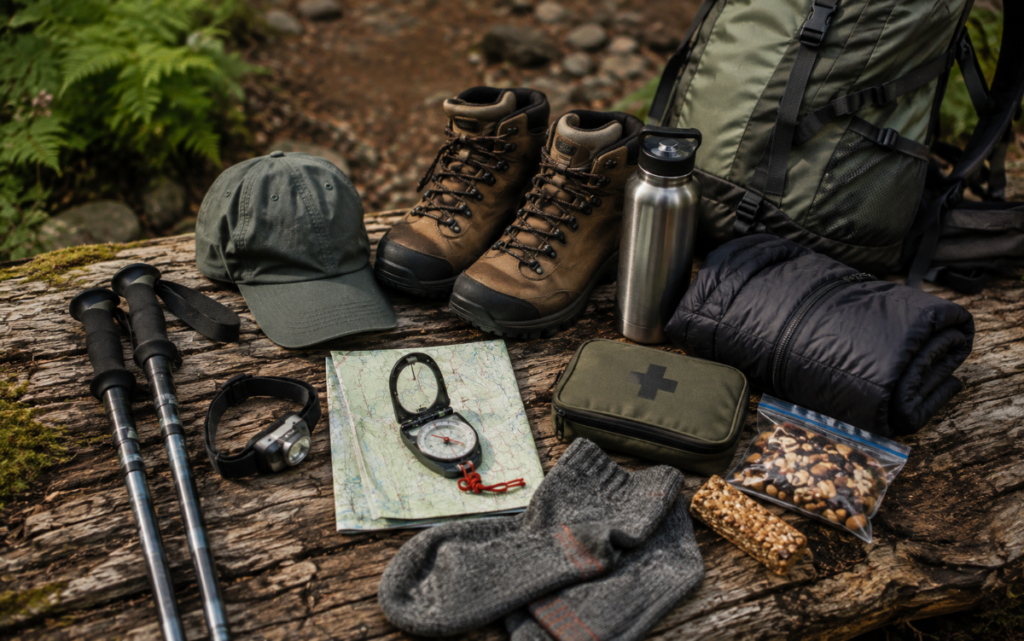
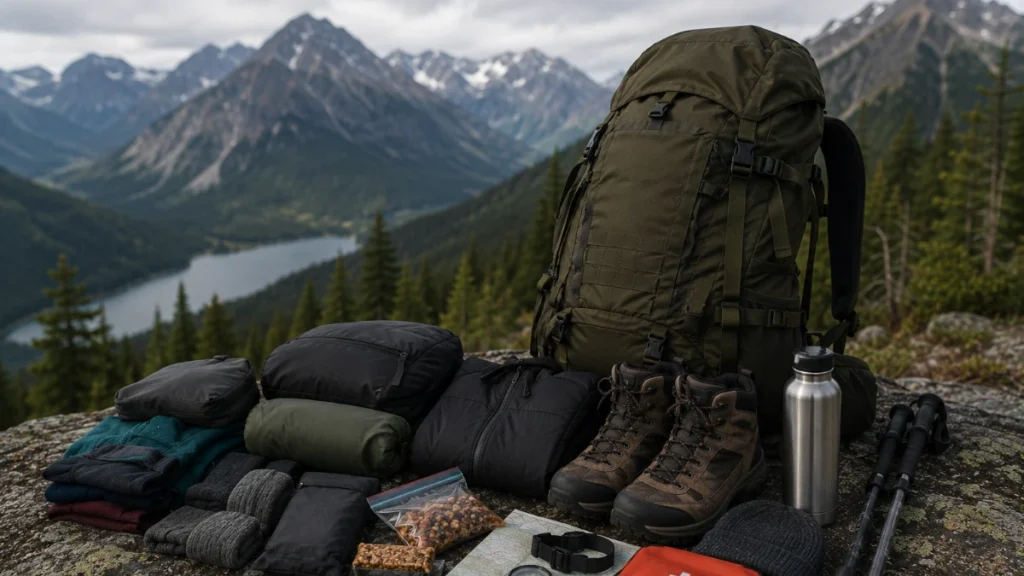
OutdoorCompass.net – Packing for a hike isn’t like packing for a trip — the goal isn’t to bring everything you might want, it’s to bring exactly what keeps you safe, hydrated, and comfortable without weighing you down. This guide breaks down what to bring by category, and just as importantly, why each item matters.
If you’re looking for a quick list to run through right before you leave, the First Hike Checklist is built for that. This guide goes deeper into the reasoning, so you can make good decisions as conditions or trail length change.
Everything you need falls into six categories:
- Footwear & clothing
- Hydration & food
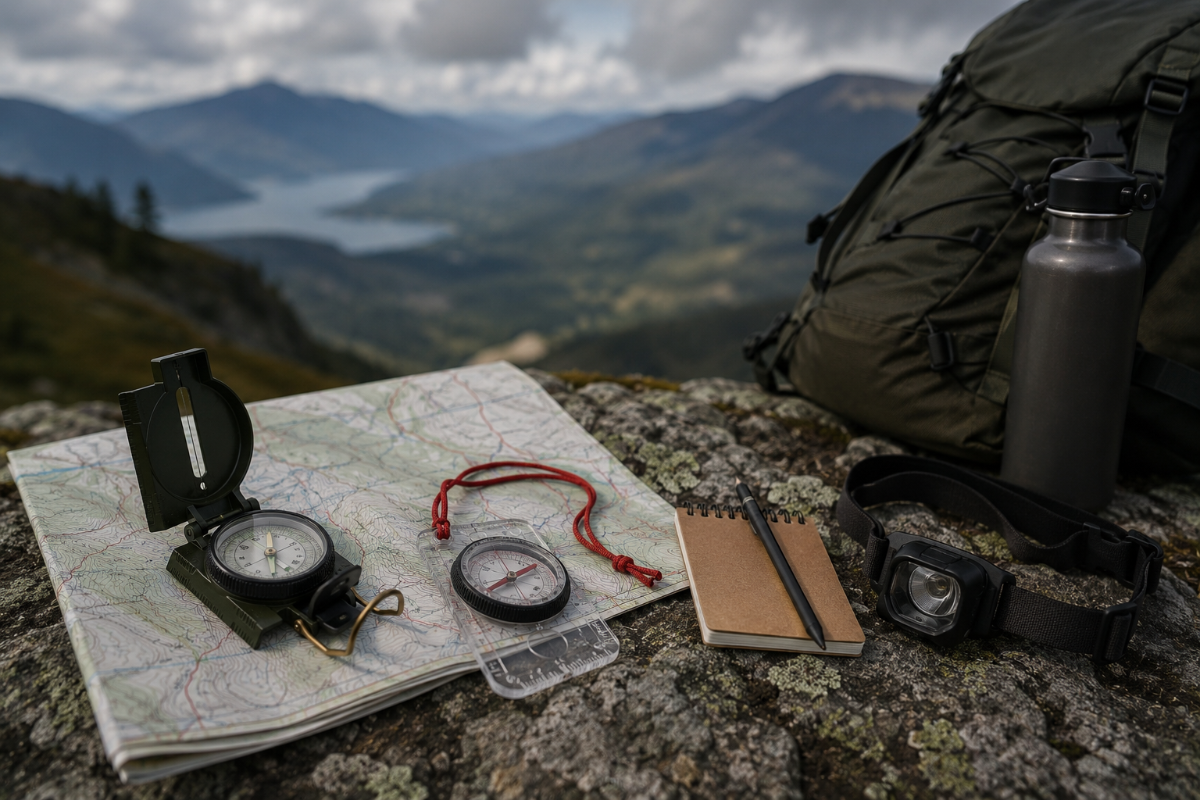
- Navigation
- Safety & first aid
- Sun and weather protection
- Situational extras (trail- or season-dependent)
Footwear & Clothing
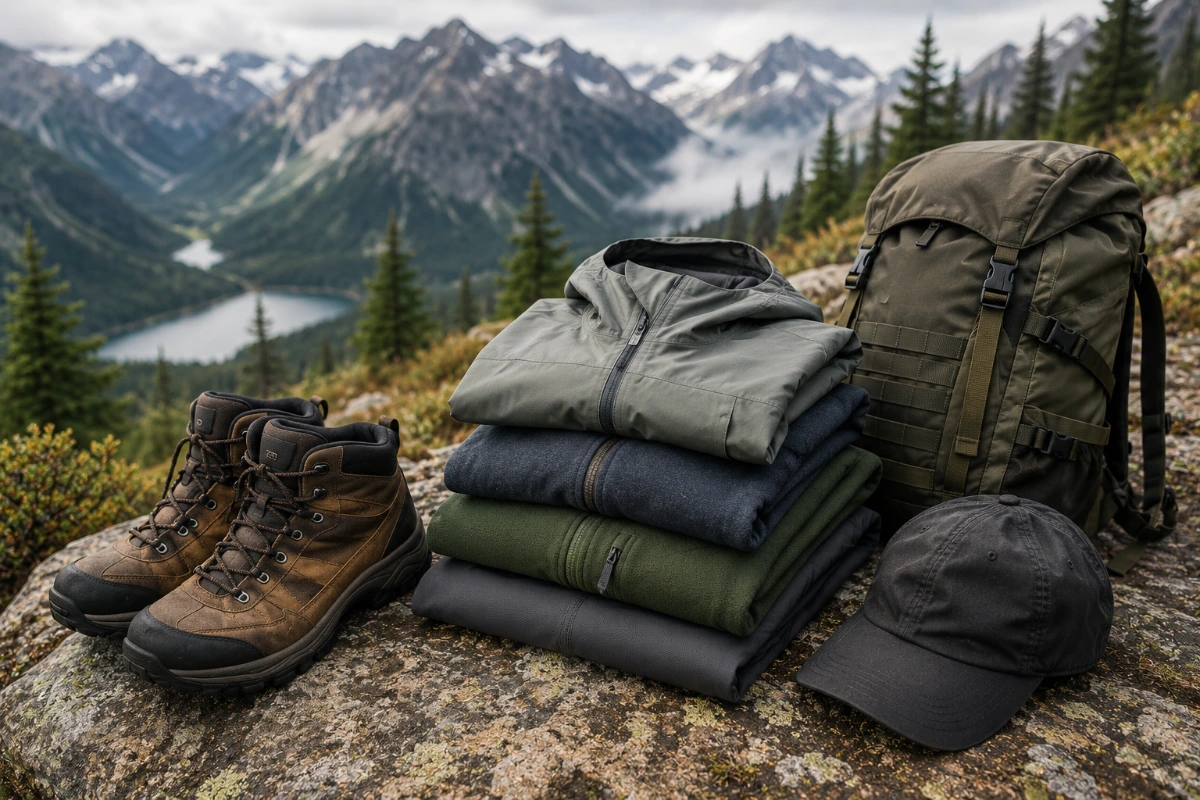
Footwear should match the terrain, not just personal preference. On flat, dry, well-maintained trails, athletic shoes can work fine. Once terrain gets uneven, rocky, or wet, proper hiking shoes or boots make a real difference — better grip, more support, and less risk of a rolled ankle.
Clothing works best in layers rather than one heavy item. A typical layering setup looks like:
- A moisture-wicking base layer (avoid cotton — it holds moisture and stays cold when wet)
- A light insulating layer (fleece or similar) for cooler moments
- A wind or rain layer, packed even if the forecast looks clear
Weather on trails, especially at elevation, can shift faster than forecasts suggest. Layers let you adapt without having to turn back.
Hydration & Food
Water is the one item you don’t want to underestimate. A reasonable baseline is about 0.5 liters per hour of moderate hiking, more in hot weather or on strenuous terrain. For a 3-hour hike, that’s roughly 1.5 liters as a starting point — adjust up if it’s hot or you sweat heavily.
Food doesn’t need to be complicated. For shorter hikes (under 3–4 hours), simple snacks with quick energy — fruit, nuts, granola bars — are usually enough. For longer hikes, bring something more substantial, like a sandwich, and pack a bit more than you think you’ll eat. Being hungrier than expected on the trail is far more common than the reverse.
Safety & First Aid
A basic hiking first aid kit is smaller and more specific than a general household one. At minimum, it’s worth carrying:
- Blister plasters (one of the most common trail issues)
- A few adhesive bandages
- Any personal medication you take regularly
- A small amount of pain relief medication, if you normally use it
Sun and Weather Protection
Sunscreen, sunglasses, and a hat matter even on overcast days — UV exposure doesn’t disappear with cloud cover, and it’s often stronger at elevation. This is one of the more commonly skipped items among beginners, and one of the easier ones to regret.
Situational Extras
These aren’t universal must-haves, but they matter depending on conditions:
- Trekking poles — helpful on steep or uneven terrain, or if you have joint concerns.
- A headlamp or small flashlight — worth carrying if there’s any chance you’ll still be on trail near sunset, even if you don’t plan to be.
- Insect repellent — relevant in wooded or humid areas, less so on exposed alpine trails.
- An extra insulating layer — worth adding for higher-elevation hikes, where temperatures drop faster than at the trailhead.
The rule of thumb: add these based on your specific trail and season, not by default.
What Not to Overpack
It’s easy to overcorrect and bring too much, which adds unnecessary weight for a short hike. A few common overpacking habits:
- Carrying a full-size first aid kit for a 2-hour hike
- Bringing multiple changes of clothing for a day hike
- Packing food for a full day when you’re only out for a few hours
- Bringing camping gear “just in case” on a route with no overnight component
More gear isn’t automatically safer — it’s extra weight that can make a hike less enjoyable without adding real benefit.
Frequently Asked Questions
Do I need a specialized backpack for a short day hike?
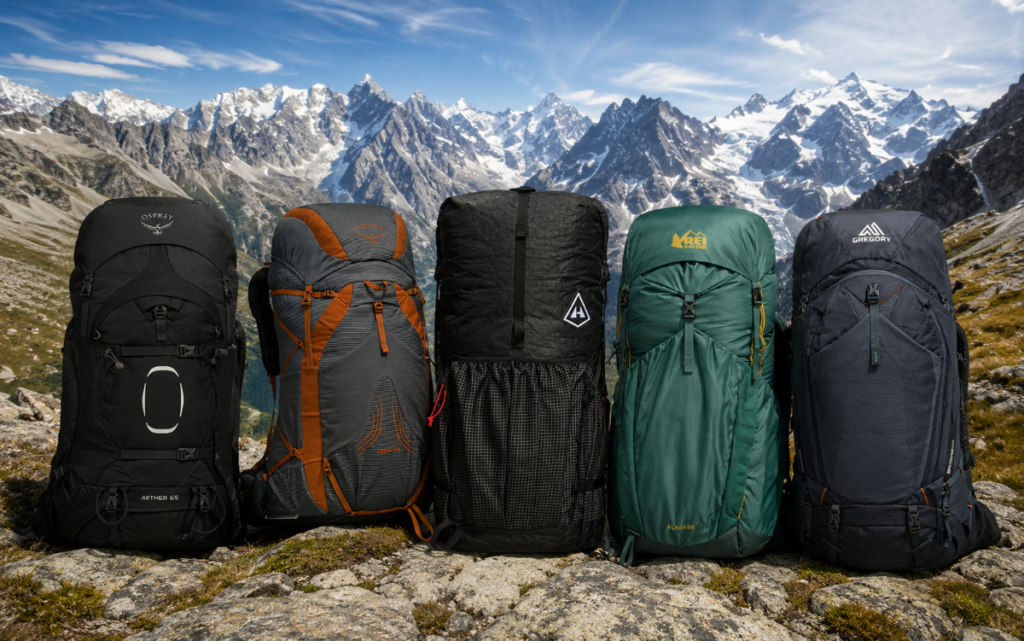
Not necessarily. A simple daypack is enough for most short hikes. Backpack choice matters more as hike length and gear needs increase — that’s covered in more detail in the hiking backpack guide.
Can I wear cotton clothing for hiking?
It’s best avoided for anything beyond a short, easy, dry-weather hike. Cotton absorbs moisture and stays wet, which can leave you cold once you sweat or if weather turns — synthetic or wool fabrics perform better in most conditions.
How much food is reasonable for a 3–4 hour hike?
Enough for one to two snack breaks plus a bit extra — think a couple of energy-dense snacks and, if it’s closer to 4 hours, something more substantial like a sandwich.
Recommended Beginner Gear
You don’t need a huge collection of equipment for a first hike. Start with a few practical essentials that match your trail, weather, and hike length.
Hiking Shoes
Choose footwear with a comfortable fit and traction appropriate for your terrain.
Check hiking shoes on Amazon →Daypack
A simple daypack is usually enough for short hikes, while longer outings may require more capacity and support.
See hiking daypacks on Amazon →Water Bottle
Bring enough water for the conditions and duration of your hike.
Explore hiking water bottles on Amazon →Compact First Aid Kit
A small kit can keep basic supplies organized without adding unnecessary bulk.
See compact hiking first aid kits on Amazon →Headlamp
Useful insurance if your hike takes longer than expected or you return near sunset.
Explore hiking headlamps on Amazon →Trekking Poles
Worth considering for steep, uneven, or longer trails where additional stability can be useful.
Explore trekking poles on Amazon →