
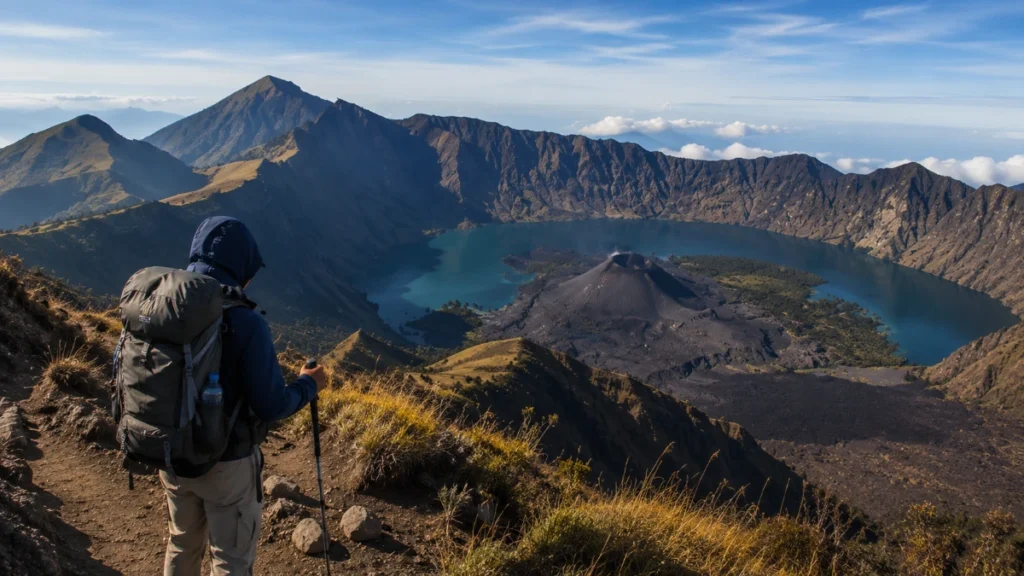
OutdoorCompass.net – Mount Rinjani is Indonesia’s second-highest volcano and one of the country’s most demanding and rewarding multi-day treks. The trek takes you past a turquoise crater lake, hot springs, and a steep summit push, and many hikers rank it among the best treks in Southeast Asia. It is also a mountain where access rules change often, so this guide puts the current status first.
⚠️ Current Access Status — Read This First
The most recent reports found while researching this guide (latest dated early October 2026) describe the following timeline:
- 1 September 2026: Rinjani National Park (BTNGR) moved to a limited opening to reduce wildfire risk in the dry season. Online booking through the official eRinjani app was suspended, while bookings made and paid before that date continued to be honored. Open fires were banned, and patrols and baggage checks for ignition sources were tightened.
- 22 September 2026: A forest fire broke out at Bukit Setampol (Torean resort), later estimated at roughly 1,098 hectares. The Torean and Senaru routes were closed, and hikers still on the mountain were redirected to descend via Sembalun.
- 1 October 2026: The fire was reported fully extinguished.
- 3 October 2026: The Senaru route reopened, and eRinjani online booking became available again from 06:00 WITA. Park authorities listed five routes as operating again: Sembalun, Senaru, Timbanuh, Tetebatu, and Aik Berik.
Torean route update: The Torean route remained closed in reports published on October 3, 2026, because post-fire trail conditions still required further safety work. Senaru reopened on October 3 after an assessment by park authorities and relevant stakeholders. Check the official eRinjani website and official BTNGR announcements before booking, as route access can change.
Overview and Difficulty
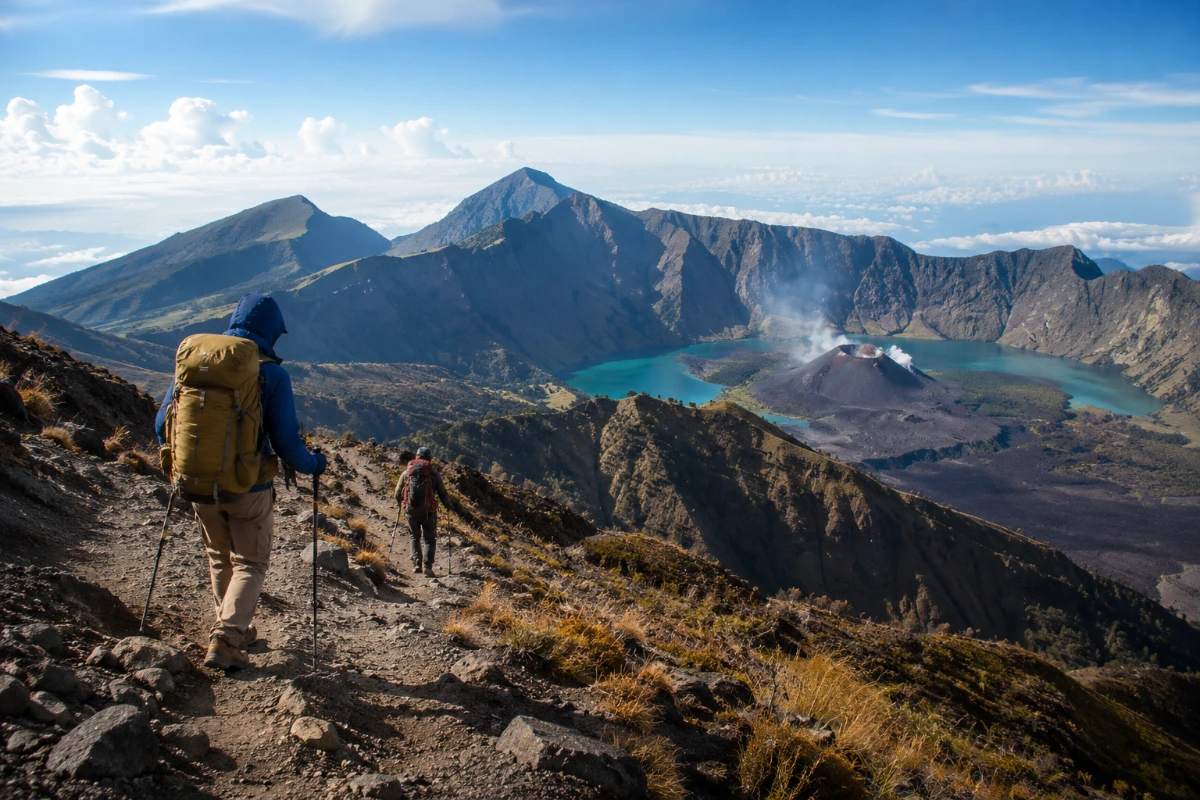
- Elevation: approximately 3,726 m
- Difficulty: Hard. This is a multi-day trek with serious elevation gain and a steep final summit ascent on loose volcanic ground, as typically described by trek operators.
- Typical duration: about 2–4 days depending on the route and itinerary. Operators commonly offer 2-day crater-rim trips and 3–4 day summit treks.
- Volcanic status: Rinjani has been at Alert Level II (Waspada) since 2015. Authorities recommend staying at least 1.5 km from the center of the active crater (currently Barujari cone).
This isn’t a first-mountain choice. It rewards hikers who already have multi-day trekking experience. If you’re newer to hiking, Mount Prau is a much gentler place to start.
Best Season
Rinjani is generally trekked in the dry season, and the park closes in the wet season (roughly January through March; the 2026 closure was reported as running until March). Plan around two things:
- Wet season: trails are closed or hazardous.
- Late dry season (around August to October): dry vegetation raises wildfire risk, and as 2026 shows, that can mean booking suspensions and route closures at short notice.
There’s no guaranteed “safe window.” Confirm current status close to your travel dates, and keep some flexibility in your itinerary.
How to Get There
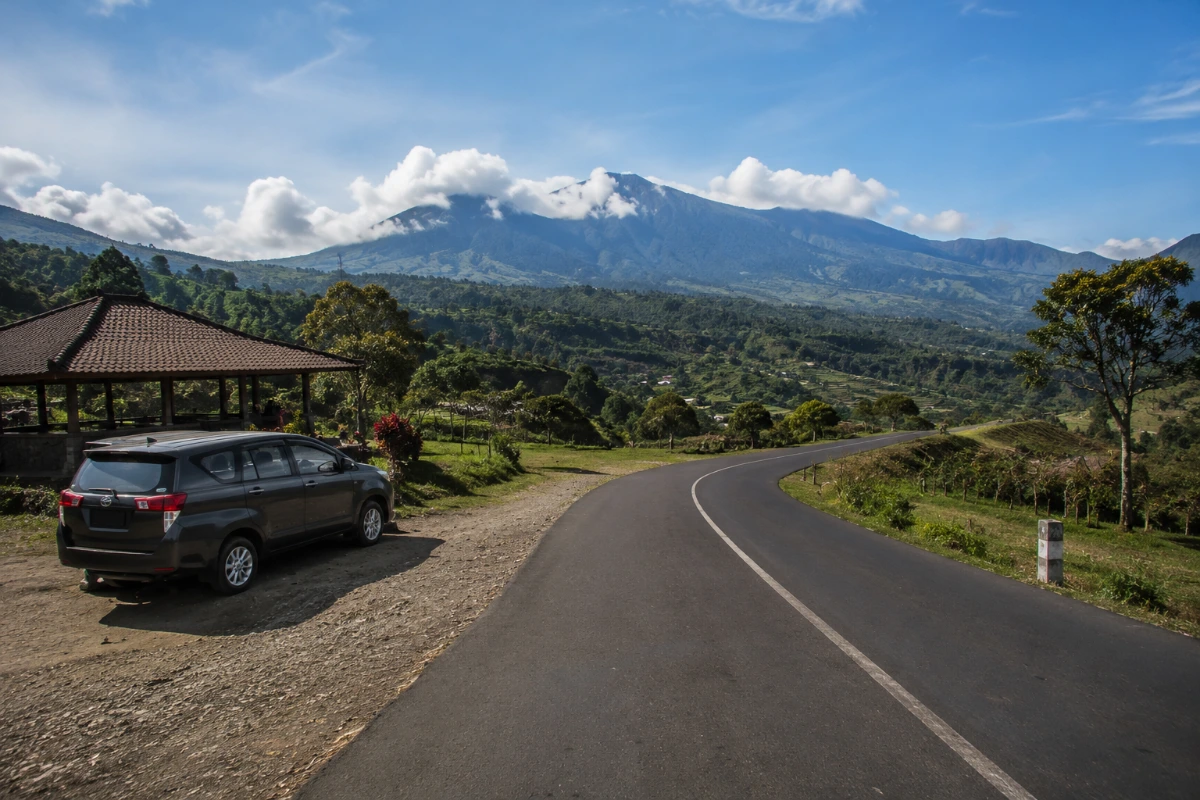
Rinjani sits in the north-east of Lombok. The two main trailheads are Sembalun (east Lombok, the usual starting point for the summit route) and Senaru (north Lombok). Most visitors fly into Lombok International Airport and continue by road, which takes a few hours depending on the route and traffic. Many trekking operators include transfers in their packages.
Permits, Fees, and Rules
Booking: All hikers must register through the official eRinjani app. If you book through a trekking organizer, they handle registration for you. Tickets are calculated per day of trekking.
Entrance fees (per the park authority’s notice following a 2025 ministerial regulation; verify current amounts before you go):
| Route class | Routes | Foreign visitors | Indonesians (weekday / holiday) |
|---|---|---|---|
| Class 1 | Sembalun, Senaru, Torean | Rp250,000 per day | Rp50,000 / Rp75,000 per day |
| Class 2 | Aik Berik, Tetebatu, Timbanuh | Rp200,000 per day | Rp20,000 per day |
Note: Guide, porter, transport, food, and gear costs are separate from the entrance fee.
Key rules reported for 2026:
- Groups must have at least 2 people, and hikers must go with a guide or a hiker experienced on Rinjani. Solo hiking has been reported as allowed only with a guide.
- Hikers under 17 must be accompanied by a guide or an experienced adult over 17 and provide a parent or guardian’s written permission.
- Check-in hours are about 07:00–15:00 WITA, and check-out hours are about 07:00–21:00 WITA, unless confirmed otherwise with staff.
- You must show your standard hiking equipment and any items that could become waste at check-in, follow the pack-in/pack-out waste rules, and attend the safety briefing.
- No open fires, and extra care with smoking and anything that could start a fire.
Routes

Rinjani has several official routes. The ones most visitors use:
- Sembalun: Typically the route used for the summit push, starting from the east side.
- Senaru: Starts on the north side and is commonly used for the descent or for trips to the crater rim and lake.
- Torean: A third main route, closed after the September 2026 fire. Check its current status.
- Timbanuh, Tetebatu, and Aik Berik: Lesser-used routes classed at a lower fee tier.
Many operators combine routes, for example climbing via Sembalun and descending via Senaru or Torean. Exact distances, camp locations, and timings vary by operator, so confirm your itinerary and the open routes with them before booking.
What to Bring
The essentials from What to Bring Hiking , the Multi-Day Trip Planning Checklist , and the Backpacking Safety guide all apply here. A few Rinjani-specific points:
- Warm layers. Nights on the crater rim and the pre-dawn summit climb can be cold even in the dry season. See the Hiking Clothing Layering Guide .
- A headlamp. Summit pushes usually start well before dawn.
- Sun protection and plenty of water. The ascent is exposed.
- Nothing that can start a fire. Rangers check baggage for ignition sources during the dry season.
- Cash and ID for permits and extras.
Safety Tips
- Check current status before you book and again just before you travel. Rinjani has dealt with wildfire closures in both August and September 2026.
- Respect the volcano’s exclusion zone. Stay at least 1.5 km from the active crater.
- Be honest about your fitness. Altitude and the steep final ascent catch many people out. Turn back early if you feel unwell, as covered in Hiking Safety Tips .
- Choose a licensed, reputable operator, and ask about their safety procedures, porter treatment, and what happens if routes close mid-trip.
- Follow the fire rules strictly. Dry-season fires have already forced route closures this year.
Frequently Asked Questions
Is Mount Rinjani open right now?
According to reports available in early October 2026, Mount Rinjani was open, online booking had been restored on October 3, and five routes were operating. The status of the Torean route was unclear. Conditions and access rules can change quickly, so confirm the latest information directly with the park authority or through eRinjani before your trip.
Do I need a guide to climb Mount Rinjani?
According to the requirements described in this guide, groups must have at least two people and be accompanied by a guide or an experienced Rinjani hiker. Solo hiking has been reported as permitted only with a guide. Many visitors arrange their trek through a trekking operator. Confirm the current requirements with park authorities before booking.
How much does the Mount Rinjani permit cost?
According to the park’s published rates cited in this guide, foreign visitors pay Rp250,000 per day and Indonesian visitors pay Rp50,000 per day on weekdays for the main routes of Sembalun, Senaru, and Torean. Check the latest rates and applicable rules through eRinjani before making your booking, as fees and requirements can change.
Can I climb Mount Rinjani as a beginner?
Mount Rinjani is not recommended as a first mountain. A shorter hike, such as Mount Prau, can be a better introduction to mountain hiking. Rinjani is more suitable for hikers with previous multi-day trekking experience and good physical fitness.
Which Mount Rinjani route should I choose?
Sembalun is commonly used for summit treks, while Senaru is another major access route often included in crater-rim and lake itineraries. The best route depends on your itinerary, fitness, and current trail access. Check official park updates before choosing your route.
Can I book Mount Rinjani without a trekking operator?
Check the current eRinjani booking process and park requirements before making arrangements. Booking independently does not necessarily mean you can hike independently. Confirm the latest rules on guides, group size, and registration directly with park authorities before your trip.
Rinjani Rewards Preparation and Flexibility
Rinjani is one of Indonesia’s great treks, but it demands more planning than most. Build a bit of flexibility into your dates, double-check the park’s current status before you commit, and choose a reputable operator who can adapt if routes close.
OutdoorCompass
Explore More. Pack Smarter.

