OutdoorCompass.net – If you’ve searched for “car camping vs tent camping” and found the results a bit confusing, that’s not you missing something — it’s a genuinely ambiguous term. “Tent camping” gets used in two different ways depending on context, and mixing them up leads to real confusion about what kind of trip you’re actually planning. This guide clears up both meanings.
The Ambiguity, Explained
The confusion comes from the fact that “tent camping” and “car camping” describe different parts of a camping setup.
- Tent camping describes your shelter: you sleep in a tent rather than an RV, cabin, or other fixed accommodation.
- Car camping describes how you access your campsite: you drive to or near the site and bring your gear from the vehicle.
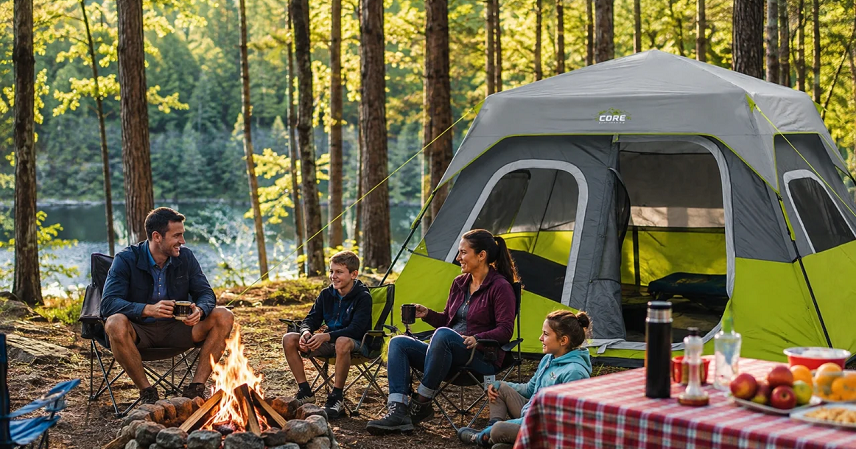
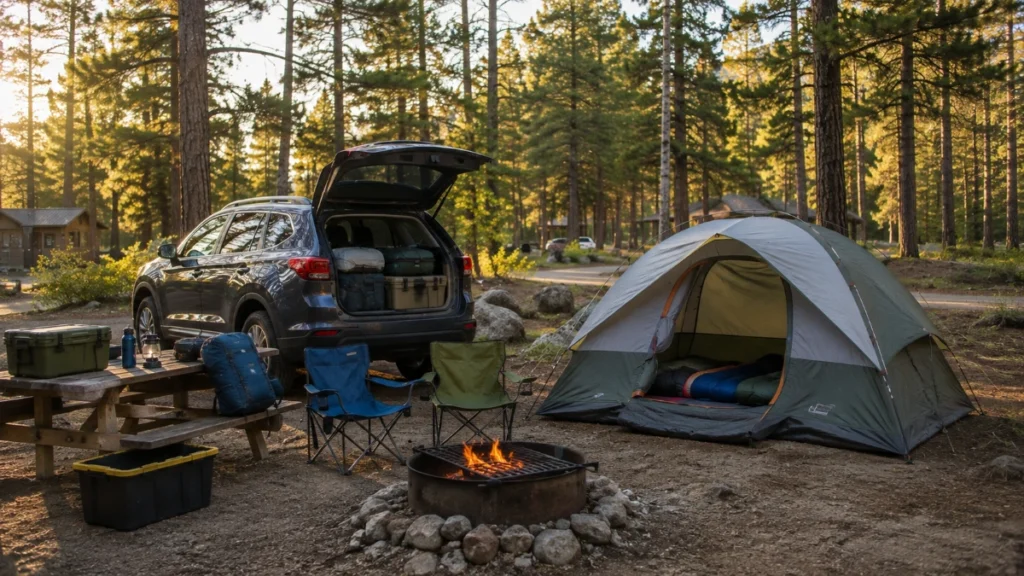
That means the two terms can overlap. A trip where you drive to a campground, park near your site, and sleep in a tent is both car camping and tent camping.
The confusion usually appears when people use “tent camping” to mean backcountry or hike-in camping. That type of trip involves carrying gear away from vehicle access and can overlap significantly with backpacking.
Throughout the beginner camping guides on OutdoorCompass, “car camping” refers to tent-based camping where you can bring your gear directly from a vehicle. When we discuss backpacking or backcountry trips, the terminology is stated explicitly.
Car Camping: Definition and Characteristics
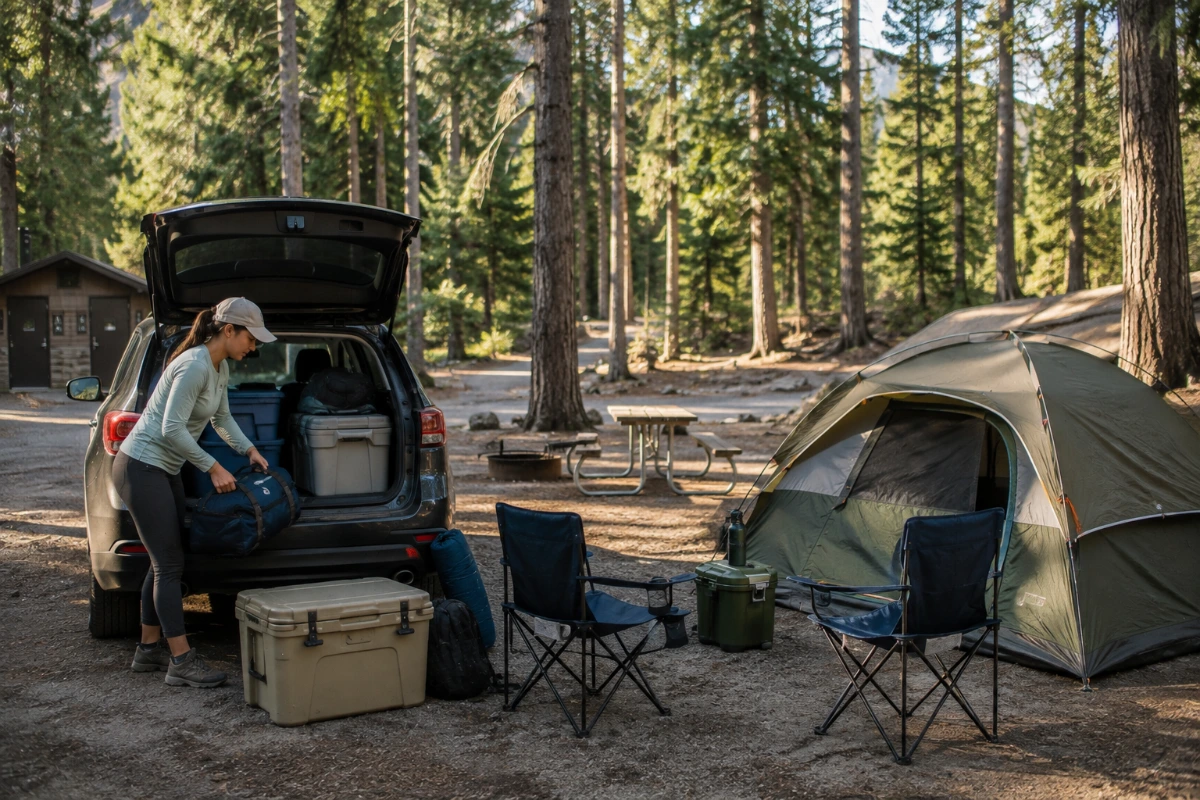
Car camping means driving to your campsite and unloading your gear directly from your vehicle. You typically park at or very near your site, which means:
- Gear weight and packed size matter much less, since you’re not carrying the equipment over significant distances.
- You have access to more comfort items — camp chairs, coolers, larger tents — since you’re not limited by what fits on your back.
- Campgrounds designed for car camping usually have some level of infrastructure: marked sites, often restrooms, sometimes water access.
This is the type of camping covered throughout the rest of this beginner’s guide series.
Backcountry Camping: Definition and Characteristics
Backcountry tent camping (in the second sense of the term above) means hiking into your site and carrying everything you need on your back — tent, sleeping system, food, water, and cooking gear. This is functionally very close to backpacking, and the two terms are often used interchangeably.
If this is what you’re actually planning, the gear and planning considerations are meaningfully different from car camping — weight matters, packed size matters, and the skill and preparation bar is higher.
For a full breakdown of this type of trip, see Backpacking for Beginners.
Side-by-Side Comparison
| Feature | Car Camping | Backcountry Camping |
|---|---|---|
| Access | Drive to or near the site | Travel away from vehicle access |
| Gear weight | Much less important | More important because gear must be carried |
| Comfort items | More flexibility | Limited by what you can carry |
| Infrastructure | Often developed facilities | May have limited or no facilities |
| Planning | Relatively simple | More involved, depending on route and conditions |
| Skills | Basic camping skills | Camping plus hiking/navigation skills may be needed |
Which Should a Beginner Choose?
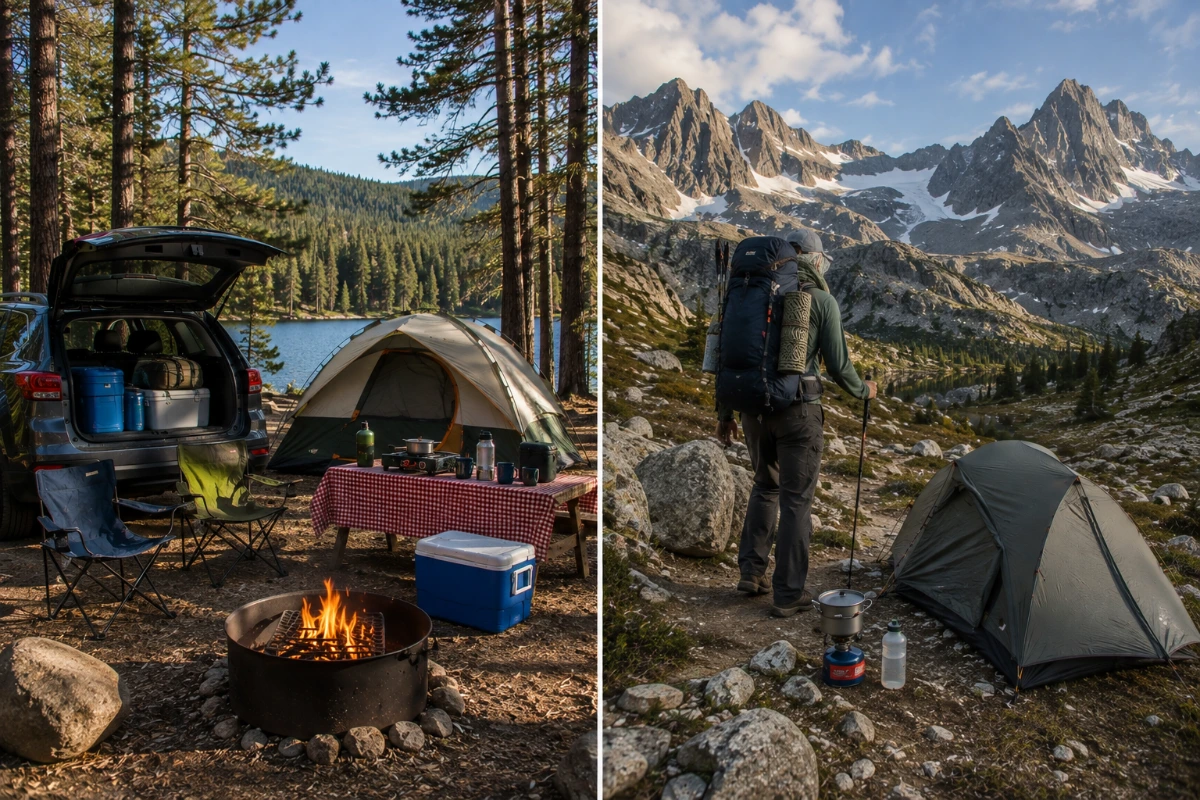
For many beginners, car camping is a simpler and more forgiving way to start an outdoor overnight trip. It removes the physical demands and gear-weight considerations of backcountry camping, letting you focus on learning the core skills — setting up a tent, cooking outdoors, sleeping comfortably outside — without adding the complexity of a hike-in trip on top of everything else that’s new.
Backcountry camping can be a reasonable next step once you’re comfortable with the basics and have built some hiking experience, but someone completely new to overnight camping may find a vehicle-accessible trip easier to manage first.
Frequently Asked Questions
Is “tent camping” the same thing as backpacking?
No. Tent camping simply means sleeping in a tent, while backpacking involves traveling on foot while carrying your gear, usually for an overnight or multi-day trip. You can go tent camping at a drive-in campground without backpacking, or combine tent camping with backpacking on a hike-in trip.
Can you go car camping without a tent, like in an RV?
Yes — RV camping is a separate category where your vehicle itself serves as your shelter. This guide focuses on tent-based car camping specifically, since it’s the more accessible and lower-cost entry point for most beginners.
What is “glamping” and how does it compare to these two?
Glamping (glamorous camping) typically refers to camping with significantly upgraded comfort and amenities — pre-set-up tents or structures, real beds, sometimes electricity or private bathrooms. It sits outside the beginner camping and backcountry camping comparison here, since it’s less about learning outdoor skills and more about a comfort-focused outdoor-adjacent experience.
Know Which Trip You’re Actually Planning
The confusion around “tent camping” comes down to context, not a single fixed definition. If you’re planning to drive to your site and unload from your car, you’re looking at car camping — the focus of this guide series. If you’re planning to hike in and carry your gear, you’re looking at backcountry camping, which shares much more in common with backpacking. Knowing which one you’re actually planning makes every other preparation decision much clearer.
OutdoorCompass
Explore More. Pack Smarter.