OutdoorCompass.net – If you already own a tent for car camping, it’s a fair question: why not just use it for backpacking too? The short answer is that the two are designed around different priorities, and those differences matter once you’re carrying the tent on your back instead of transporting it by car. Here’s what actually separates them.
Key Differences at a Glance
| Feature | Backpacking Tent | Camping Tent |
|---|---|---|
| Priority | Low weight, small packed size | Space, comfort, features |
| Weight | Built to be carried on foot | Built to be carried in a vehicle |
| Packed size | Compact, fits inside a backpack | Larger, often needs its own bag or trunk space |
| Interior space | Compact, efficient use of space | More room, sometimes standing height |
| Setup complexity | Usually quick, designed for trail efficiency | Varies, sometimes more elaborate for comfort features |
What Makes a Tent a “Backpacking Tent”?
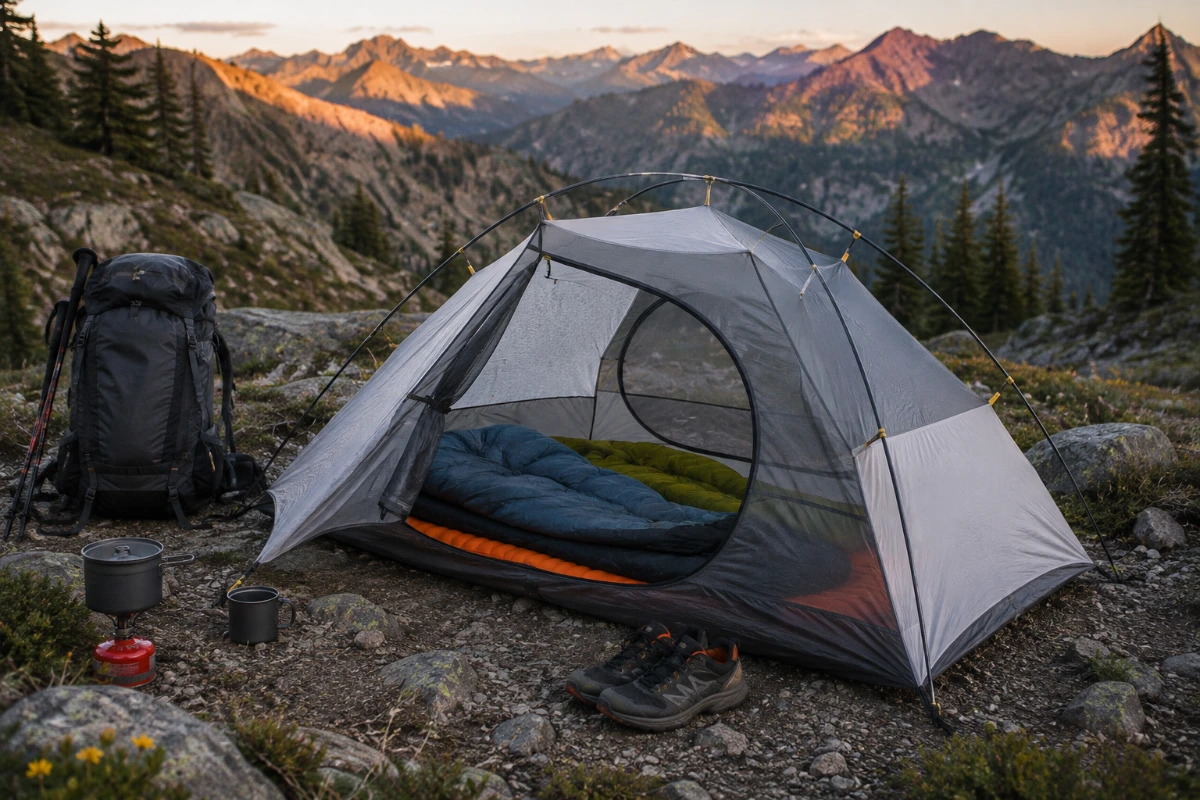
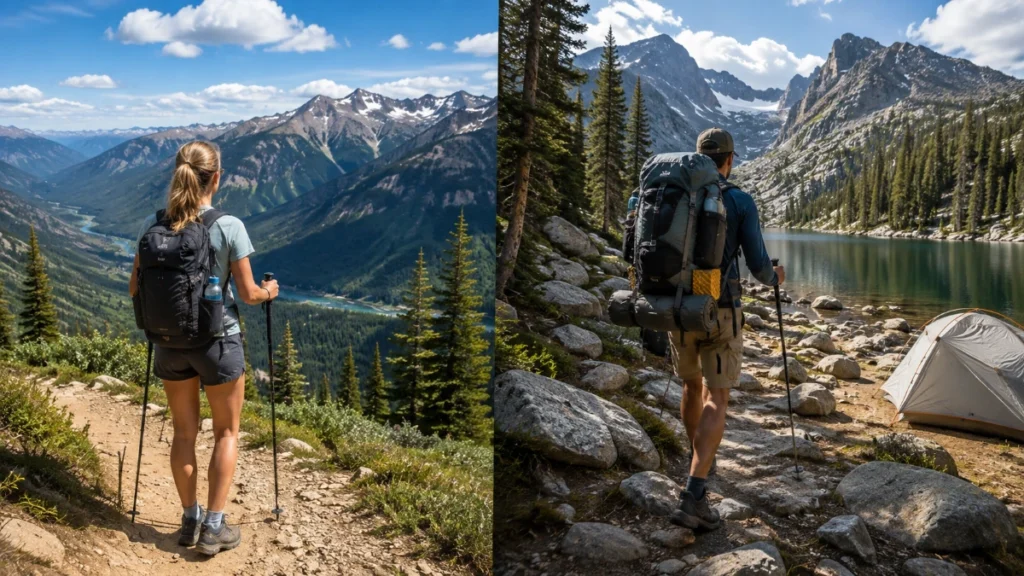
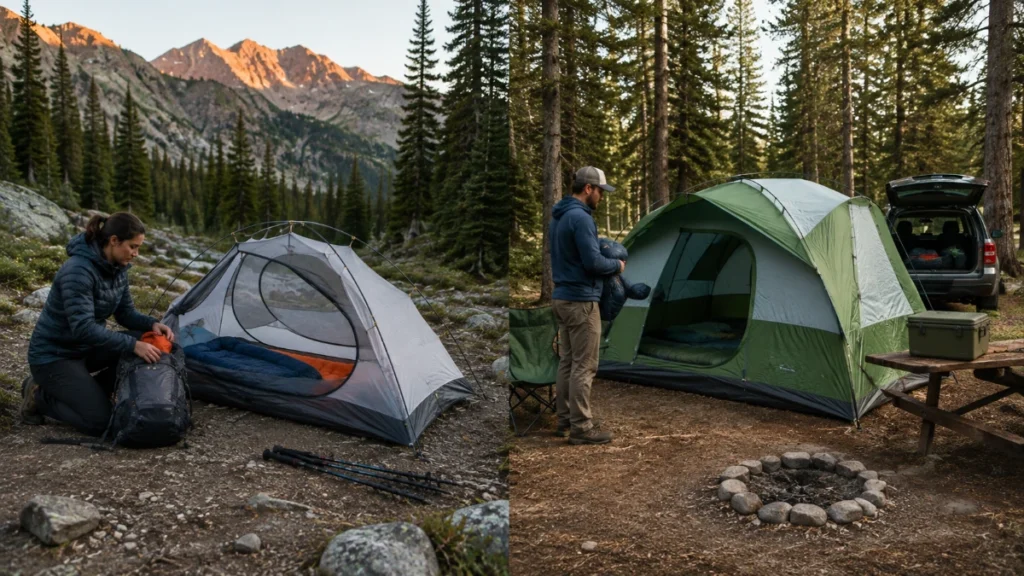
Backpacking tents are designed around one central constraint: you’re going to carry this on your back, potentially for multiple days. That drives every other design decision — lighter materials, more compact poles, and a smaller packed size, often at the cost of interior space compared to a camping tent rated for the same number of people.
This is also why backpacking tent capacity ratings tend to feel tight — a “2-person” backpacking tent can feel relatively snug for two people, particularly when compared with a similarly rated car camping tent. This is because backpacking tents generally prioritize lower weight and packed size over maximum interior space.
What Makes a Tent a “Camping Tent”?
Camping tents (sometimes called car camping tents) are designed for a different constraint entirely: you’re driving your gear to the site, so weight and packed size matter far less. This allows for larger interior space, features like tall ceilings or multiple rooms, bigger windows for ventilation and views, and generally a more comfortable living space — all of which can add significantly more weight and bulk than many hikers would want to carry over a longer distance.
Read More → Best Camping Tents for Beginners
Can You Use a Camping Tent for Backpacking?
Yes, a camping tent can be used for backpacking, but whether it makes sense depends heavily on the trip. For a very short or easy overnight trip, the extra weight may be manageable. On longer trips, however, carrying a heavier tent can become a noticeable part of your overall pack load. A camping tent can be substantially heavier and bulkier than a comparable backpacking tent.
This might still make sense for a very short, easy first overnight trip close to your car, where the weight penalty is tolerable and you’d rather not buy new gear before deciding if backpacking is for you. For anything beyond that, the weight difference becomes a real limiting factor.
Can You Use a Backpacking Tent for Camping?
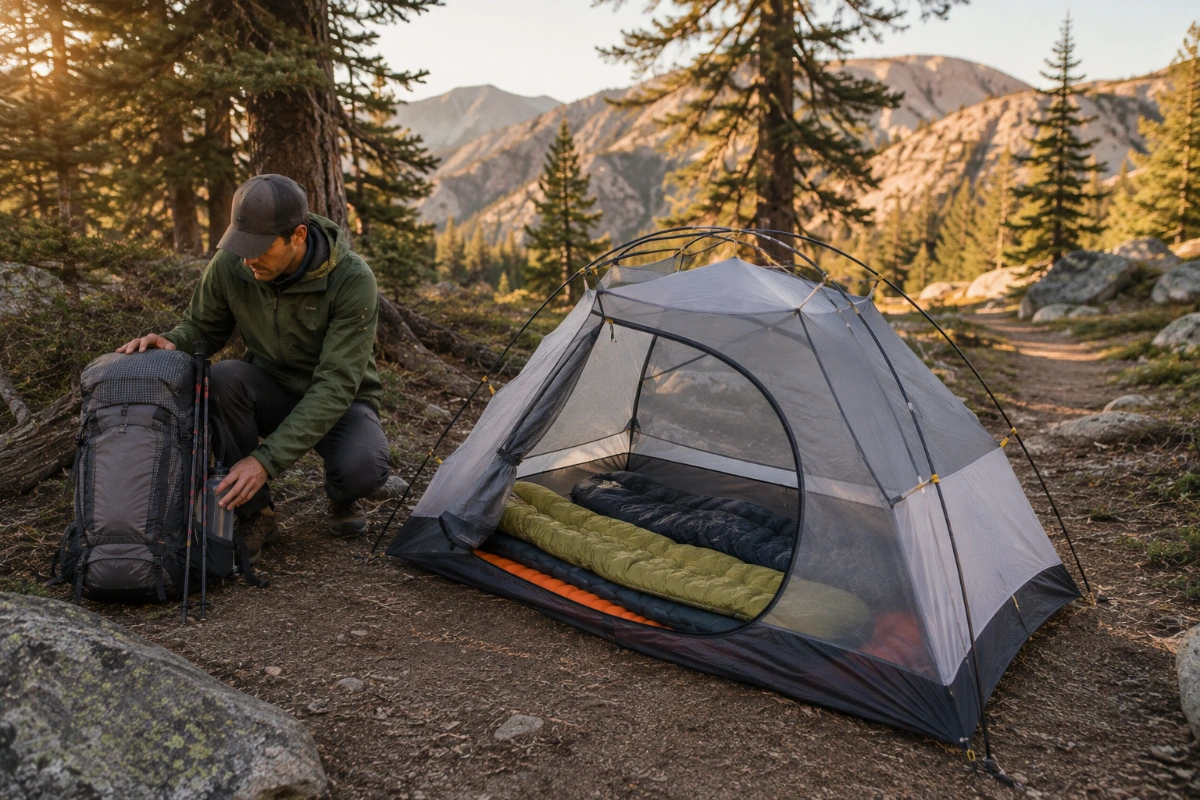
The reverse works more easily — using a backpacking tent for car camping is generally easier than using a large camping tent for backpacking. If you already own a backpacking tent and camp occasionally, there’s no strict need to buy a separate camping tent unless the added comfort and space genuinely matter to you for that use case.
Key Specs to Compare
- Packed weight — one of the most important factors for backpacking suitability because you’ll be carrying the tent for the duration of the trip.
- Packed size — how much space it takes up in or on your pack once compressed into its stuff sack.
- Setup time and complexity — matters more on the trail, where you’re often setting up in fading light or less-than-ideal weather compared to a relaxed car camping setup.
- Capacity rating — worth treating as approximate rather than exact, since backpacking tent capacity ratings tend to assume a tighter fit than most people expect, prioritizing weight savings over roomy space.
- Weather protection — Consider how the tent handles the conditions you expect, including rain, wind, and temperature. A lighter tent is not automatically the better choice if it doesn’t suit the conditions of your trip.
Read More → Ultralight Backpacking Gear Basics: Why Weight Matters and How to Start Reducing It
Frequently Asked Questions
Are backpacking tents more expensive than camping tents?
Not necessarily. Pricing varies widely across both categories depending on materials, brand, and features. Lighter-weight materials used in some backpacking tents can push costs up, but this is not a universal rule, and budget-friendly options are available in both categories.
What’s a reasonable weight for a beginner backpacking tent?
There is no single fixed number that applies to everyone, since it depends on trip length, group size, and personal priorities around weight versus space. Rather than targeting an exact figure, compare the weight of a few tents you are considering and weigh that against how much space and comfort you are willing to trade for lighter weight.
Do I need two separate tents if I enjoy both car camping and backpacking?
Not strictly. A backpacking tent can work for both purposes, although it will generally offer less interior space for car camping than a dedicated camping tent. Many people eventually choose to own both, but starting with one tent and adding another later can be a reasonable approach if you find you want the trade-offs offered by the other category.
Can I use a 4-person camping tent for backpacking?
You can, but the extra weight and packed size may make it impractical for longer backpacking trips. For a short trip close to the trailhead, it may be manageable if you are comfortable carrying the additional load. The more important question is whether the tent’s weight, packed size, and capacity make sense for the specific trip.
Is a backpacking tent better than a camping tent?
Neither is universally better. A backpacking tent is generally better suited to trips where you need to carry your shelter, while a camping tent is often better suited to vehicle-based camping where interior space and comfort are more important than carried weight.
Different Tools for Different Trips
A backpacking tent and a camping tent solve different problems — one is built to be carried, the other built for comfort where weight doesn’t matter. Neither is objectively better; the right choice depends entirely on how you’re actually getting the tent to your campsite.
OutdoorCompass
Explore More. Pack Smarter.