OutdoorCompass.net – Choosing the best backpacking backpack can make a major difference on a multi-day trip. Your pack carries your shelter, sleeping system, food, clothing, and other essentials, so comfort and fit matter. This guide compares popular 40L–65L backpacking backpacks and explains what to look for in capacity, suspension, hip belts, weight, and organization.
Quick Picks
Comparing Backpacking Backpacks (40L–65L)
Specifications below are drawn from verified product listings. Pricing was not included in the available data and should be checked directly before purchasing.
| Feature | Osprey Atmos AG 65 | Osprey Exos 58 | Gregory Baltoro 65 | Osprey Rook 65 | Kelty Coyote 60 |
|---|---|---|---|---|---|
| Capacity | 65L | 58L | 65L | 65L | 60L (listed as 65L in some spec data — verify) |
| Weight | 4 lb | 2.84 lb | 5.09 lb | 3.7 lb | 4 lb |
| Material | Nylon | Recycled high-tenacity nylon (bluesign approved) | Nylon | Polyester | Polyester |
| Water resistance | Waterproof | Water repellent | Water resistant | Water resistant | Water resistant |
| Suspension | AntiGravity | Ventilated, lightweight | Supportive, structured | Structured | Adjustable |
Our Top Backpacking Backpack Picks
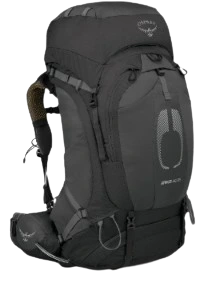
1. Osprey Atmos AG 65
- Price: $278.11
- Item Weight: 4 pounds
- Best for: Overall comfort and multi-day backpacking
The Osprey Atmos AG 65 is a strong all-around option for backpackers who prioritize carrying comfort, ventilation, and a well-supported suspension system.
Its 65-liter capacity provides plenty of room for multi-day trips, while the AntiGravity suspension system is designed to distribute weight across the back and hips. The suspended mesh backpanel also creates airflow between the pack and your back.
The adjustable torso and hipbelt system allows the pack to be fitted more precisely to your body, which can be particularly useful when carrying a heavier load over several days.
The Atmos AG 65 also provides multiple pockets and attachment points for organizing camping equipment, clothing, water, and other backpacking essentials.
Pros
- Excellent carrying comfort
- Good ventilation
- Supportive suspension
- Plenty of storage for multi-day trips
- Adjustable fit
Cons
- Heavier than ultralight backpacks
- Higher price than basic backpacking packs
- More suspension than some lightweight hikers need
Why We Recommend It
A backpacking pack needs to remain comfortable when you’re carrying food, shelter, clothing, and other equipment for several days. The Atmos AG 65 focuses heavily on suspension and load distribution, making it a practical choice for backpackers who value comfort over minimizing every ounce.
2. Osprey Exos 58
- Price: $285.00
- Item Weight: 2.84 pounds
- Best for: Lightweight backpacking
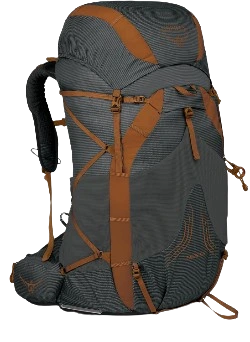
The Osprey Exos 58 is designed for backpackers who want to reduce pack weight without moving completely into the ultralight gear category.
With approximately 58 liters of capacity, the Exos provides enough space for many multi-day trips while maintaining a relatively lightweight design.
Its suspension system provides ventilation and support while the lightweight construction helps reduce the amount of weight you’re carrying before adding your gear.
The pack also includes practical organization features and attachment points for items such as trekking poles and other frequently used equipment.
Pros
- Relatively lightweight
- Good ventilation
- Useful capacity for multi-day trips
- Comfortable suspension
- Good option for weight-conscious hikers
Cons
- Less suitable for very heavy loads
- Lightweight materials require more care
- May provide less structure than heavier packs
Why We Recommend It
Every pound matters when you’re hiking long distances. The Exos 58 offers a middle ground between traditional backpacking packs and more minimalist designs, giving hikers useful capacity without adding as much pack weight.
It’s particularly appealing for backpackers who have already started reducing the weight of their sleeping system, shelter, and other gear.
3. Gregory Baltoro 65
- Price: $369.95
- Item Weight: 5.09 pounds
- Best for: Comfort-focused backpacking
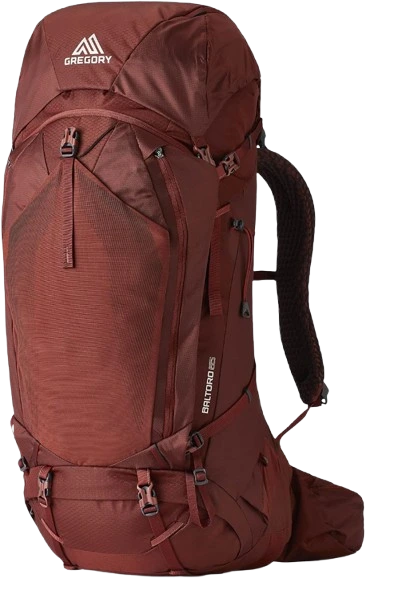
The Gregory Baltoro 65 is built for backpackers who prioritize support and carrying comfort, particularly when their gear load is relatively substantial.
Its 65-liter capacity provides enough space for multi-day equipment, food, clothing, and a sleeping system. The suspension system is designed to transfer weight toward the hips while providing structure and stability.
The adjustable torso system helps accommodate different body shapes, while the multiple compartments make it easier to organize equipment.
The Baltoro is also designed with features aimed at making longer days on the trail more manageable, including ventilation and a supportive hipbelt.
Pros
- Supportive suspension
- Comfortable for heavier loads
- Good organization
- Large enough for multi-day trips
- Adjustable fit
Cons
- Relatively heavy
- Bulkier than lightweight alternatives
- May be more pack than lightweight backpackers need
Why We Recommend It
Some backpackers don’t want to compromise carrying support simply to save weight. The Baltoro 65 is designed around that approach, providing a structured suspension system for hikers carrying substantial loads.
For longer trips where food, shelter, and additional equipment increase your total pack weight, this type of supportive design can be particularly useful.
4. Osprey Rook 65
- Price: $205.00
- Item Weight: 3.7 pounds
- Best for: Beginner backpackers
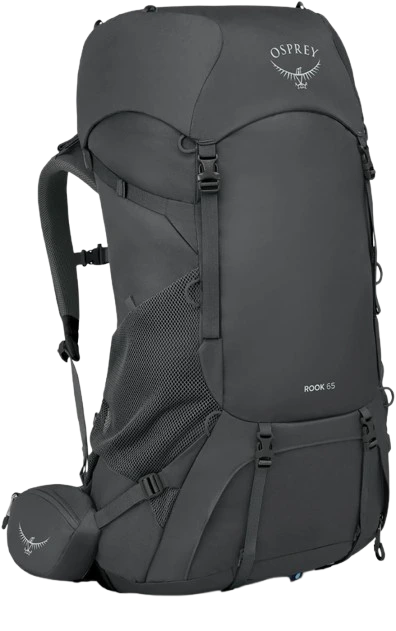
The Osprey Rook 65 is a straightforward option for beginners looking for their first dedicated backpacking pack.
Its 65-liter capacity gives new backpackers plenty of space to carry the basic equipment required for overnight and multi-day trips without immediately requiring an extremely compact packing system.
The Rook uses a structured suspension system with adjustable fit features, helping beginners get familiar with how a backpacking pack should sit on their body.
Its organization is relatively straightforward, which can also make it easier for first-time backpackers to learn how to distribute equipment inside the pack.
Pros
- Beginner-friendly design
- Good capacity
- Adjustable fit
- Straightforward organization
- Suitable for overnight and multi-day trips
Cons
- Heavier than some lightweight options
- Basic compared with premium backpacking packs
- May be more capacity than needed for short trips
Why We Recommend It
Buying your first backpacking backpack can be confusing because there are many different suspension systems, capacities, and lightweight designs.
The Rook 65 keeps things relatively straightforward while providing the capacity and structure beginners generally need for learning how to pack for overnight and multi-day adventures.
5. Kelty Coyote 60
- Price: $159.95
- Item Weight: 4 pounds
- Best for: Budget-conscious backpackers
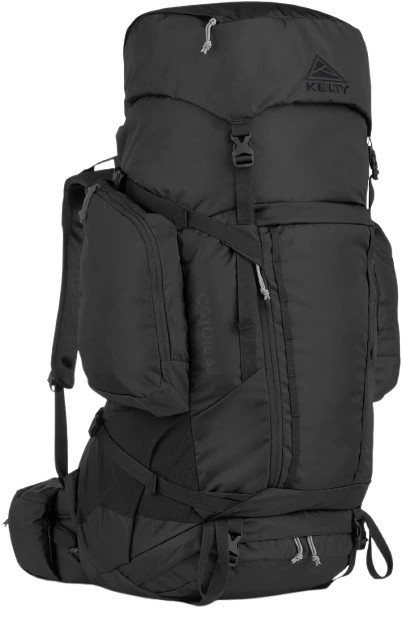
The Kelty Coyote 60 is a practical option for backpackers who want a full-size pack without moving immediately into the higher-priced premium segment.
Its 60-liter capacity offers enough room for many multi-day trips, while the adjustable suspension allows hikers to fine-tune the fit.
The pack provides multiple storage areas for organizing clothing, food, shelter, and other backpacking equipment. Its design is focused more on practicality and value than on minimizing every ounce.
For beginners building a backpacking setup from scratch, that can make the Coyote 60 an appealing option when the budget also needs to cover a tent, sleeping bag, sleeping pad, stove, and other equipment.
Pros
- Practical capacity
- Adjustable fit
- Good organization
- Suitable for beginners
- Generally more accessible than premium packs
Cons
- Heavier than lightweight alternatives
- Less focused on weight savings
- Basic compared with premium suspension systems
Why We Recommend It
A complete backpacking setup can become expensive quickly. Spending less on the backpack can leave more room in the budget for other essentials such as a sleeping system, shelter, stove, and navigation equipment.
The Coyote 60 focuses on practical capacity and useful backpacking features rather than an ultralight design.
Key Decision Factors
- Capacity matched to your typical trip length
- Suspension system and frame, which matters far more here than on a daypack
- Hip belt quality and load transfer, since you’re carrying significantly more weight
- Torso and hip sizing, even more critical at this capacity range
- Access points and organization — top-loading vs. panel-loading designs
Capacity: Matching Liters to Trip Length
As a general guideline (not a strict rule):
- 40–50L typically suits shorter trips — roughly one to three nights — for hikers who pack efficiently.
- 50–65L gives more room for longer trips, colder-weather gear, or hikers who prefer more packing flexibility.
Actual capacity needs vary based on your gear choices, how efficiently you pack, and trip length, so treat these as starting points rather than fixed thresholds.
Suspension System and Frame
This matters far more at 40–65L than it does for a daypack, simply because you’re carrying a lot more weight. A well-designed internal frame and suspension system transfers weight to your hips rather than letting it hang entirely off your shoulders, which makes a significant difference in comfort over multiple days.
This builds directly on the frame type principles covered in the daypack backpack guide — the same concept applies here, just with higher stakes given the additional weight involved.
Hip Belt and Load Transfer
At backpacking capacities, hip belt quality deserves more attention than it does for a daypack. A well-padded, properly adjustable hip belt is what allows your hips — not your shoulders — to bear most of the load over a multi-day trip. Look for a hip belt with substantial, contoured padding and a clear adjustment range, rather than a minimal or thin design that might be adequate for a lighter daypack but not for a heavier multi-day load.
Torso and Hip Belt Sizing
The torso-length principle from the daypack guide applies here too, but it matters even more at this capacity — a poor torso fit on a heavily loaded pack causes noticeably more discomfort than the same mismatch on a lighter daypack. Many backpacking packs also come in specific size ranges (small, medium, large) tied to torso length and sometimes offer adjustable hip belt sizing separately, worth checking specifically if you’re between standard sizes.
Access Points and Organization
- Top-loading packs are simpler and often lighter, but require unpacking from the top down to reach items lower in the bag.
- Panel-loading (or front-access) packs let you reach gear from multiple points without fully unpacking, at the cost of slightly more weight and complexity from the additional zippers and structure.
Neither is universally better — top-loading suits hikers who pack methodically and don’t mind the retrieval order; panel-loading suits hikers who prioritize quick access to specific items regardless of where they’re packed.
Frequently Asked Questions
What size backpack do I need for a weekend backpacking trip?
For a typical one-to-three-night trip, 40–50L is a reasonable starting range for most hikers, though this varies based on your specific gear and how efficiently you pack.
Is a heavier backpack always more durable?
Not necessarily. Some lighter packs use higher-cost, high-strength materials that maintain durability while reducing weight. Weight and durability are related but not strictly proportional, so it is worth checking the specific materials rather than assuming a heavier pack is automatically tougher.
What’s the difference between the Osprey Atmos AG 65 and other similarly named Osprey packs?
Osprey offers multiple packs within the Atmos AG line with different specifications, including an “LT” lightweight variant. Always confirm the exact model name and specifications on the current product listing before purchasing, since similarly named packs can have meaningfully different weights and features.
Choose Based on Trip Length and Fit, Not Just the Category Leader
The right backpacking backpack matches your typical trip length, fits your torso and hips properly, and has a suspension system built for the weight you’ll actually be carrying. Use the criteria above to narrow your choice, then verify current pricing, exact specifications, and availability directly before buying.
OutdoorCompass
Explore More. Pack Smarter.