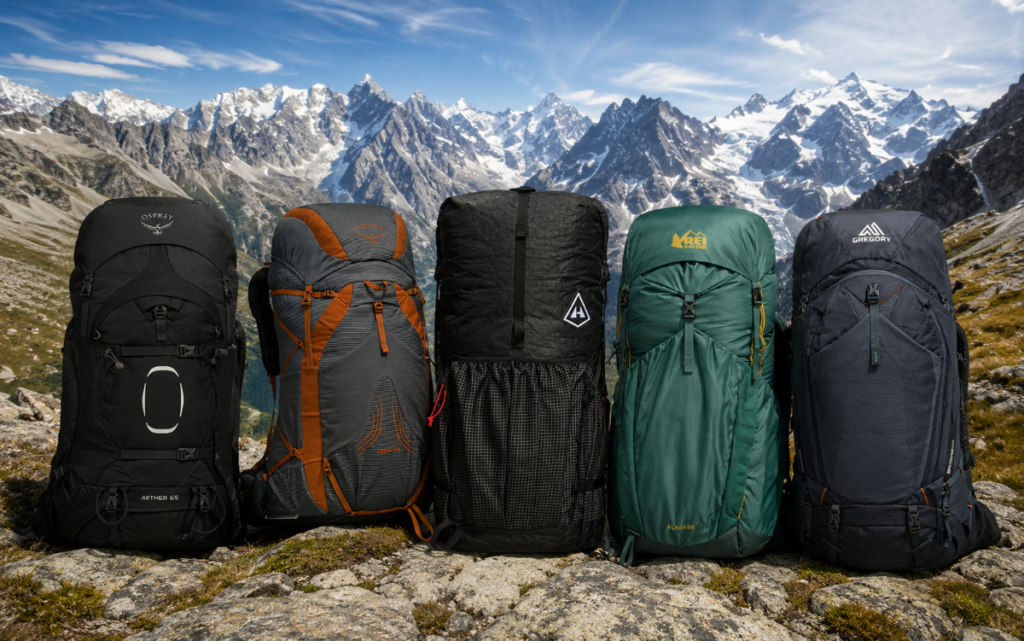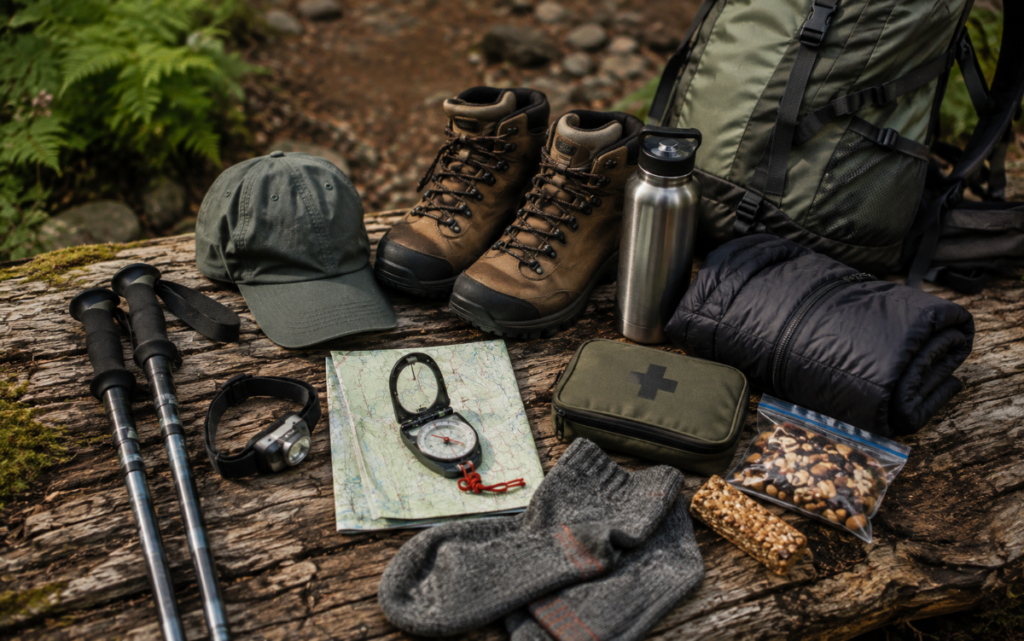
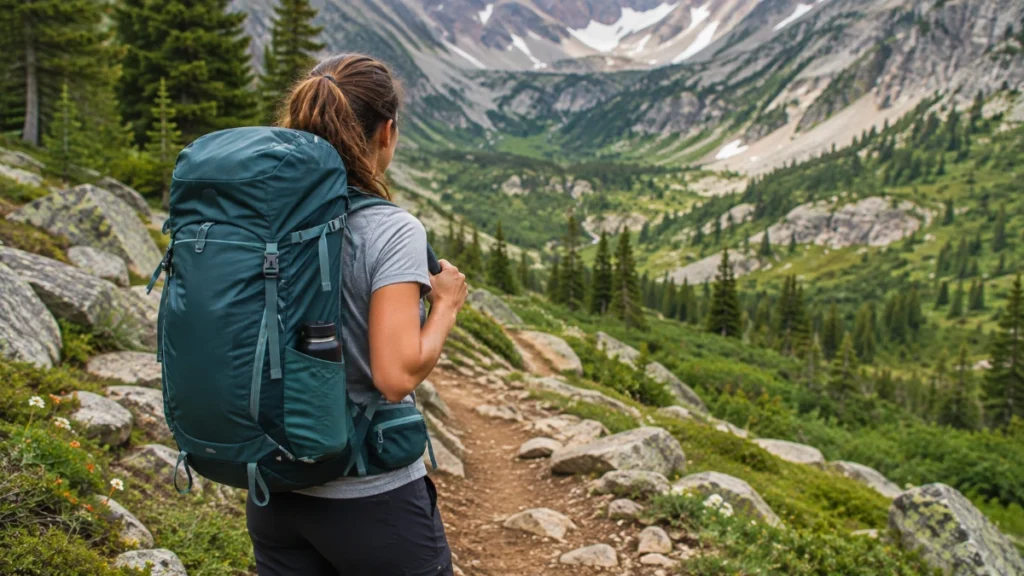
OutdoorCompass.net – A hiking backpack does more than just carry your gear — the right size and fit affect your comfort, balance, and how tired you feel by the end of a hike. This guide covers what actually matters when choosing one, then looks at how a few well-regarded beginner-friendly daypacks compare.
Key Decision Factors
- Capacity — how many liters you actually need, based on hike length
- Torso fit — more important than your height for getting the right size
- Hip belt and weight distribution — matters even for smaller daypacks
- Frame type — affects stability as capacity and load increase
- Features that matter vs. ones that are mostly marketing
How Much Capacity Do You Actually Need?
Capacity requirements depend on hike length, weather, trail conditions, and how much gear you need to carry:
- Short day hikes (2–4 hours): roughly 10–20L is usually enough for water, snacks, and a light layer.
- Longer day hikes or hikes needing extra layers (cold weather, higher elevation): roughly 20–30L gives room for additional clothing, more food, and extra water.
- Overnight or light backpacking: typically 30L and up — outside the scope of a beginner day-hiking pack, but useful for context if you’re deciding whether to buy now for future trips too.
These ranges reflect general practice across the outdoor gear industry rather than a single manufacturer’s specification, so treat them as a starting guideline rather than a strict rule.
Torso Fit vs. Body Height
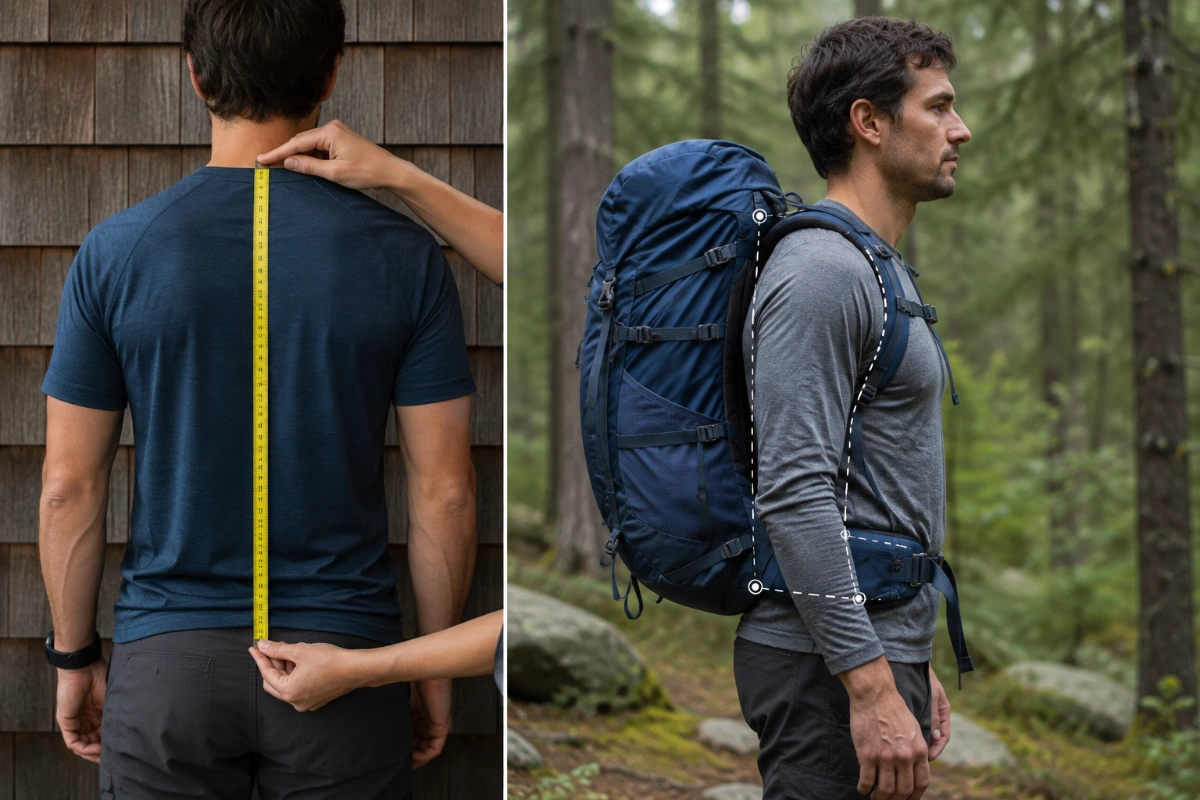
One of the more common beginner mistakes is choosing a backpack size based on height alone. What actually determines fit is your torso length — the distance from the base of your neck to your hip bones — which doesn’t necessarily correlate with how tall you are.
To get a rough torso measurement at home: tilt your head forward to find the bony bump at the base of your neck, then measure down to the level of your hip bones (roughly where a belt would sit). Many backpack size charts use this measurement, so having it on hand makes sizing much more accurate than guessing from height alone.
How Should a Hiking Backpack Fit?
A properly fitted backpack should feel secure without squeezing your shoulders or hips. The shoulder straps should sit comfortably against your body, while the hip belt should rest around your hip bones rather than your waist.
Hip Belt and Weight Distribution
Even for a relatively small daypack, a hip belt matters more than beginners often expect. Its job is to shift weight from your shoulders onto your hips, which are better suited to carry sustained load — this can reduce the amount of weight carried directly on your shoulders and may improve comfort on longer hikes.
For very light loads on short hikes, a minimal or even absent hip belt may be fine. As pack weight and hike duration increase, a more substantial, padded hip belt makes a noticeable difference in comfort.
When adjusted correctly, the hip belt should sit around your hip bones rather than directly around your waist. Tighten it enough to feel secure without restricting movement or breathing.
Frame Type: Frameless vs. Internal Frame
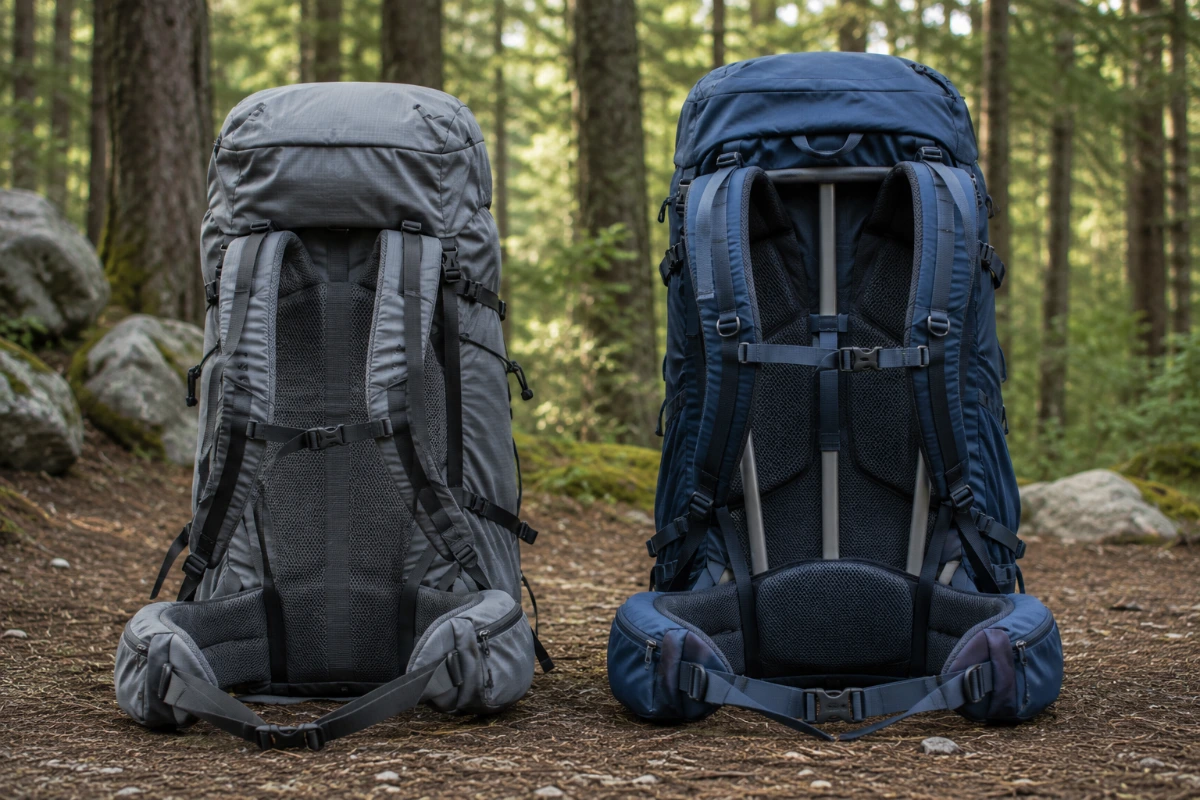
- Frameless packs are lighter and more flexible, but offer less structure, which can make heavier loads feel less stable and cause the pack to sag against your back.
- Internal frame packs add structure that helps distribute weight more evenly and keeps the pack’s shape stable, which becomes more valuable as capacity and load increase.
For many beginner day hikes in the 20–30L range, a lightweight internal frame can be a practical middle ground between carrying comfort, stability, and pack weight.
Features That Actually Matter (vs. Marketing Fluff)
- Hydration reservoir compatibility (a sleeve and port for a water bladder) — genuinely useful if you plan to hike with a bladder instead of bottles.
- Ventilated or mesh back panel — can improve comfort in hot weather by allowing more airflow between your back and the pack.
- Rain cover — useful if you frequently hike in unpredictable weather, less critical in consistently dry climates.
- Excessive external pockets and straps — can look feature-rich in marketing but often add weight without meaningfully improving your actual hiking experience, especially for a simple day pack.
- Sternum strap — helps stabilize shoulder straps.
- Adjustable torso system — useful if the pack offers multiple torso settings.
- Side pockets — convenient for water bottles and frequently accessed items.
Prioritize the features that match how and where you’ll actually hike, rather than a pack with the longest feature list.
How to Test Fit Before Buying
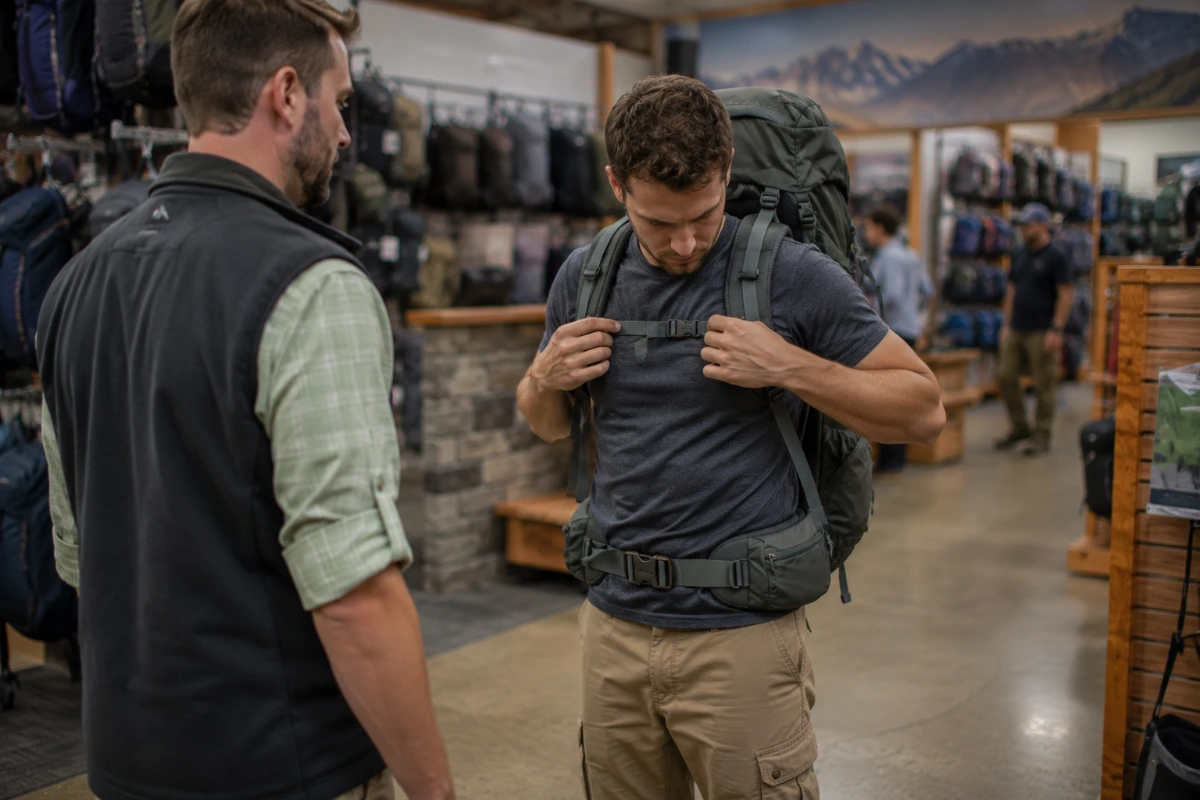
- Add some weight to the pack when trying it on — an empty pack tells you very little about how it will actually feel.
- Adjust all straps (shoulder, sternum, hip belt) rather than judging fit with factory settings.
- Walk around for several minutes with the pack on, not just stand still, since fit issues often only become noticeable with movement.
Comparing Beginner-Friendly Hiking Backpacks
The models below are commonly recommended options for beginner day hikers. The specifications below are provided as a general comparison. Product details can vary by size, version, and region, so verify current specifications, pricing, and availability before purchasing.
| Feature | Osprey Talon 22 | Deuter Futura 27 | Osprey Hikelite LT 30 | Deuter Trail 30 |
|---|---|---|---|---|
| Best for | Best Overall | Best for Hot Weather | Best for Full-Day Hiking | Best for Longer Hikes |
| Capacity | 22L | 27L | 30L | 30L |
| Weight | 1.08 kg | 1.33 kg | 0.92 kg | 1.12 kg |
| Key advantage | Stable, close-to-body fit | Excellent back ventilation | Lightweight, includes rain cover | Supports 4–8 kg load range |
| Best suited for | General day hiking | Warm-weather hiking | Lightweight full-day hiking | Longer day hikes / heavier loads |
Note: Pack weight can vary by size, configuration, and manufacturer measurement method. Verify the current manufacturer’s specifications before purchasing.
How to read this table for your situation:
- If you want a well-rounded pack for general day hiking, the Osprey Talon 22 is worth considering for its stable, close-fitting design.
- If you tend to run hot or hike often in warm climates, the Deuter Futura 27‘s ventilation advantage is a meaningful differentiator. Its ventilated back design may be worth prioritizing if you regularly hike in warm conditions.
- If minimizing pack weight matters most to you, the Osprey Hikelite LT 30 is the lightest of the group and includes a rain cover, useful if you hike in unpredictable weather.
- If you’re planning longer hikes with a heavier load, the Deuter Trail 30‘s specified load range (4–8 kg) suggests it’s built with heavier carrying in mind.
Check Current Options on Amazon:
If one of these models looks like a good match, check the current price, availability, sizing, and customer reviews before purchasing.
Verify the current price, availability, specifications, size options, and seller information before purchasing.
Frequently Asked Questions
Is a hiking backpack really different from a regular backpack?
Yes. Hiking backpacks typically include features such as a padded, adjustable hip belt for better weight distribution, a frame or frame sheet for structure, and hydration compatibility. These features are less common on general-purpose backpacks.
What’s the ideal capacity for a beginner?
For most beginner day hikes, a 20–30L backpack is a practical range for carrying water, food, an extra layer, and basic safety gear. Shorter or milder hikes may require less capacity, while longer or cold-weather hikes may benefit from the higher end of the range.
Does a more expensive backpack always mean more comfort?
Not necessarily. Fit has a greater effect on comfort than price, particularly when it comes to matching the torso length and getting a properly fitting hip belt. A well-fitting mid-range backpack can be more comfortable than an expensive pack that does not fit your body properly.
What size hiking backpack is best for a beginner?
For most beginner day hikes, a 20–30L backpack is a practical starting point. Shorter hikes may need less capacity, while cold-weather or longer day hikes may benefit from additional space.
How should a hiking backpack fit?
A hiking backpack should sit securely against your back without excessive movement. The hip belt should rest around your hip bones, while the shoulder and sternum straps should feel secure without restricting movement.
Is a frame necessary in a hiking backpack?
Not always. Frameless backpacks can work well for very light loads, while an internal frame can provide more structure and stability as the weight of the pack increases.
Choose Based on Fit and Capacity, Not Just Reputation
The right beginner hiking backpack matches your torso length, fits the capacity your typical hikes actually require, and distributes weight comfortably through a proper hip belt. Use the criteria above to narrow down what you need, then verify current pricing, availability, and reviews directly before buying.
OutdoorCompass
Explore More. Pack Smarter.