OutdoorCompass.net – Camping is one of the most accessible ways to spend a night outdoors — and a simple car camping trip doesn’t require prior outdoor experience, advanced fitness, or specialized skills. This guide walks through everything you need to know before your first trip, from choosing the right kind of camping to the gear and safety basics that make it go smoothly.
Key Takeaways
- Start with car camping at a developed campground before considering more remote options.
- Keep the essentials simple — shelter, a sleep system, a way to cook, and basic lighting.
- Choose a familiar, well-reviewed location to make a first trip easier to manage rather than relying on premium gear alone.
- Camping works well as a family or group activity, not just a solo pursuit.
What Is Camping? (And What It Isn’t)
Camping means sleeping outdoors, typically in a tent, for one or more nights. The two most common forms for beginners are:
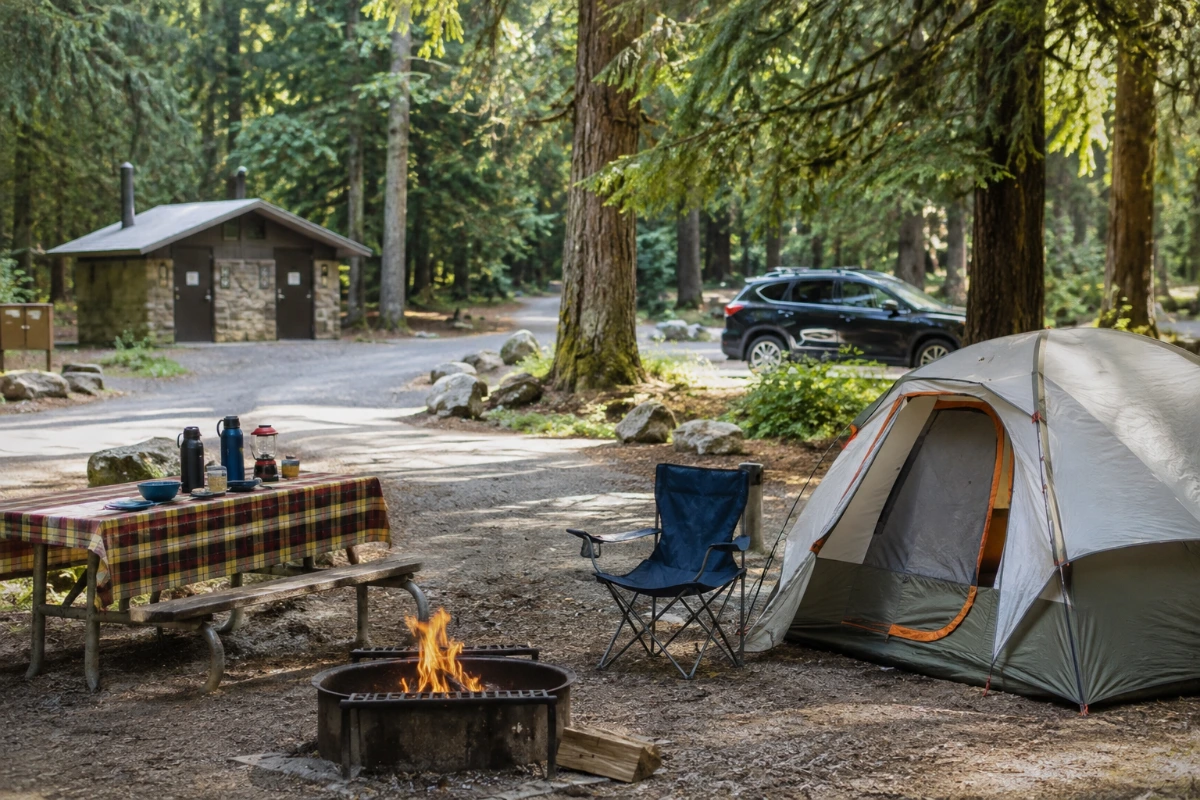
- Car camping — you drive to your campsite, park nearby, and unload your gear directly from your vehicle. This is the easiest entry point, since weight and packed size barely matter when you’re not carrying gear on foot.
- Backcountry camping — you travel farther from vehicle access and may need to carry some or all of your gear to the campsite. This can overlap significantly with backpacking, and if that’s actually what you’re looking into, the backpacking beginner’s guide is a better starting point than this one.
For many first-time campers, car camping at a developed, easily accessible campground is a simple way to get started — it removes most of the complexity while still giving you the full outdoor camping experience.
Choosing Your First Camping Trip
A few things make a first camping trip go smoothly:
- Choose a developed campground with basic facilities (restrooms, marked sites, sometimes water access) rather than a remote, undeveloped site.
- Pick somewhere close to home for your first trip — an hour or two away is plenty, so you’re not dealing with long travel on top of everything else that’s new.
- Check reviews and site information in advance, so you know what to expect: site size, nearby amenities, and any specific rules for the campground.
Starting simple lets you focus on learning the actual camping skills — setting up your tent, cooking outdoors, staying comfortable overnight — without also navigating an unfamiliar or remote location.
Essential Gear Categories
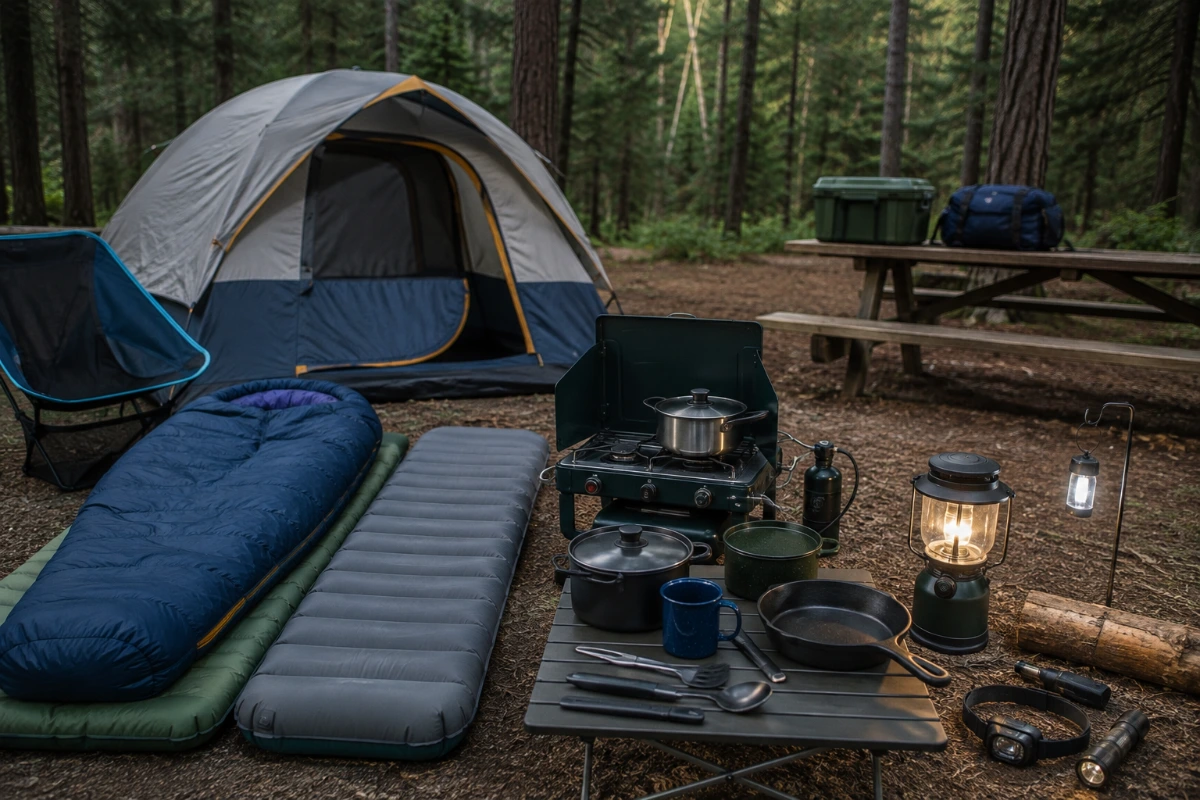
Camping gear breaks down into a few core categories. This is an overview — each has its own detailed guide.
Shelter (tent) Your tent is your home base for the trip. For car camping, weight matters far less than it would for backpacking, which opens up more options in terms of space and features.
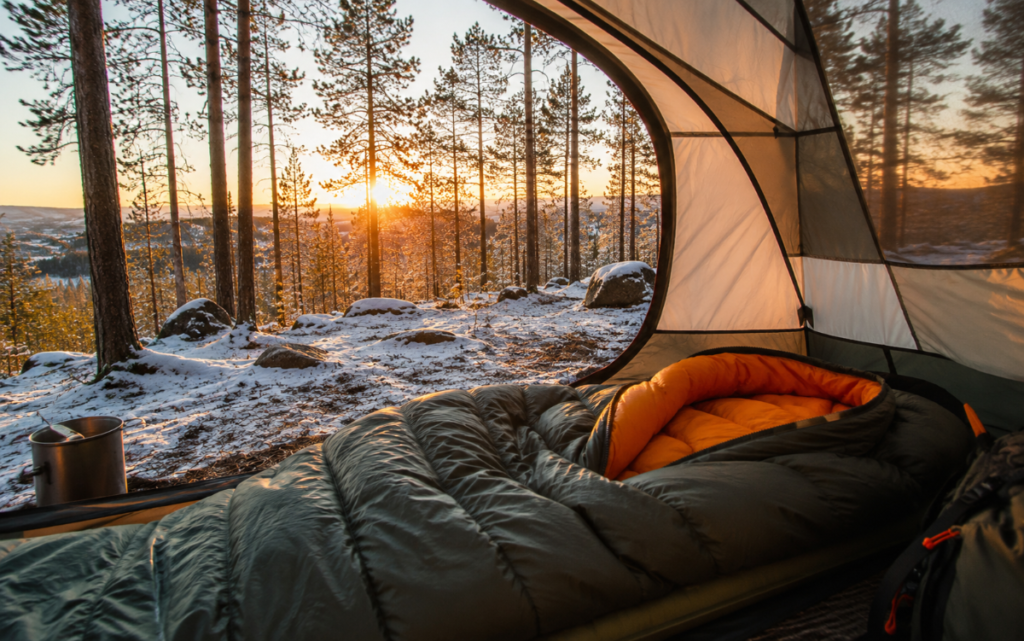
Sleep system A sleeping bag and some form of padding (a sleeping pad or air mattress) appropriate for the expected overnight temperature.
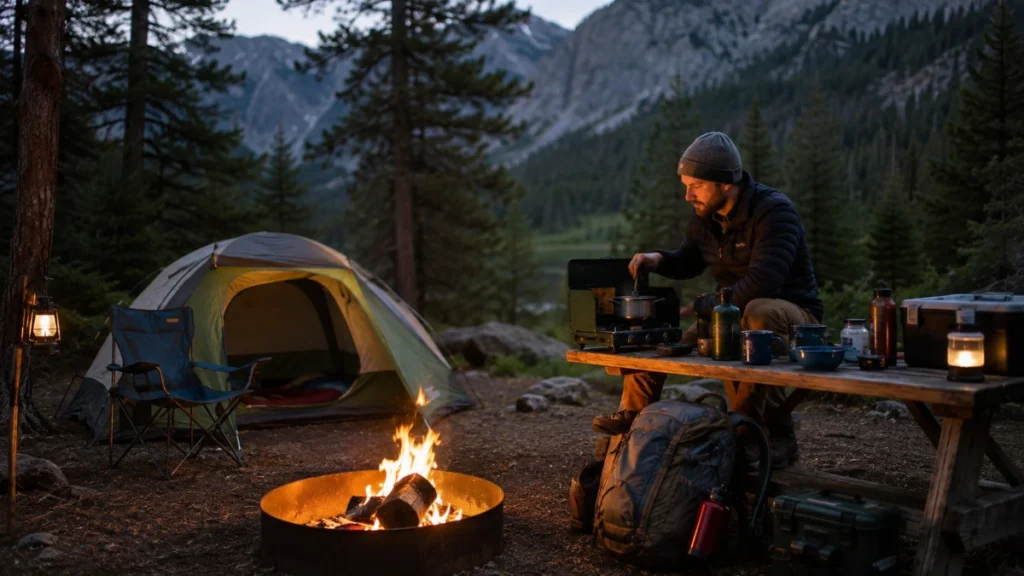
Cooking setup A camp stove or fire-based cooking method, along with basic cookware for preparing meals at the site. → Related: Camping Cookware Essentials
Lighting A reliable light source for setting up camp after dark, moving around the site at night, and general visibility once the sun goes down.
What to Bring: Quick Overview
Beyond the core gear categories, there’s a broader list of items worth bringing on any camping trip — from basic tools to comfort items that make the experience more enjoyable.
Setting Up Camp
Getting your tent and site set up correctly, especially before it gets dark, makes the rest of your trip considerably easier.
Safety Basics
Camping safety covers weather awareness, fire safety, wildlife basics, and a few other considerations specific to spending the night outdoors.
Camping with Family
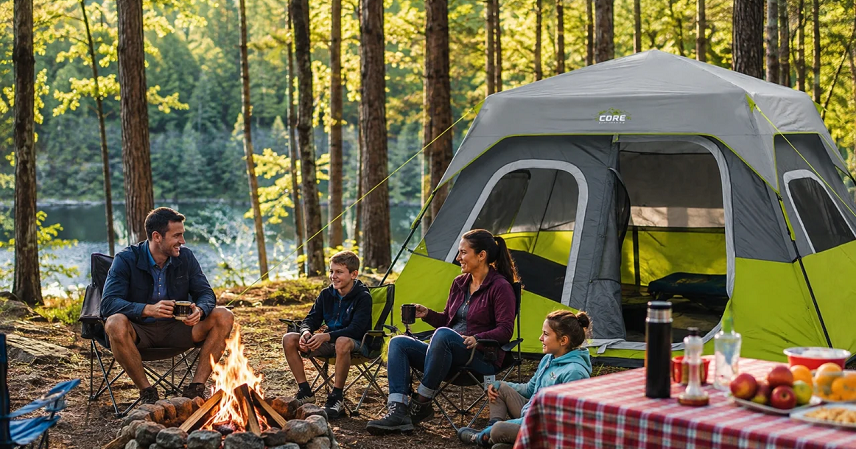
Camping can work well as a family or group activity, not just a solo trip or couple’s getaway. Bringing kids along involves some additional planning — shorter distances to amenities, extra entertainment, and a bit more buffer time for everything.
Common Beginner Mistakes
A few patterns show up repeatedly among first-time campers — some avoidable with just a bit of advance planning.
Frequently Asked Questions
What’s the difference between camping and backpacking?
Camping, specifically car camping, means driving to your site and unloading gear from your vehicle, so weight and packed size aren’t major concerns. Backpacking means hiking to your campsite while carrying everything on your back, which requires much more attention to gear weight and packability. If you’re specifically interested in backpacking, the backpacking beginner’s guide covers that in depth.
Do I need expensive gear for my first camping trip?
No. Basic, functional gear is enough for a first car camping trip — the location and your preparation matter more than how premium your equipment is. You can always upgrade specific items later once you know what you actually value in your setup.
How long should a first camping trip be?
A single night is a completely reasonable starting point. It’s enough to experience the full process — setting up, cooking, sleeping outdoors, and breaking down camp — without committing to a longer trip before you know how it feels.
What should I do if it rains on my first camping trip?
Rain doesn’t automatically mean a camping trip has to end, but it does make site selection, shelter, clothing, and weather awareness more important. Check the forecast before leaving and understand the campground’s conditions and requirements before your trip.
Where to Go From Here
The best next step depends on what you’re currently figuring out:
- If you’re deciding between car camping and something more involved, Car Camping vs. Tent Camping breaks down the difference in more detail.
- If you’re actively planning a trip, What to Bring Camping is the practical checklist to work from.
- If you’re still building your gear list, start with a tent and sleep system, since those are the two most trip-defining purchases.
Camping rewards a bit of preparation more than it rewards expensive gear. Start simple, choose a familiar location, and the rest comes together with a little experience.
OutdoorCompass
Explore More. Pack Smarter.