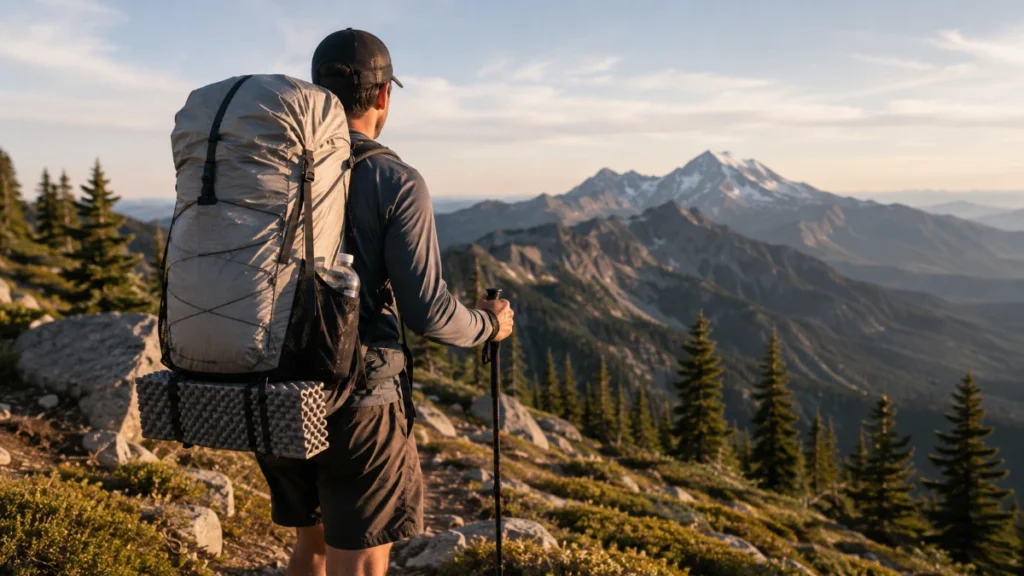
OutdoorCompass.net – “Ultralight” gets thrown around a lot in backpacking circles, sometimes in a way that makes it sound like an obsession with shaving grams for its own sake. At its core, though, it’s a practical principle: carrying less weight can reduce fatigue over multiple days on the trail. This guide covers the reasoning behind it, where weight reduction actually matters most, and where it doesn’t need to be your priority.
Key Takeaway
Pack weight matters more in backpacking than in day hiking because you’re carrying it across consecutive days, not just a few hours. Most meaningful weight reduction comes from three gear categories — often called the “Big 3” — rather than from optimizing dozens of small items.
Why Pack Weight Matters More in Backpacking
Backpacking fatigue can accumulate across days, and carrying more weight generally increases the physical demand of each day’s hike. The effect becomes more noticeable when that load is carried repeatedly over consecutive days.
This is part of why backpackers pay closer attention to gear weight than day hikers typically do — the same few kilograms matter a lot more when you’re carrying them for several consecutive days rather than a single afternoon.
The “Big 3”: Where Most Weight Reduction Happens
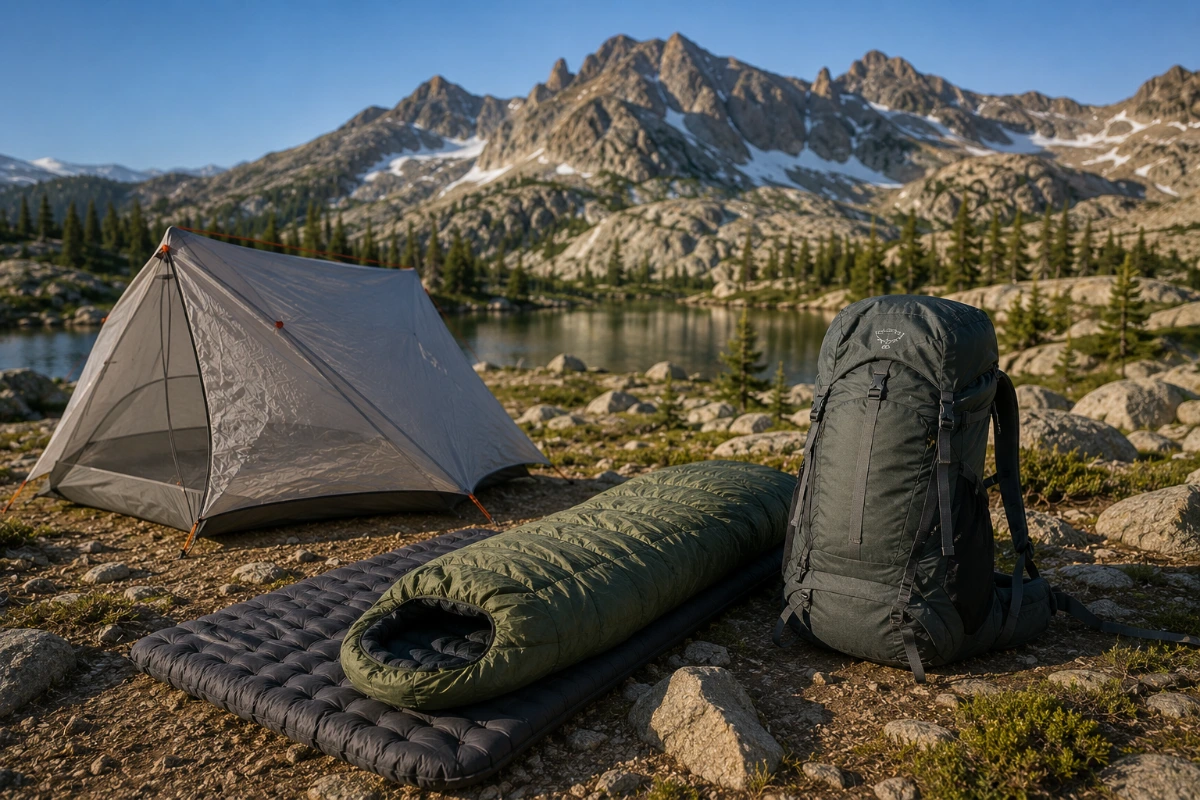
Three gear categories typically account for the largest share of your total pack weight:
- Shelter (tent or equivalent)
- Sleep system (sleeping bag and pad)
- Backpack itself
Because these three items often represent a substantial portion of your carried gear weight, they’re a useful place to look for meaningful reductions. Focusing here first, before optimizing smaller items like utensils or stuff sacks, generally gives you the most meaningful weight savings for the effort involved.
Base Weight vs. Total Pack Weight
This is a useful distinction for thinking about pack weight clearly:
- Base weight refers to the weight of your gear excluding consumables — food, water, and fuel, which get used up and vary trip to trip.
- Total pack weight includes everything, consumables and all, at the start of your hike.
Base weight is the more useful number for comparing gear setups or tracking your own progress toward a lighter pack, since it isolates your actual equipment choices from variables like trip length and how much water you’re carrying that day.
Common Ultralight Trade-offs
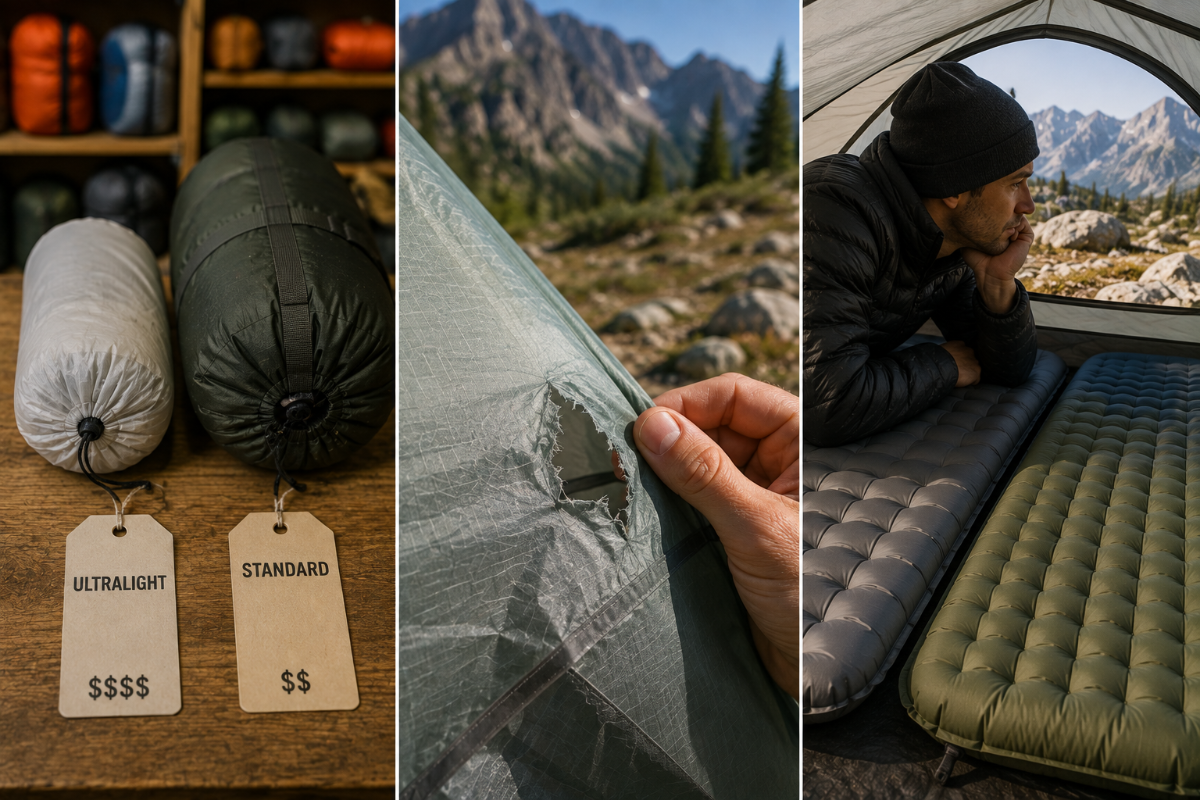
Lighter gear isn’t automatically better — it usually comes with a real trade-off, and it’s worth being honest about that rather than treating “lighter” as an unconditional win:
- Cost — ultralight materials and construction techniques are often more expensive than standard equivalents.
- Durability — some ultralight gear uses thinner or more delicate materials, which can mean more careful handling and a shorter usable lifespan.
- Comfort — a thinner sleeping pad, for example, saves weight but may sacrifice some comfort and insulation compared to a thicker one.
None of this means ultralight gear is a bad choice — it means it’s a deliberate trade-off, and the right balance depends on your priorities, budget, and how much weight savings actually matters for your specific trips.
Practical Ways to Start Reducing Weight (Without Buying New Gear)
Before buying anything new, it’s worth auditing what you already own — this is often the cheapest and most immediate way to reduce pack weight:
- Lay out everything you plan to bring before a trip and genuinely question whether each item is necessary, rather than packing out of habit.
- Look for duplicated function — multiple items serving a similar purpose (several types of cordage, redundant tools) are an easy place to cut weight without spending money.
- Weigh your gear, even with a basic kitchen scale, to see where your actual weight is concentrated — this often reveals surprises, since perceived “big” items aren’t always the heaviest ones.
Reducing weight from what you already own costs nothing and often has a bigger impact than people expect before they actually go through the exercise.
Where to Reduce Weight First
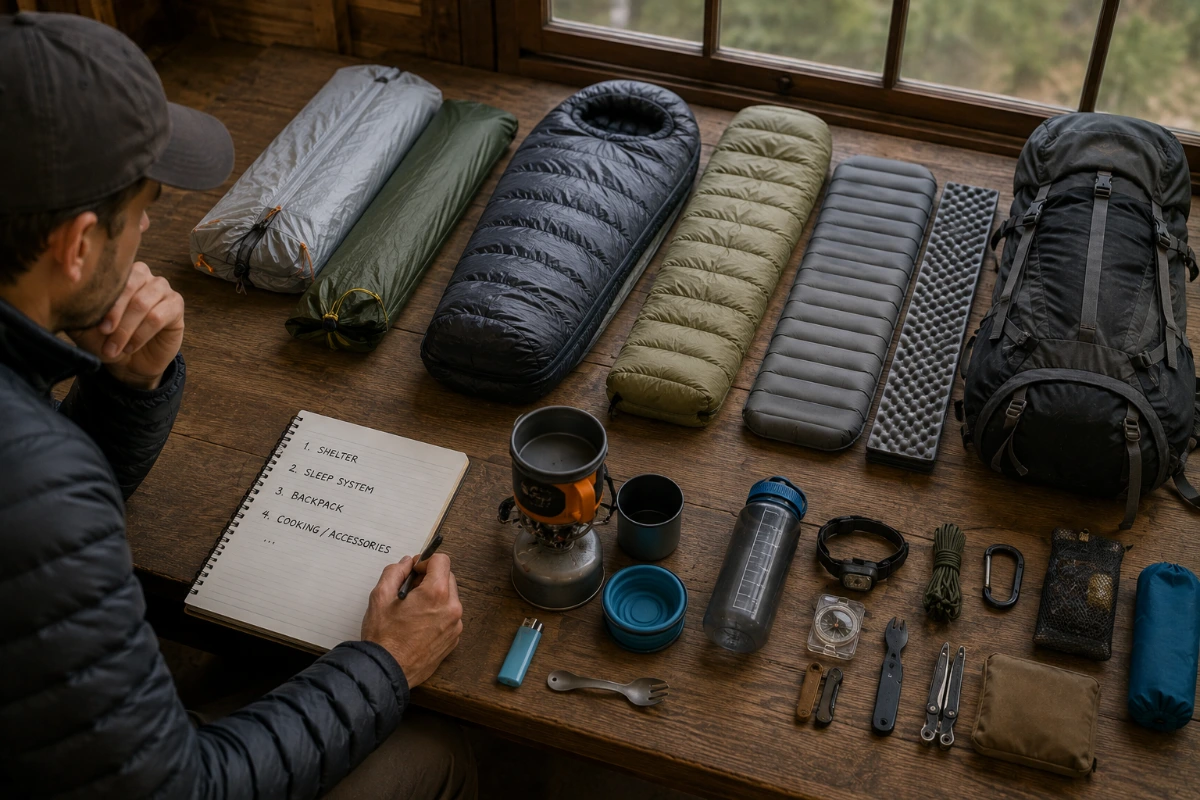
A simple way to approach weight reduction is to work from the largest opportunities to the smallest ones:
- Shelter — Compare the weight of your current shelter with realistic alternatives.
- Sleep system — Look at your sleeping bag or quilt and sleeping pad together, rather than optimizing only one item.
- Backpack — Once your gear list is reasonably settled, choose a pack that comfortably carries the actual load you need.
- Cooking and small accessories — After the Big 3, look for duplicated items, oversized accessories, and things you rarely use.
You don’t need to replace everything at once. Reducing weight gradually as existing gear wears out or your needs become clearer is often a more practical approach.
When Ultralight Isn’t the Right Priority
For a first backpacking trip in particular, comfort and familiarity are often more useful than aggressively minimizing weight. A slightly heavier but warmer sleeping bag, or a thicker, more comfortable sleeping pad, may make a bigger difference to your first overnight experience than a small weight reduction.
It’s reasonable — and common — to prioritize comfort and familiarity on early trips, then gradually shift toward lighter gear as you gain experience and have a clearer sense of what actually matters to you on the trail.
Frequently Asked Questions
How far in advance should I start planning a backpacking trip?
For a first trip, a few weeks is a reasonable planning window. This gives you enough time to research your route, check permit requirements, and test your gear without rushing.
Do all backpacking trails require a permit?
No. However, many popular trails and destinations do require permits, and requirements vary by location and land management agency. Always check directly with the specific park, forest, or trail authority before your trip.
What’s actually different about this checklist compared to a day-hiking checklist?
The biggest differences are the planning phase and the overnight gear system. Backpacking requires additional planning for permits, multi-day food and water logistics, and weather conditions across several days. Your day-hiking checklist still provides the foundation underneath all of this.
What should I check the night before a backpacking trip?
Review your route and weather conditions, confirm permits and reservations, recheck essential gear, and pack according to your checklist. Make sure someone also has your trip plan and expected return information.
Should I test my backpacking gear before my first trip?
Yes. Set up your shelter, test your stove and fuel, check your sleep system, and become familiar with any equipment you haven’t used before. Testing gear at home gives you a chance to identify problems before you’re on the trail.
Weight Reduction Is a Direction, Not a Destination
Ultralight principles are useful as a general direction — start with your heaviest categories, audit what you already own before buying anything new, and stay honest about the trade-offs involved. There’s no requirement to chase an extreme minimalist setup, especially early on; comfort and reliability are valid priorities too, and most backpackers find their own balance over time rather than starting there.
OutdoorCompass
Explore More. Pack Smarter.