OutdoorCompass.net – “Hiking” and “backpacking” get used interchangeably a lot, but they describe genuinely different activities — different gear, different time commitment, and different skills. If you’ve heard someone talk about a “backpacking trip” and weren’t quite sure how that’s different from a regular hike, this breaks it down clearly.
Quick Comparison
| Feature | Hiking | Backpacking |
|---|---|---|
| Duration | Single day | Multiple days, with one or more nights outdoors |
| Gear | Daypack, water, food, layers, navigation, safety gear | All of that, plus shelter, sleep system, cooking setup, and extra supplies |
| Physical demand | One day of effort | Cumulative effort across consecutive days, with a heavier pack |
| Skill level | Beginner-friendly | Builds on hiking experience and adds overnight skills |
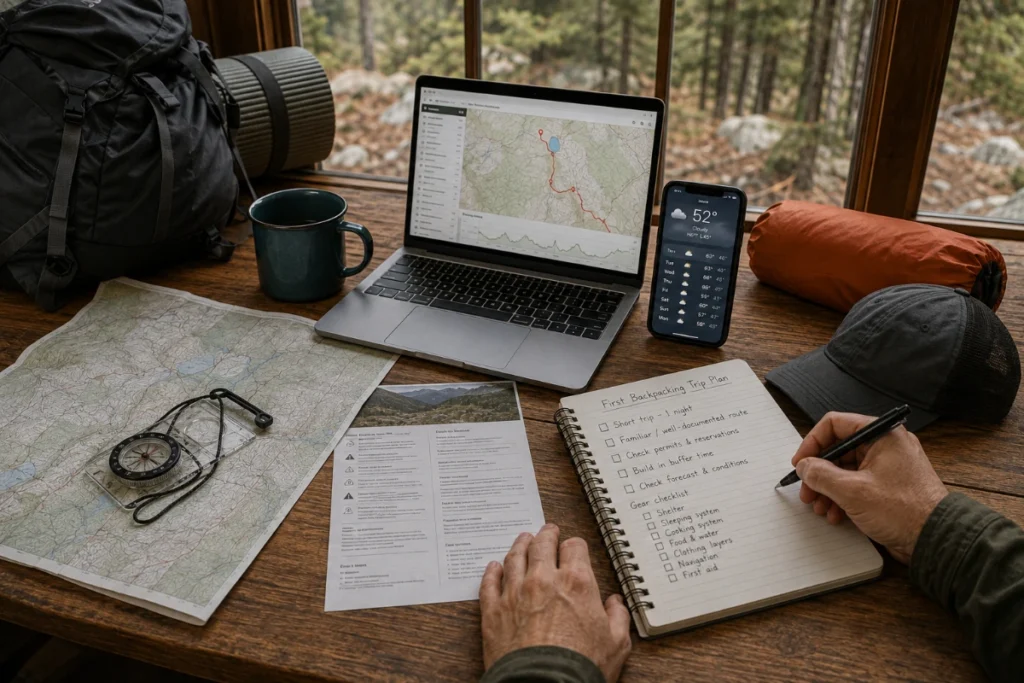
| Planning | Relatively flexible | Requires more planning for permits, food, water, weather, and emergencies |
What Is Hiking?
Hiking is walking on natural trails for recreation or exercise, typically completed in a single day and returning to your starting point or a set endpoint the same day. It ranges from short, flat walks to long, strenuous day trips, but the defining feature is that you’re not camping overnight as part of the activity.
Read more: Hiking for Beginners: The Complete Guide to Your First Trail
What Is Backpacking?
Backpacking is hiking while carrying everything needed to camp overnight — shelter, a sleep system, food, and water — for one or more nights on the trail. It’s built directly on hiking, but adds an entire additional layer: you’re not just walking a trail, you’re also carrying and managing a mobile camping setup for the duration of the trip.
You’ll sometimes see “trekking” used as a near-synonym for backpacking or multi-day hiking, particularly for longer or more remote routes. The terms overlap significantly, and the exact line between them varies by region and context — the useful distinction to focus on isn’t the label, but whether overnight camping and multi-day gear are involved.
Read more: Backpacking for Beginners: A Complete Guide to Your First Trip
Side-by-Side Comparison
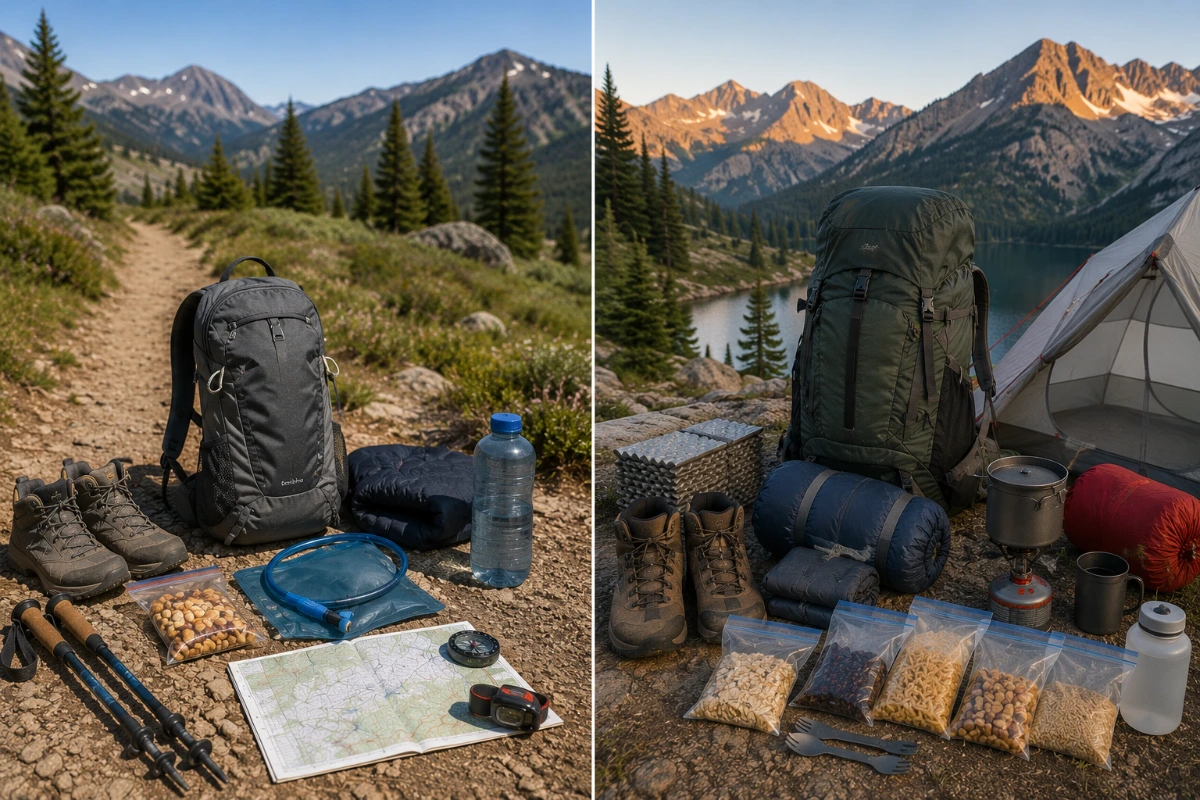
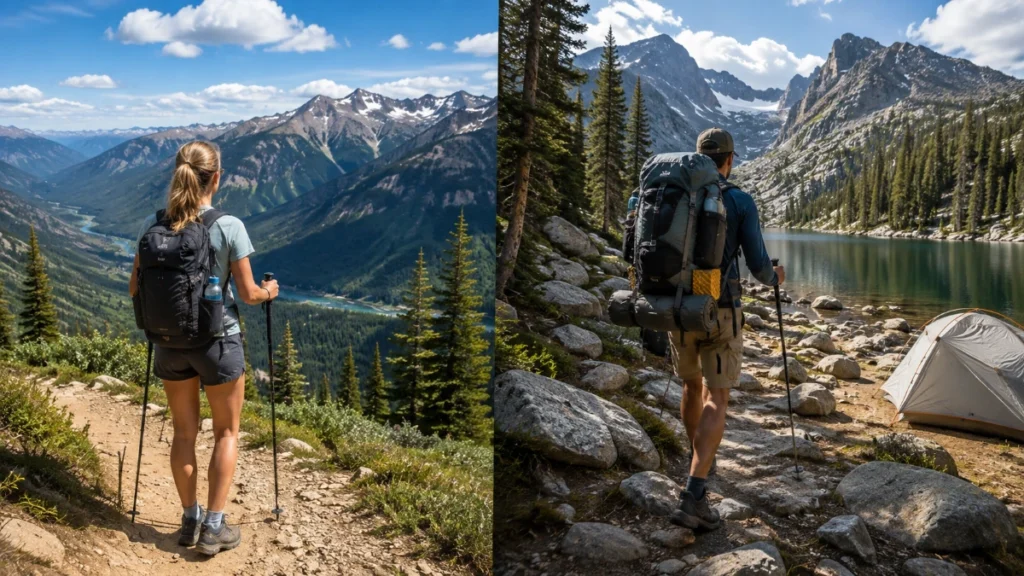
Duration: In this guide, hiking refers to a single-day activity without overnight camping. Backpacking spans multiple days, with camping in between.
Gear: Backpacking requires all of that, plus a larger backpack, a tent or equivalent shelter, a sleeping bag and pad, and a cooking system — a substantially larger and heavier gear list.
Physical demand: A hike’s physical demand is contained to a single day, while backpacking can involve cumulative fatigue across consecutive days. Combined with carrying significantly more weight than a typical day pack, this creates a meaningfully different kind of physical challenge.
Skill required: Day hiking can be accessible to beginners with appropriate preparation, while backpacking generally requires more developed navigation skills, an understanding of overnight gear systems, and comfort making decisions farther from immediate help.
Planning complexity: Day hikes can often involve relatively simple logistics, while backpacking frequently involves permits or reservations (which vary significantly by location and trail), multi-day food and water logistics, and a longer weather window to plan around.
Cost: Backpacking generally requires a larger gear investment than hiking, since it adds several new equipment categories (shelter, sleep system, cooking gear) on top of standard hiking gear. Specific costs vary widely depending on gear choices, so this guide won’t attach fixed figures to it.
Which One Should You Try First?
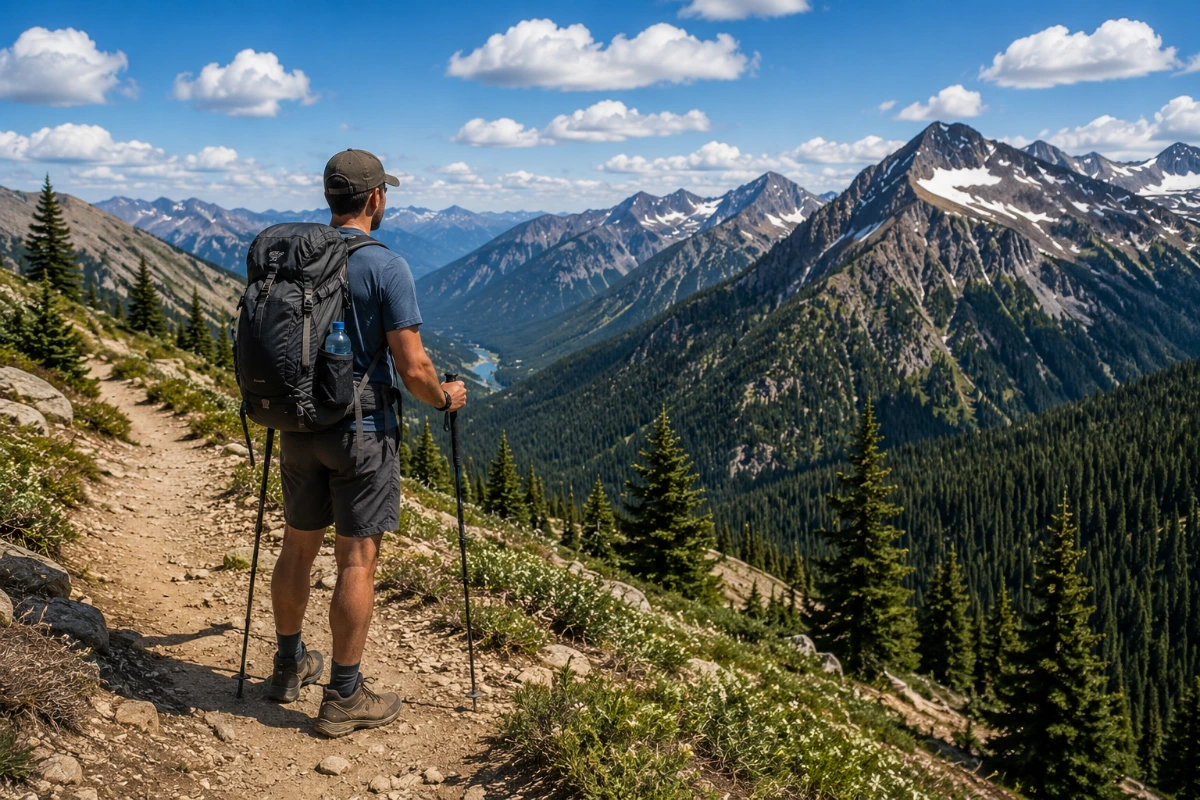
If you’re new to trail activities altogether, hiking is the sensible starting point — it lets you build comfort with navigation, pacing, and trail conditions without the added complexity of overnight gear and logistics.
It’s also worth being clear that hiking isn’t just a stepping stone toward backpacking. Plenty of hikers stick with day hiking indefinitely and never feel a need to go further, and that’s a complete, valid way to enjoy the activity on its own.
Can You Do Both?
Yes — and in practice, most people who backpack still hike regularly too. They’re not mutually exclusive activities competing for your time; day hiking often continues to be the more frequent activity, with backpacking trips layered in occasionally when time and planning allow for them.
Frequently Asked Questions
Is backpacking the same as trekking?
The terms overlap heavily and are often used interchangeably, especially for longer or more remote multi-day routes. There is no strict, universally agreed-upon line between them. What matters more than the label is whether overnight camping and multi-day gear are part of the trip.
Does backpacking require much greater physical fitness than hiking?
It requires a different kind of physical capacity more than dramatically greater fitness. Backpacking involves carrying significantly more weight and managing cumulative fatigue across multiple days, rather than simply being stronger or faster.
Can a beginner hiker go straight to backpacking without much hiking experience first?
It’s possible, but it means learning overnight gear, extended navigation, and multi-day logistics all at once without hiking fundamentals as a foundation. Building some day-hiking experience first generally makes the transition considerably smoother.
Is backpacking harder than hiking?
Backpacking can be more demanding because you carry more weight and manage physical effort across multiple days. However, difficulty depends on factors such as route, distance, elevation, weather, pack weight, and individual experience.
OutdoorCompass
Explore More. Pack Smarter.