OutdoorCompass.net – If you’ve never hiked before, the idea can feel more complicated than it actually is. You don’t need expensive gear, advanced fitness, or wilderness experience to get started. You need a plan, a few basics, and a trail that matches your ability. This guide walks you through everything you need to know before your first hike.
Key Takeaways
- Start with a short, well-marked trail before attempting anything challenging.
- The essentials are simple: proper footwear, water, a way to navigate, and appropriate clothing.
- Knowing basic safety and etiquette matters more than having premium gear.
- Every beginner mistake below is avoidable with a little preparation.
What Is Hiking, Exactly?
Hiking is walking on natural trails, typically outside urban areas, for recreation or exercise. It ranges from flat, easy paths to steep, multi-hour climbs.
It’s worth knowing how it differs from similar terms, since they get used loosely:
- Hiking — a day activity on a trail, returning to your starting point or a set endpoint the same day.
- Trekking — usually a longer, multi-day version of hiking, often in remote or mountainous terrain.
- Backpacking — hiking while carrying overnight gear (tent, sleeping bag, food) to camp along the way.
For your first time out, you’re almost certainly looking at hiking in the simplest sense: a single day, a defined trail, back to your car or trailhead by evening.
Why People Hike
The appeal is straightforward. Hiking is low-cost, doesn’t require a gym membership or special facility, and gets you outside. Many people find it helps with stress and general fitness, and it’s an activity you can do alone, with friends, or with family, at whatever pace suits you.
None of that requires taking our word for it — it’s part of why hiking has remained one of the most accessible outdoor activities.
How to Choose Your First Trail
This is the decision that matters most for a good first experience. A trail that’s too long or too steep is the single most common reason beginners have a bad first hike.
Look for:
- Distance: For a first hike, 3–5 km (roughly 2–3 miles) round trip is a reasonable starting point for most people.
- Elevation gain: This refers to how much total uphill climbing the trail involves. A trail with low elevation gain (under roughly 150–200 meters) will feel far easier than the distance alone suggests.
- Trail difficulty rating: Many trail apps and park websites label trails as easy, moderate, or hard. Start with “easy.”
- Familiarity and marking: Well-marked, well-traveled trails are easier to navigate and generally safer for a first outing.
Avoid picking a trail based on photos alone — a stunning viewpoint often means a harder climb to reach it.
Essential Gear for Beginner Hikers
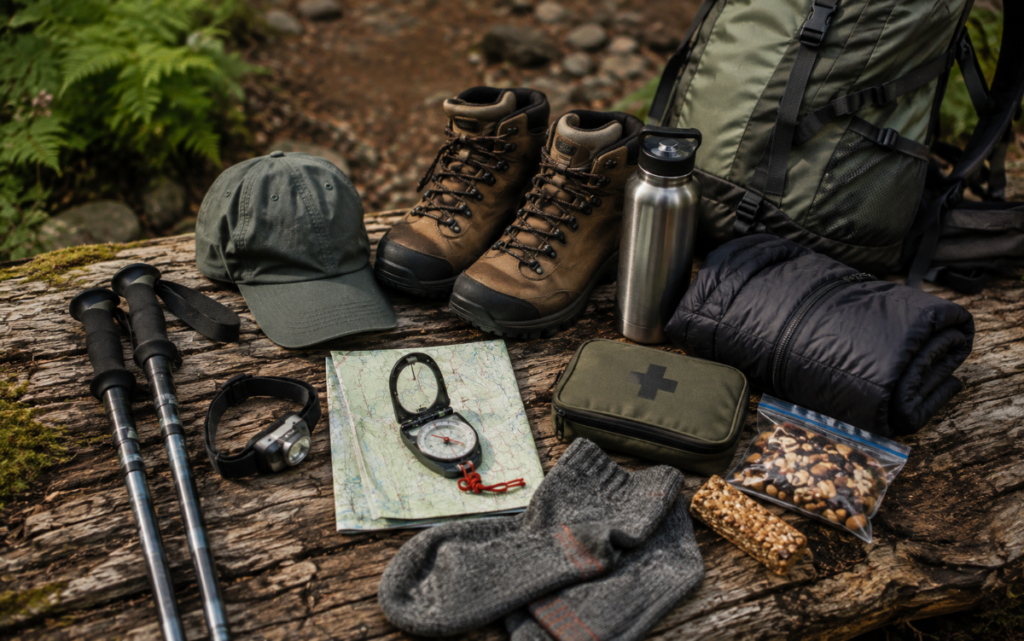
You don’t need to buy everything at once, and you don’t need premium equipment for a first hike. Here’s what actually matters, and why.
Footwear
Your shoes matter more than almost anything else you bring.
Regular sneakers can work for very easy, dry trails, but proper
hiking shoes or boots provide better grip and ankle support once
terrain gets uneven.
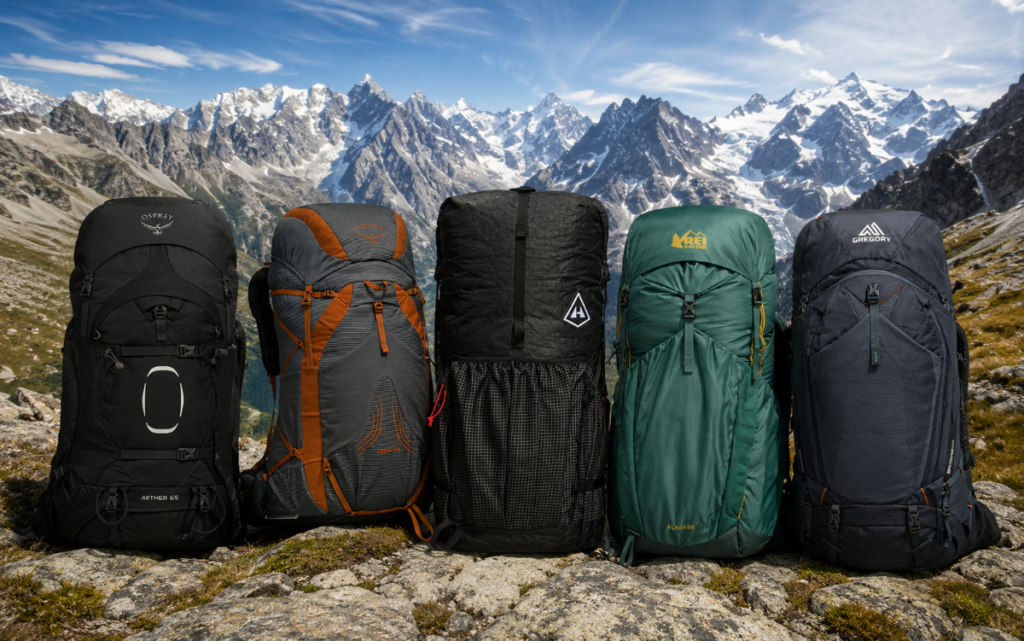
A backpack
Even for a short hike, you’ll want something to carry water,
snacks, and layers. It doesn’t need to be large — a simple daypack
is enough for most first hikes.
Water
Bring more than you think you’ll need. A general guideline is
about 0.5 liters per hour of moderate activity, adjusted for
heat and trail difficulty.
Clothing
Weather can shift quickly outdoors, even on a clear day. Dressing
in layers lets you adjust as conditions change rather than being
stuck too hot or too cold.
Navigation
Even on marked trails, it helps to know where you are and where
the trail goes. A downloaded offline map or a trail app is usually
enough for a beginner hike.
Safety Basics Before You Go
A few habits go a long way toward keeping a hike safe and enjoyable:
- Check the weather forecast the morning of your hike, not just the night before.
- Tell someone your planned route and expected return time.
- Know your turnaround point in advance — if you’re not at the halfway mark by your planned turnaround time, head back.
- Carry basic first aid items, even for a short hike.
- Know the signs of dehydration and heat exhaustion, and don’t push through them.
Basic Navigation Awareness
Getting lost is one of the more common reasons hikes go wrong, even on trails that seem obvious. Before you go, it helps to know how to read trail markers, understand your route on a map, and recognize when you’ve gone off-trail.
Common Beginner Mistakes
A few patterns show up repeatedly among first-time hikers:
- Choosing a trail that’s too long or too steep for their fitness level.
- Underestimating how much water to bring.
- Wearing the wrong footwear for the terrain.
- Not checking the weather or start time, leading to hiking in the dark.
- Not telling anyone where they’re going.
Being aware of these ahead of time avoids most of them.
Your First Hike Checklist
Before you head out, it helps to have a simple list to run through rather than relying on memory. Cover the basics: footwear, water, food, navigation, weather-appropriate clothing, and letting someone know your plan.
Hiking Etiquette and Leave No Trace
Part of hiking responsibly is minimizing your impact on the trail and the people around you:
- Stay on marked trails to avoid damaging surrounding vegetation.
- Pack out everything you bring in, including food scraps.
- Yield to hikers heading uphill when the trail is narrow.
- Keep noise levels reasonable.
These habits protect the trails for everyone, including future you.
Frequently Asked Questions
Do I need special shoes to go hiking?
Not necessarily for very easy, flat trails, but proper hiking shoes make a noticeable difference in grip and comfort once you’re on uneven or loose terrain, and they reduce your risk of ankle injury.
How far should a beginner hike?
A round trip of 3–5 km with minimal elevation gain is a reasonable starting point. You can build up distance and difficulty as you gain experience and fitness.
What’s the difference between hiking and trekking?
Hiking is typically a single-day activity on a set trail. Trekking usually refers to longer, multi-day journeys, often in more remote terrain.
Is it safe to hike alone as a beginner?
It can be, on well-traveled, well-marked trails, but it’s safer to hike with someone else your first few times. If you do go alone, always tell someone your route and expected return time.