OutdoorCompass.net – Hiking shoes are one of the few pieces of gear worth getting right on the first try — the wrong fit or type can turn an otherwise good trail into a miserable one. This guide walks through the factors that actually matter when choosing hiking footwear, then looks at how a few well-known beginner-friendly options compare on those factors.
Key Decision Factors
Before looking at specific shoes, it helps to know what you’re actually deciding between:
- Footwear type — trail runner, low-cut hiking shoe, or hiking boot
- Terrain match — what kind of trail you’ll mostly be hiking
- Fit — matters more than brand or price
- Waterproofing — a real trade-off, not an automatic “yes”
- Outsole/traction — how the shoe grips different surfaces
- Break-in period — every hiking shoe needs one, to some degree
Types of Hiking Footwear
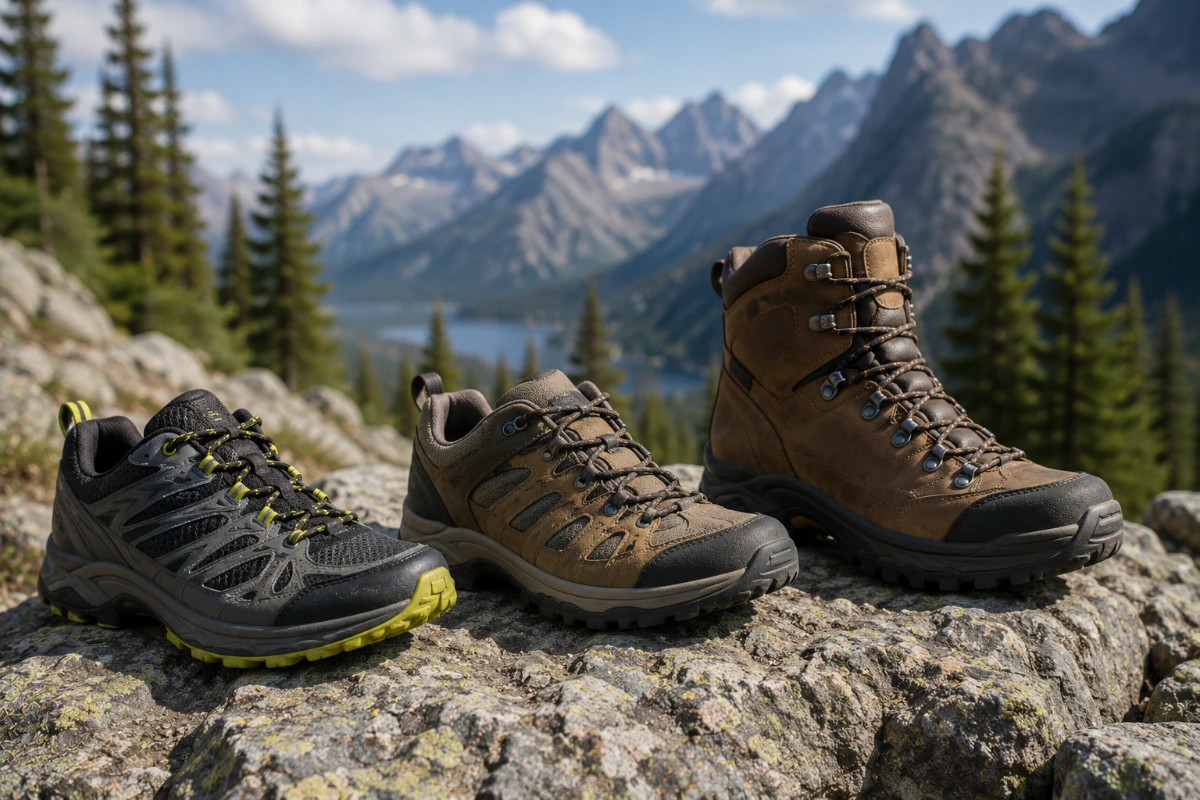
Trail running shoes are low-cut, lightweight, and flexible — closer to a running shoe than a boot. They’re popular for well-maintained trails and day hikes where you don’t need much ankle support.
Low-cut hiking shoes sit between trail runners and boots — sturdier soles and more structure than a trail runner, without the weight of a full boot. This is the most common category for beginner day hiking.
Mid-cut and high-cut hiking boots provide more ankle support and typically more structure underfoot, at the cost of extra weight and a longer break-in period. These matter more for uneven, rocky terrain or when carrying a heavier pack.
There’s no universally “best” type — the right choice depends on your trail and how much support you personally want around your ankle.
Match Footwear to Your Trail Type
- Flat, well-maintained trails: trail runners or low-cut shoes are usually sufficient.
- Uneven, rocky, or root-covered terrain: low-cut shoes with a sturdy sole, or a mid-cut boot, offer more protection and stability.
- Wet or muddy conditions: prioritize traction and appropriate water protection.
- Carrying a heavier pack or hiking on rough, uneven terrain: a more structured mid-cut option may provide additional stability and protection.
If you’re unsure how to judge your specific trail’s terrain and difficulty, the beginner’s hiking guide covers how to evaluate a trail before you go.
Fit Matters More Than Brand
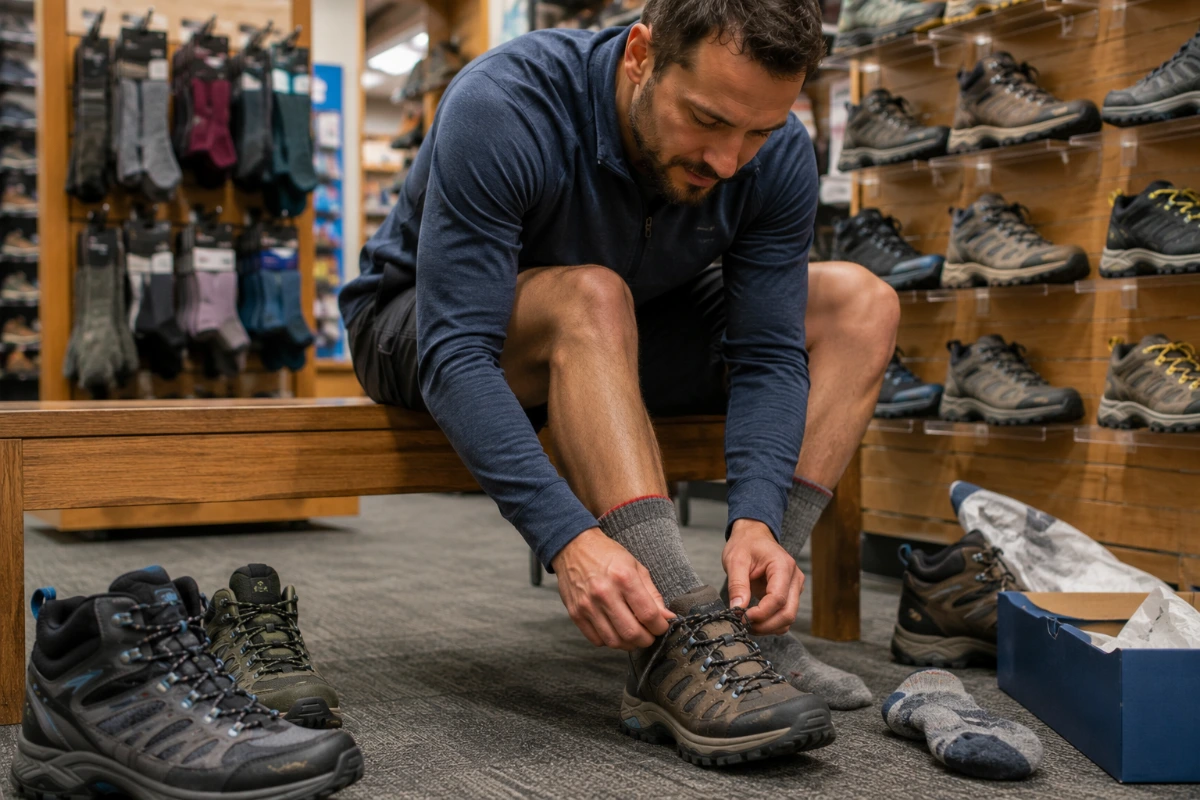
A shoe that fits poorly will cause blisters and discomfort regardless of how well-reviewed or expensive it is. A few practical fitting tips:
- Try shoes on later in the day, when your feet are naturally slightly more swollen — this better reflects how they’ll feel a few hours into a hike.
- Leave roughly a thumb’s width of space between your longest toe and the front of the shoe, to avoid your toes jamming forward on descents.
- Wear the socks you actually plan to hike in when trying shoes on, since sock thickness affects fit. Your socks are also part of your overall hiking clothing system, so our Hiking Clothing Layering Guide covers how to choose and manage layers for changing trail conditions.
- Your heel should stay reasonably secure when walking, especially when going downhill. Excessive heel movement can increase friction and contribute to hot spots or blisters.
If you’re choosing between two similar shoes, prioritize the one that fits your foot shape well over the one with a stronger brand reputation.
Waterproofing: Worth It or Not?
Waterproof hiking shoes keep your feet dry in wet conditions, but that protection comes with a trade-off: they’re generally less breathable and can run warmer, especially in hot weather.
- Choose waterproof if you regularly hike in wet, muddy, or cold conditions, or hike in a climate with frequent rain.
- Consider non-waterproof if you mostly hike in dry conditions, since better breathability can mean more comfort on hot-weather hikes.
Some models are offered in both waterproof and non-waterproof versions of the same shoe — worth checking before assuming a specific model only comes one way.
Sole and Traction
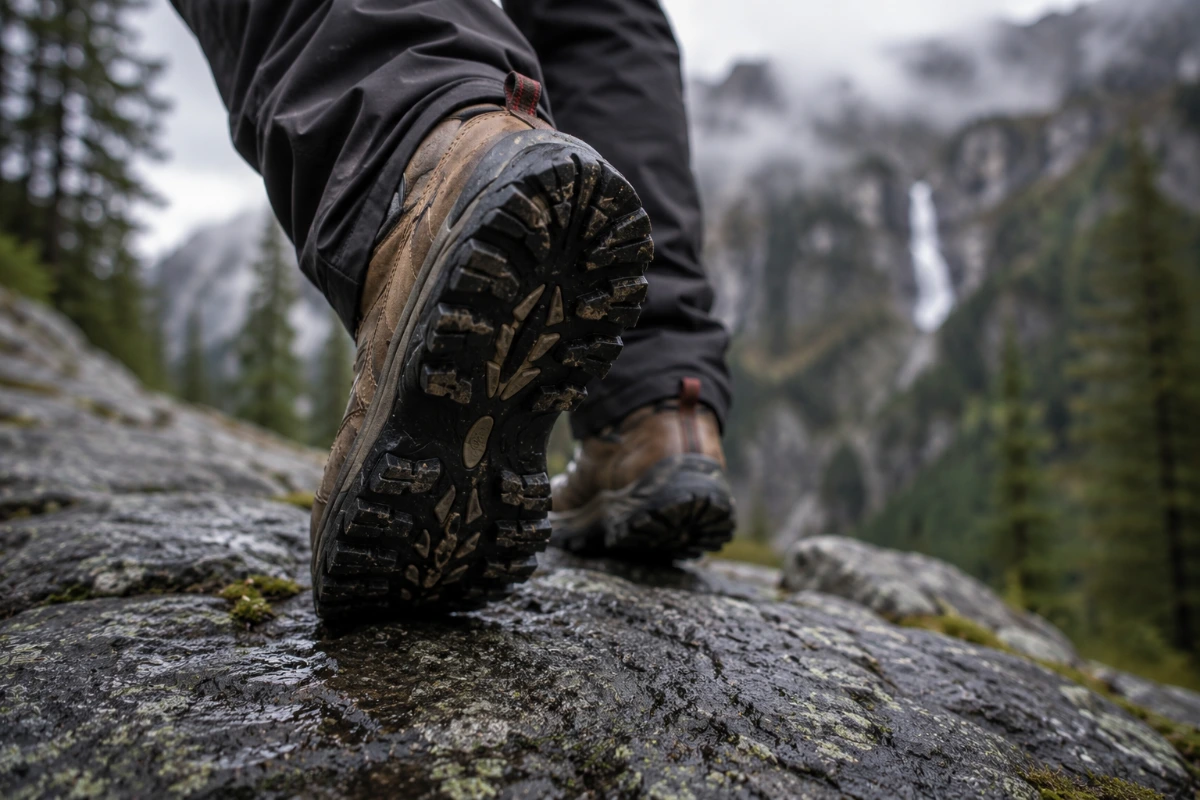
The outsole (the bottom of the shoe) determines how much grip you get on different surfaces — this matters most on wet rock, loose gravel, or steep descents, where good traction reduces slipping. Different brands use their own proprietary outsole compounds and tread patterns, generally optimized for grip and durability, though specific performance can vary by terrain type and shouldn’t be assumed identical across models.
For beginners, the exact outsole brand matters less than choosing a tread pattern and shoe designed for the terrain you’ll actually hike.
Break-In Period
Most hiking shoes benefit from being worn before an actual hike, even if they require little or no formal break-in. Wearing new shoes around the house or on short walks for a week or two lets you catch any pressure points or fit issues somewhere low-stakes, rather than discovering them 5 kilometers into your first hike.
Starting a hike with untested footwear is also an easy mistake for beginners to avoid. For more common beginner errors, see our guide to 10 Common Hiking Mistakes Beginners Make.
Budget Considerations
A higher price doesn’t automatically mean a better shoe for your specific needs — fit and terrain match matter more than price point. That said, price often does correlate with factors like materials, durability, and specific technology (like premium waterproof membranes), so it’s a legitimate factor to weigh, just not the primary one.
Specific pricing isn’t included in this guide since prices change frequently — always check current pricing and availability directly before purchasing.
Comparing Beginner-Friendly Hiking Shoes
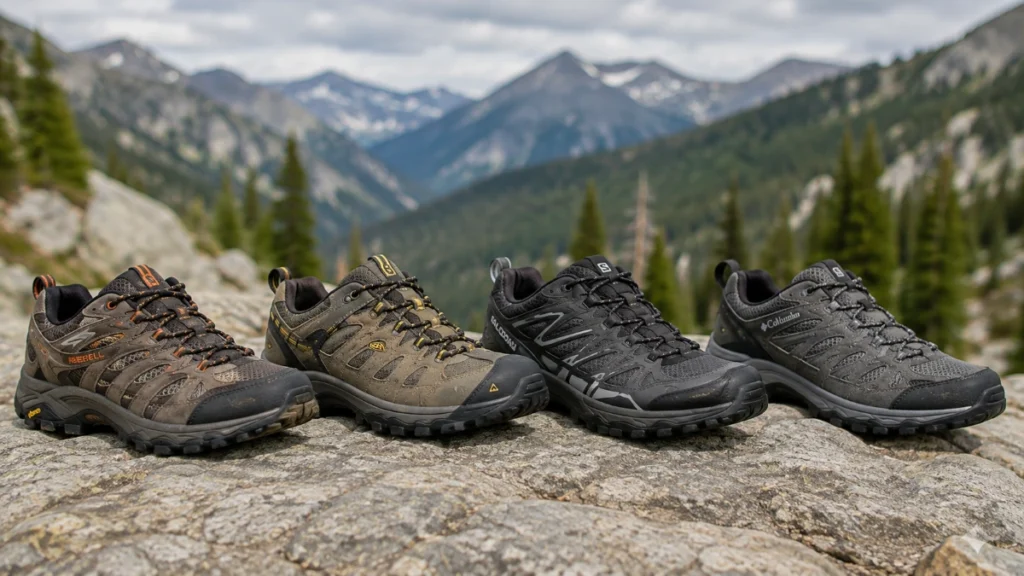
The models below are commonly recommended starting points for beginner hikers. The specifications below are provided as a general comparison. Product details can vary by size, version, and region, so verify current specifications, pricing, and availability before purchasing.
| Feature | Merrell Moab 3 | KEEN Targhee IV Waterproof | Salomon X Ultra 5 GORE-TEX | Columbia Redmond III Waterproof |
|---|---|---|---|---|
| Beginner-Friendly | Yes | Yes | Yes | Yes |
| Waterproof | Available in waterproof and non-waterproof versions | Yes | Yes | Yes |
| Weight | Approx. 460–480 g | Approx. 530 g | Approx. 369–380 g | Approx. 467 g |
| Outsole | Vibram TC5+ | KEEN.RUGGED | Contagrip | Omni-Grip |
| Main strength | All-around versatility | Roomy fit | Lightweight and stable | Value |
| Best suited for | General day hiking | Hikers wanting a roomier fit | Lightweight hiking | Budget-conscious hikers |
How to read this table for your situation:
- If you want one solid all-around choice without leaning heavily one direction, the Moab 3 is worth a closer look, and its availability in both waterproof and non-waterproof versions gives some flexibility.
- If you have a wider or higher-volume foot, the Targhee IV‘s roomier fit is worth trying on specifically for that reason — fit shape varies by brand, not just size.
- If minimizing weight while keeping stability matters to you, the X Ultra 5 is the lightest of the four listed here.
- If budget is your primary constraint, the Redmond III is positioned as the value option among these four, though “value” should be weighed against current pricing at the time you’re buying, not assumed from this table alone.
Check Current Options on Amazon:
If one of these models looks like a good match, check the current price, availability, sizing, and customer reviews before purchasing.
Verify the current price, availability, specifications, size options, and seller information before purchasing.
Frequently Asked Questions
Do I need expensive hiking shoes as a beginner?
No — a well-fitting shoe in the beginner-friendly category, matched to your typical trail conditions, is more important than price point.
Fit and terrain match should drive the decision more than budget alone.
Can I use regular running shoes for hiking?
For flat, dry, well-maintained trails, running shoes can work reasonably well.
Once terrain becomes uneven, rocky, or wet, dedicated hiking shoes or trail runners generally offer better grip and foot protection.
How long is a normal break-in period?
A week or two of regular wear — around the house or on short walks — is a reasonable break-in window before a longer hike, even for shoes marketed as requiring minimal break-in.
Choose Based on Fit and Terrain, Not Just Reputation
The right hiking shoe is the one that fits your foot well and matches the terrain you’ll actually be hiking — not necessarily the most expensive or most talked-about option. Use the criteria above to narrow down a type and fit, then verify current pricing, availability, and reviews directly before making a final decision.
OutdoorCompass
Explore More. Pack Smarter.