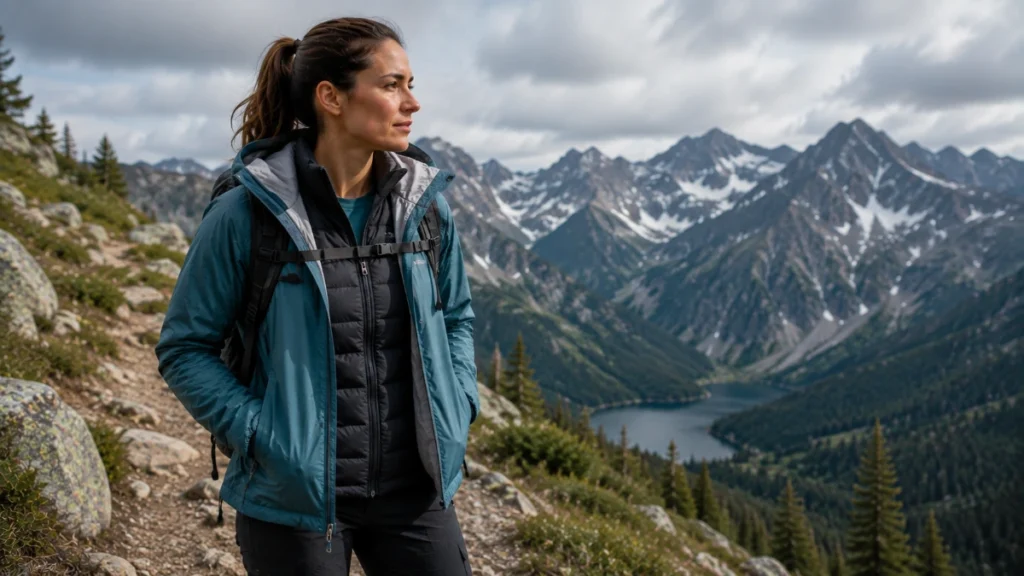
OutdoorCompass.net – Layering isn’t really about how many clothes you bring — it’s a system that lets you adjust quickly as your body temperature and the weather around you change over the course of a hike. Understanding how each layer actually works makes it much easier to dress appropriately for any trail, rather than guessing based on the morning temperature alone.
The Three-Layer System
Each layer has a distinct job:
- Base layer — manages moisture by moving sweat away from your skin.
- Mid layer — provides insulation, trapping body heat.
- Outer layer — protects against wind and precipitation.
Understanding this separation of function is the key to layering well — you’re not just “adding warmth,” you’re managing moisture, heat, and weather protection somewhat independently.
Base Layer: Managing Moisture
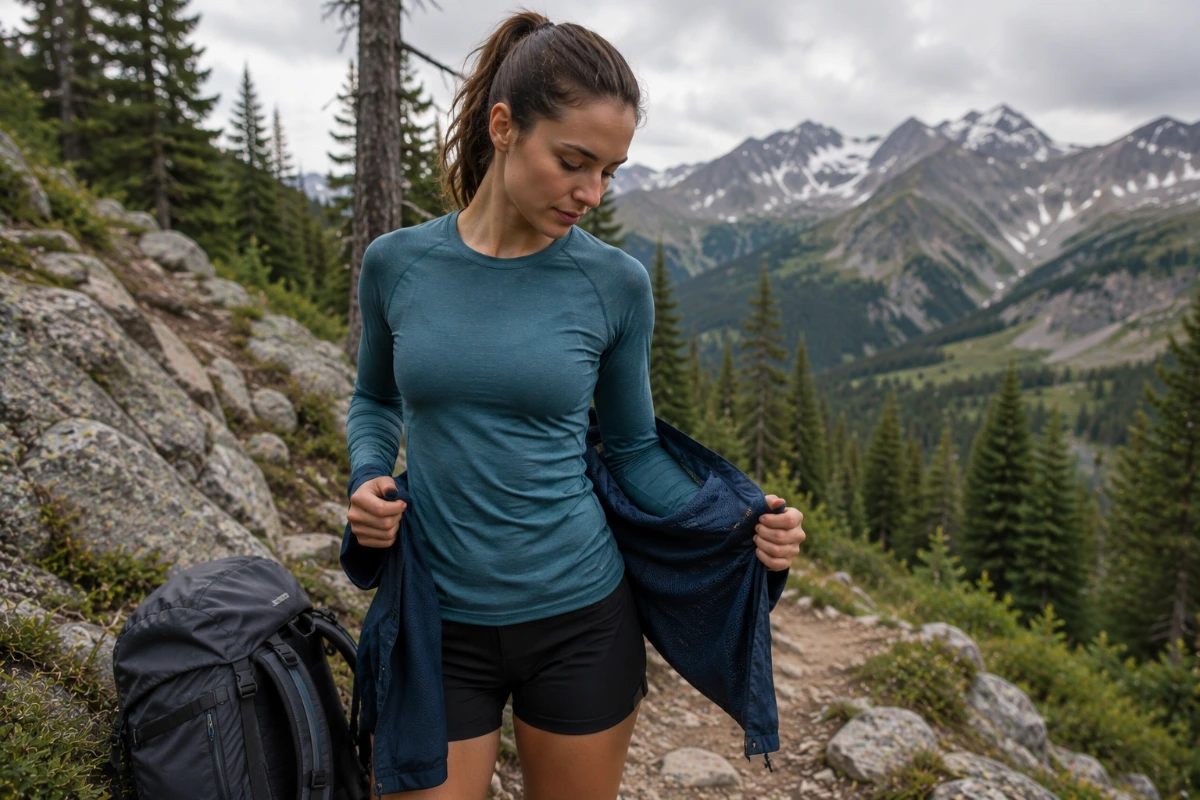
The base layer’s main job isn’t warmth — it’s moving sweat away from your skin so you don’t stay wet. This matters because wet skin loses heat far faster than dry skin, especially once you stop moving or the wind picks up.
This is exactly why cotton performs poorly for hiking: it absorbs moisture and holds onto it rather than moving it away from your skin, so once you sweat, you stay damp for the rest of the hike. In cool or windy conditions, that dampness accelerates heat loss.
Two common base layer materials, at a general level:
- Synthetic fabrics (like polyester blends) — dry quickly, wick moisture effectively, and are generally more affordable.
- Merino wool — also wicks moisture well, tends to resist odor better over multiple wears, but is often pricier and can be less durable than synthetics.
Both are reasonable choices; the main point is avoiding cotton against your skin, not choosing a specific brand or fabric blend.
Merino vs Synthetic: Which Base Layer Is Right for You?
| Feature | Synthetic | Merino |
|---|---|---|
| Moisture management | Excellent | Excellent |
| Drying speed | Fast | Moderate |
| Odor resistance | Moderate | Excellent |
| Price | Usually lower | Usually higher |
| Durability | Generally good | Can vary by fabric/blend |
| Best for | Budget & frequent washing | Multi-day use & odor-sensitive hikers |
For beginners: Either can work well. Choose based on your budget, expected conditions, washing access, and how often you’ll wear the same layer.
Synthetic Option: Columbia Men’s Hike T-Shirt
Merino Option: Smartwool Men’s Merino Sport 150
Mid Layer: Insulation
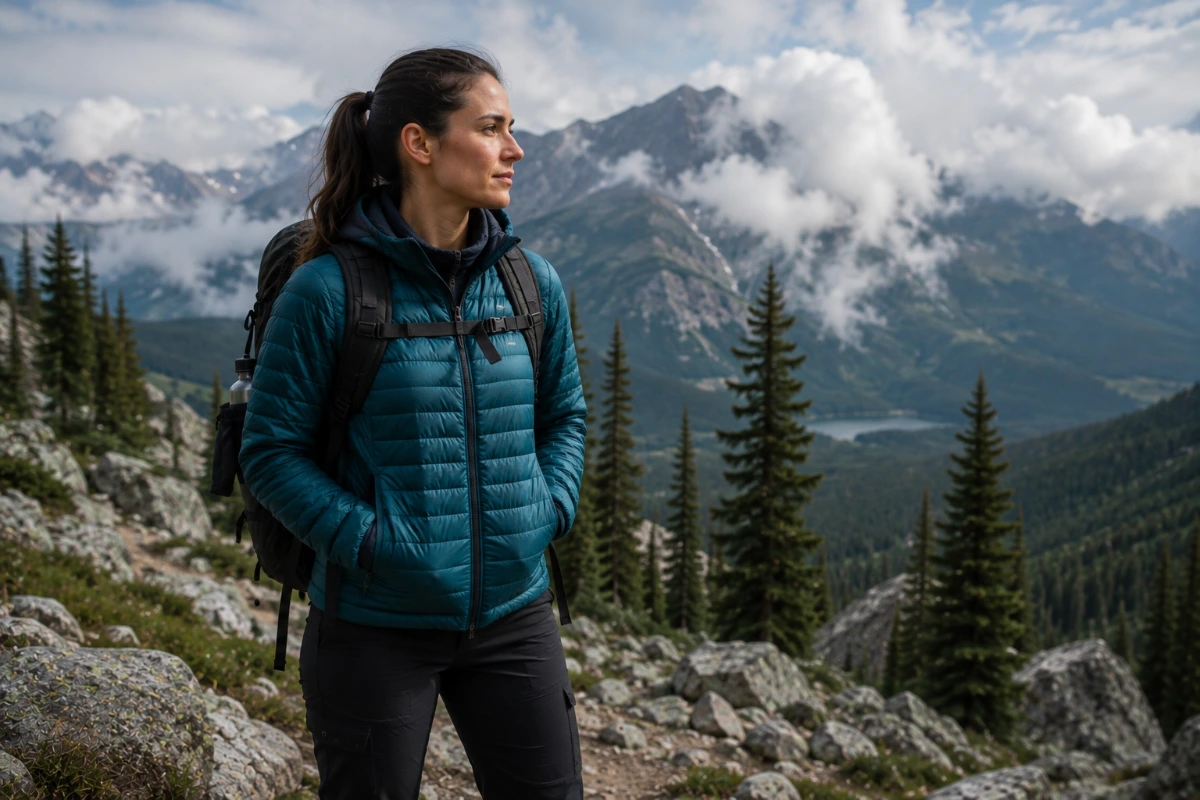
The mid layer’s job is trapping the heat your body generates. Common options, with general trade-offs:
- Fleece — breathable, dries quickly, insulates reasonably well even when slightly damp, but is less compressible than down. A practical option for most beginner hikes in mild-to-cool conditions.
- Down insulation — very warm for its weight and packs down small, but can lose substantial insulating performance when saturated and generally dries more slowly than synthetic alternatives.
- Synthetic insulation — generally heavier than down for comparable warmth, but tends to retain more insulating performance when damp and dries faster.
For most beginner hikes in mild-to-cool conditions, a simple fleece is a practical, low-complexity choice. Down and synthetic insulation become more relevant for colder conditions, higher elevations, or situations where packability and moisture management are bigger priorities.
Outer Layer: Protection from the Elements
The outer layer’s job is blocking wind and precipitation — it’s not primarily for warmth, which is why a thin, non-insulated rain shell can still be an essential layer even in relatively mild temperatures.
A few terms worth understanding:
-
Waterproof — blocks water from passing through entirely, typically at the cost of some breathability.
Amazon option: Columbia Men’s Watertight II Rain Jacket
-
Water-resistant — repels light moisture (like drizzle) but isn’t designed to withstand sustained rain.
Amazon option: Columbia Men’s Glennaker Lake Rain Jacket
-
Windproof — blocks wind but doesn’t necessarily block water.
Amazon option: THE NORTH FACE Men’s Cyclone 3 Jacket
For unpredictable weather, a genuinely waterproof, breathable outer layer offers the most protection, though water-resistant options are often sufficient for short hikes in fair-weather conditions with low rain risk.
How to Adjust Layers Mid-Hike
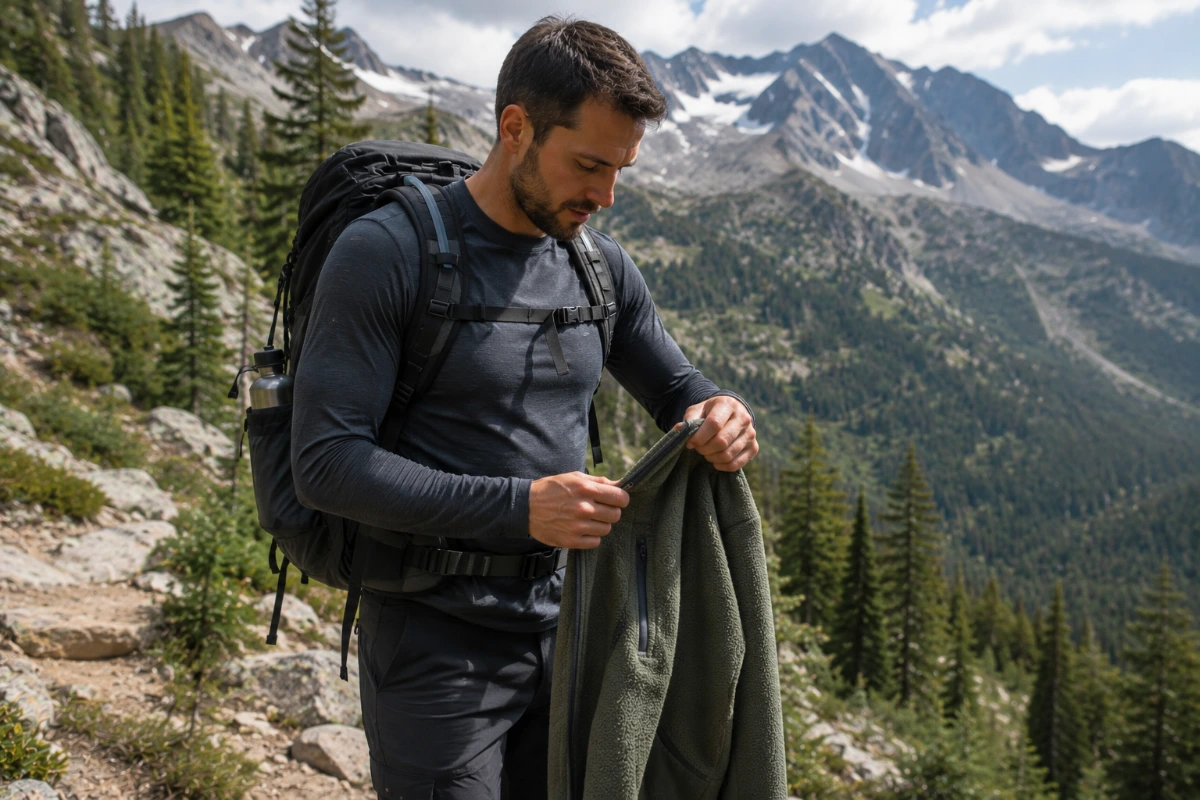
One of the most useful, and most overlooked, layering habits: remove a layer before you start overheating, not after.
A common beginner pattern is starting a hike bundled up because the trailhead feels cool, then continuing to climb while sweating heavily rather than stopping to shed a layer. By the time discomfort is obvious, you’re already damp under your base layer, which becomes a problem again once you stop moving or the wind picks up.
A practical approach: if you’re starting to feel warm on a climb, that’s the signal to pause briefly and remove a layer — not a sign to push through until you’re actually overheated.
Layering by Season or Condition
These are illustrative starting combinations, not fixed rules — actual conditions, personal cold tolerance, and exertion level all matter.
Mild, warm weather: Base layer alone is often enough, with a light wind or rain layer packed in case conditions shift.
Cool, moderate weather: Base layer plus a light mid layer (fleece), with a wind or rain shell packed for wind or precipitation.
Cold or windy conditions, higher elevation: Base layer, a warmer mid layer (heavier fleece or insulated jacket), plus a waterproof, windproof outer shell.
Common Layering Mistakes
- Overdressing at the trailhead — dressing for how the air feels standing still, rather than how it will feel once you’re moving and generating heat. This usually becomes obvious about 15–20 minutes into a hike.
- Assuming a non-breathable outer layer is “leaking” — a jacket that isn’t breathable can trap your own sweat inside, which feels like the jacket is letting water in when the moisture is actually coming from you, not the weather.
- Skipping the outer layer entirely on a clear day — even fair-weather forecasts can shift, especially at elevation, and a lightweight rain shell takes up very little pack space relative to the protection it offers.
Frequently Asked Questions
Do I need three completely separate layers, or can they overlap?
They can overlap — some jackets combine light insulation with wind resistance, for example.
What matters is that the three functions — moisture management, insulation, and weather protection — are covered, not that you’re carrying exactly three distinct garments.
Is a regular rain jacket enough for hiking?
For many beginner hikes in mild weather, a basic rain jacket is a reasonable outer layer.
For more demanding conditions — sustained rain, wind, or cold — a jacket specifically designed for breathability during active movement tends to perform noticeably better than a general-purpose rain jacket.
Do I still need to layer in hot weather?
The system still applies, just shifted — a lightweight, moisture-wicking base layer is still worth wearing instead of cotton.
It’s also worth packing a light layer in case of wind, shade-related cooling, or an unexpected weather shift, even if you don’t expect to need it.
The System Stays the Same, the Combination Changes
Once you understand what each layer is actually doing — moisture management, insulation, weather protection — you can adjust the specific combination to match conditions without having to memorize a fixed outfit for every scenario. That flexibility is the entire point of layering.
Affiliate Disclosure: Some links in this guide may be affiliate links. If you purchase through one of these links, OutdoorCompass may earn a commission at no additional cost to you.
OutdoorCompass
Explore More. Pack Smarter