
Planning your first camping trip can feel overwhelming. There are tents, sleeping bags, cooking gear, food, clothing, lights, safety equipment, and plenty of small items that are easy to forget.
The good news is that you don’t need to buy everything in the outdoor store.
A simple camping checklist for beginners can help you focus on the essentials first. Once you know what you actually need, you can add comfort items and upgrade your gear over time.
This checklist is designed for beginner-friendly campground or car camping trips. If you’re going backpacking, you’ll want to reduce the weight and size of your gear.
Quick Camping Checklist for Beginners
Before getting into the details, here’s a quick list of the most important things to pack:
- ☐ Tent
- ☐ Tent stakes and poles
- ☐ Sleeping bag
- ☐ Sleeping pad
- ☐ Pillow or camping pillow
- ☐ Camping stove
- ☐ Fuel
- ☐ Cookware
- ☐ Plates, cups, and utensils
- ☐ Food and snacks
- ☐ Plenty of drinking water
- ☐ Weather-appropriate clothing
- ☐ Extra socks
- ☐ Headlamp
- ☐ Camping lantern
- ☐ First-aid kit
- ☐ Navigation tools
- ☐ Phone and power bank
- ☐ Toiletries
- ☐ Toilet paper
- ☐ Trash bags
- ☐ Sunscreen
- ☐ Insect repellent
- ☐ Emergency supplies
- ☐ Camping chair
- ☐ Entertainment items
Now let’s go through each category.
1. Shelter
Your tent is one of the most important items on your camping checklist. For your first trip, choose a tent that’s easy to set up rather than one with complicated features. A slightly larger tent can also make beginner camping much more comfortable.
Shelter checklist
- ☐ Tent
- ☐ Tent poles
- ☐ Tent stakes
- ☐ Rainfly
- ☐ Groundsheet or footprint
- ☐ Extra guy lines
- ☐ Small mallet or hammer
- ☐ Tent repair tape
A tent rated for two people is fine for two campers, but if you want extra space for bags and gear, consider sizing up.
For example, a four-person tent can be a comfortable choice for two people because it gives you more room inside.
Beginner tip: Practice setting up your tent at home before your first camping trip. You don’t want to learn how the poles work for the first time after sunset.
Recommended beginner tent
A tent such as the Coleman Sundome is worth considering because it is designed for straightforward recreational camping and is widely available.
2. Sleeping Gear
A good sleeping setup can make or break your first camping experience.
You don’t necessarily need an expensive sleeping system. However, don’t underestimate the importance of a comfortable sleeping pad.
Your sleeping bag keeps you warm, while the sleeping pad provides insulation from the cold ground and adds cushioning.
Sleeping gear checklist
- ☐ Sleeping bag
- ☐ Sleeping pad or air mattress
- ☐ Camping pillow
- ☐ Pillowcase
- ☐ Extra blanket
- ☐ Sleeping bag liner if needed
Choose a sleeping bag based on the expected temperature at your campsite.
Don’t simply choose one because it looks warm. Check the temperature rating and compare it with the weather conditions you expect.
For warmer camping trips, a lightweight sleeping bag may be enough. For colder conditions, choose a bag designed for lower temperatures.
A compact sleeping pad such as the Klymit Static V2 can also be a practical option for campers who want something more portable.
Beginner tip: Put your sleeping pad underneath your sleeping bag. Sleeping directly on the tent floor can be surprisingly uncomfortable and cold.
3. Cooking Equipment
You don’t need a complete outdoor kitchen for your first camping trip.
Keep your first meals simple. A basic stove, one pot or pan, utensils, and a few easy-to-cook ingredients can be enough.
Cooking checklist
- ☐ Portable camping stove
- ☐ Fuel or gas canister
- ☐ Lighter
- ☐ Backup fire starter
- ☐ Pot or pan
- ☐ Cooking utensils
- ☐ Knife
- ☐ Cutting board
- ☐ Plates or bowls
- ☐ Cups or mugs
- ☐ Forks, spoons, and knives
- ☐ Food storage containers
- ☐ Cooler
- ☐ Dish sponge
- ☐ Biodegradable dish soap
- ☐ Trash bags
A single-burner camping stove is often enough for simple meals.
If you’re cooking for several people, a two-burner stove can make meal preparation easier.
The Coleman 1-Burner Butane Camping Stove is one example of the type of compact stove beginners can consider.
Important: Always use camping stoves according to the manufacturer’s instructions and only in approved outdoor cooking areas. Never use a fuel-burning stove inside a tent.
4. Food and Water
Food planning is one of the easiest ways to make camping simpler.
For your first trip, avoid meals that require complicated preparation. Think oatmeal, sandwiches, pasta, canned food, eggs, instant noodles, grilled vegetables, or pre-prepared meals.
Food checklist
- ☐ Breakfast
- ☐ Lunch
- ☐ Dinner
- ☐ Snacks
- ☐ Coffee or tea
- ☐ Cooking oil
- ☐ Salt and basic seasonings
- ☐ Drinking water
- ☐ Extra water for cooking
- ☐ Cooler or food storage
- ☐ Reusable water bottles
- ☐ Garbage bags
Bring more drinking water than you think you’ll need if you’re camping somewhere without a reliable water source.
Before leaving, check whether your campground provides potable water.
Beginner tip: Plan your meals before shopping. This helps prevent bringing too much food and reduces food waste.
5. Clothing
The right clothing is more important than bringing lots of clothing.
Instead of packing one heavy outfit, consider using layers. You can add or remove layers as the temperature changes.
Clothing checklist
- ☐ T-shirts
- ☐ Long-sleeve shirt
- ☐ Warm layer or fleece
- ☐ Waterproof jacket
- ☐ Hiking or outdoor pants
- ☐ Comfortable shorts
- ☐ Underwear
- ☐ Extra socks
- ☐ Sleep clothes
- ☐ Hat or cap
- ☐ Rain gear
- ☐ Comfortable outdoor shoes
- ☐ Sandals or camp shoes
Always bring at least one extra pair of socks.
Wet socks can make a surprisingly big difference to your comfort. If rain is expected, pack your spare clothing in waterproof bags or dry bags.
6. Lighting
Never rely only on your phone flashlight.
Once the sun goes down, you’ll want reliable lighting for walking around camp, cooking, finding things inside your tent, and using the bathroom.
Lighting checklist
- ☐ Headlamp
- ☐ Camping lantern
- ☐ Extra flashlight
- ☐ Spare batteries
- ☐ Rechargeable power bank
- ☐ Charging cables
A headlamp is particularly useful because it leaves both hands free.
A lantern is useful for illuminating the campsite or tent area.
A simple LED camping lantern is usually enough for beginners. You don’t need a large or complicated lighting system.
Beginner tip: Test every light before leaving home and make sure rechargeable devices are fully charged.
7. Personal Hygiene
Camping doesn’t mean you have to completely abandon your normal hygiene routine.
You can keep things simple with a small toiletry bag.
Hygiene checklist
- ☐ Toothbrush
- ☐ Toothpaste
- ☐ Biodegradable soap
- ☐ Hand sanitizer
- ☐ Toilet paper
- ☐ Wet wipes
- ☐ Quick-dry towel
- ☐ Deodorant
- ☐ Personal medications
- ☐ Menstrual products if needed
- ☐ Small mirror
- ☐ Trash bags
If you’re staying at an established campground, check whether bathrooms and showers are available.
If there are no facilities, you’ll need to plan more carefully for personal hygiene and waste disposal.
Always follow the campground’s rules and local regulations.
8. Safety and Emergency Gear
Safety equipment should always be part of your camping checklist, even if you’re only going on a short trip.
You may never need most of these items, but they’re worth carrying.
Safety checklist
- ☐ First-aid kit
- ☐ Personal medications
- ☐ Sunscreen
- ☐ Insect repellent
- ☐ Emergency blanket
- ☐ Whistle
- ☐ Multi-tool
- ☐ Waterproof matches or lighter
- ☐ Extra batteries
- ☐ Power bank
- ☐ Emergency food
- ☐ Extra water
- ☐ Basic repair tape
- ☐ Emergency contact information
Before leaving home, tell someone where you’re going and when you expect to return.
Check the weather forecast before your trip and understand the rules of the campground.
Beginner tip: Don’t assume that a popular campground is automatically safe in every weather condition. Strong wind, thunderstorms, flooding, extreme heat, and cold can all create hazards.
9. Navigation
Even if you’re camping at an established campground, navigation equipment is useful.
Your phone may work perfectly at home but have limited or no signal in remote areas.
Navigation checklist
- ☐ Smartphone with offline maps
- ☐ Physical map
- ☐ Compass
- ☐ GPS device if needed
- ☐ Power bank
- ☐ Charging cable
- ☐ Campground map
Download important maps before leaving home.
If you’re hiking away from the campsite, make sure you know the route and understand how to return. For more remote trips, don’t rely on your smartphone as your only navigation tool.
10. Entertainment and Comfort Items
Once the important gear is packed, you can add a few items that make your campsite more enjoyable.
These aren’t essential, but they can make a relaxing weekend much more comfortable.
Comfort checklist
- ☐ Camping chair
- ☐ Small camping table
- ☐ Hammock
- ☐ Book
- ☐ Playing cards
- ☐ Board game
- ☐ Portable speaker
- ☐ Camera
- ☐ Notebook
- ☐ Binoculars
- ☐ Coffee mug
- ☐ Extra blanket
A camping chair is especially useful if you’re staying at a campground for several hours.
You don’t need an expensive chair for your first trip. A simple folding camping chair can be perfectly adequate.
Tip: Don’t pack entertainment that distracts you from the experience. Sometimes sitting around the campfire, watching the sunset, or listening to nature is the best part of camping.
What Beginners Commonly Forget
You’ve packed your tent, sleeping bag, food, and clothes.
What could possibly go wrong?
Quite a few small things.
Here are some items beginners frequently forget:
1. Extra socks
One wet pair can ruin your evening. Pack more than you think you’ll need.
2. Tent stakes
Some campers remember the tent but forget that the tent needs stakes.
3. Tent footprint
A footprint can help protect the bottom of your tent from rough or wet ground.
4. Headlamp
A lantern lights the campsite, but a headlamp is much more useful when you need both hands.
5. Extra batteries
Your flashlight isn’t useful if the batteries are dead.
6. Toilet paper
Never assume the campground will have enough.
7. Trash bags
You need a way to pack out your trash and keep your campsite clean.
8. Phone charger
A dead phone can become a problem if you need it for navigation or emergencies.
9. Food storage
Don’t leave food lying around your campsite. Follow local rules for storing food and disposing of waste.
10. Weather protection
A sunny forecast doesn’t guarantee perfect conditions all weekend. Pack a rain jacket and consider how you’ll protect your gear from unexpected rain.
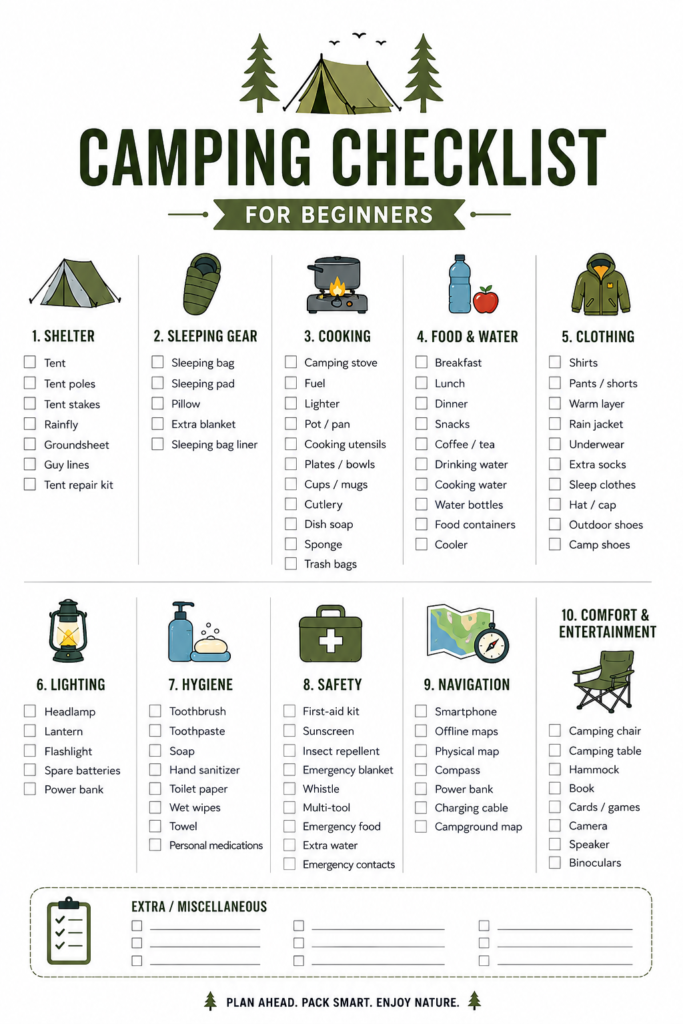
Printable Camping Checklist for Beginners
Beginner Camping Gear Worth Buying
You don’t have to buy everything on this checklist immediately.
Start with the gear you can’t easily borrow or improvise, especially your shelter and sleeping system.
For example, beginner-friendly gear categories to look for on Amazon include:
- Tent : Coleman Sundome or a similar easy-setup dome tent
- Sleeping bag : Coleman sleeping bags suited to your expected temperatures
- Sleeping pad : Klymit Static V2 or another compact camping pad
- Lantern : Coleman or another waterproof LED camping lantern
- Camping stove : Coleman 1-Burner Butane Camping Stove
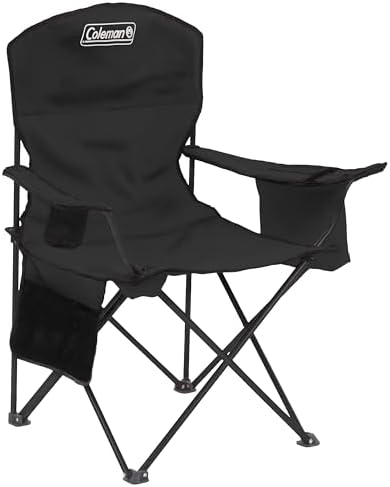
- Camping chair : A simple folding outdoor chair

- WeatherTec system’s welded corners and inverted seams keep water from getting in

- WINTER-READY: This 4-season sleeping bag, the Coleman Big & Tall, serves as a warm sleeping bag with its 40″x84″ size. D…
- OPTIMUM INSULATION: As a cold-weather sleeping bag for adults, it’s filled with 5 pounds of Holofill 808 insulation. Thi…
- FEATURE-RICH DESIGN: This adult sleeping bag cold weather is equipped with smart technologies like a no-snag patented zi…

- CAMPING SIMPLIFIED. The Insulated Static V Lite mattress packs light and small in a backpack, while still offering body-…
- ALL THE COMFORT OF HOME. Sleep better all night with our exclusive V-Chamber design that conforms to the shape of your a…
- 4 SEASON INSULATION. This mat’s V-Chambers are filled with light and lofty Klymalite synthetic insulation. With an excep…

- Perfect for Camping and Emergencies: Ideal for use at home, outdoor camping, and emergency situations.
- Water-Resistant: Built with a durable IPX4 construction to withstand any climate.
- Bright LED: Emits 54 lumens, enough to illuminate most environments effectively.

- Lightweight and Compact: Weighs only 6.7 oz. (189.9 g) and folds for easy packing
- Powerful Cooking: Offers up to 10,000 total BTUs of cooking power
- Consistent Performance: PerfectFlow technology ensures consistent performance, even in extreme conditions
- Polyester
- Imported
- Coleman Cold – built-in 4-can cooler lets you grab a cold drink without getting up
Product availability, sellers, and prices can change, so always check the current Amazon listing before purchasing.
How to Pack Your Camping Gear
Don’t simply throw everything into the car.
Group your gear by purpose.
For example:
Bag 1: Sleeping gear
- Sleeping bag
- Sleeping pad
- Pillow
- Blanket
Bag 2: Kitchen
- Stove
- Fuel
- Cookware
- Plates
- Utensils
Bag 3: Clothing
- Clothes
- Socks
- Rain jacket
- Shoes
Bag 4: Safety & personal items
- First-aid kit
- Toiletries
- Flashlight
- Power bank
Keep your first-night essentials somewhere easy to reach.
You don’t want to unload the entire car just to find your flashlight or sleeping bag.
Final Thoughts
Your first camping trip doesn’t need to be complicated.
The most important things are simple: a reliable shelter, a comfortable sleeping system, enough food and water, appropriate clothing, lighting, and basic safety equipment.
Once those essentials are covered, you can add comfort items such as a camping chair, hammock, speaker, or better cooking equipment.
Use this camping checklist for beginners before you leave home and check each item off as you pack.
Most importantly, don’t let the amount of gear stop you from going.
Start simple, learn from your first trip, and improve your camping setup one adventure at a time.
Affiliate Disclosure:
As an Amazon Associate, OutdoorCompass earns from qualifying purchases. This comes at no extra cost to you. Thank you for supporting OutdoorCompass!