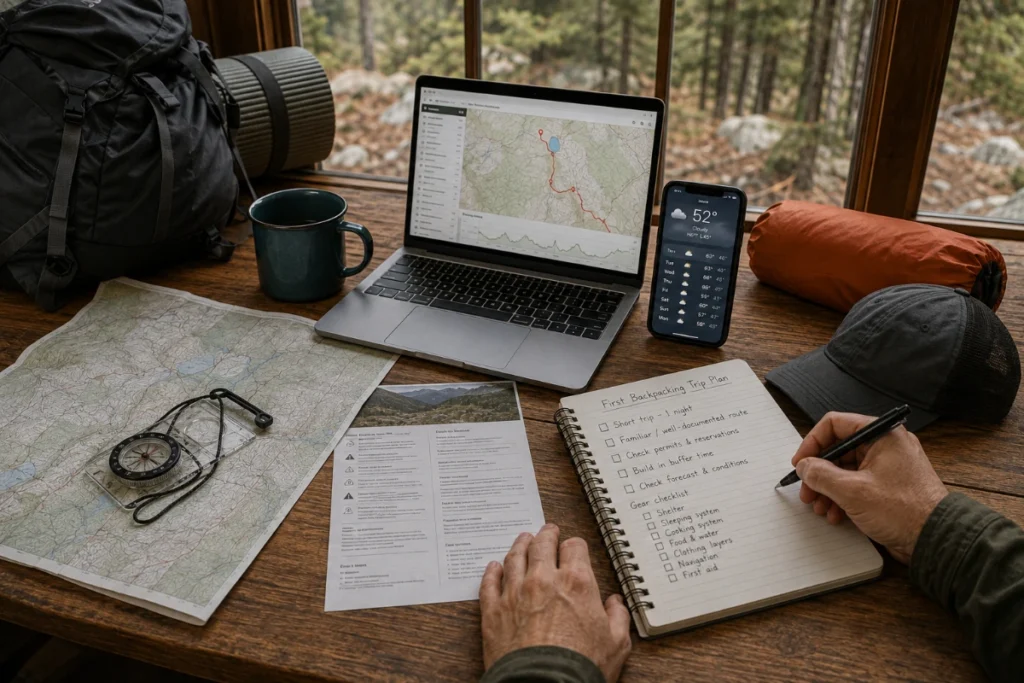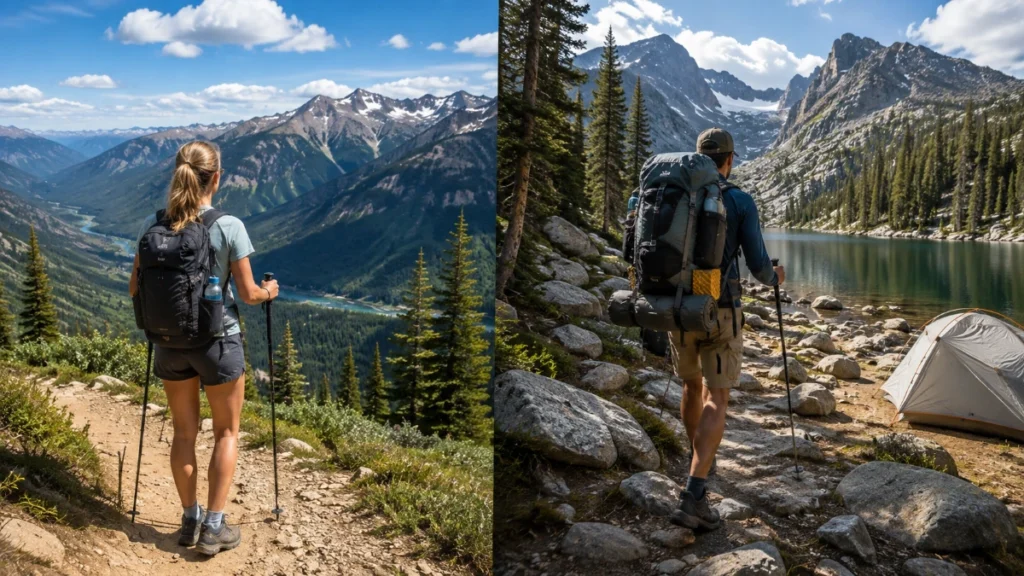
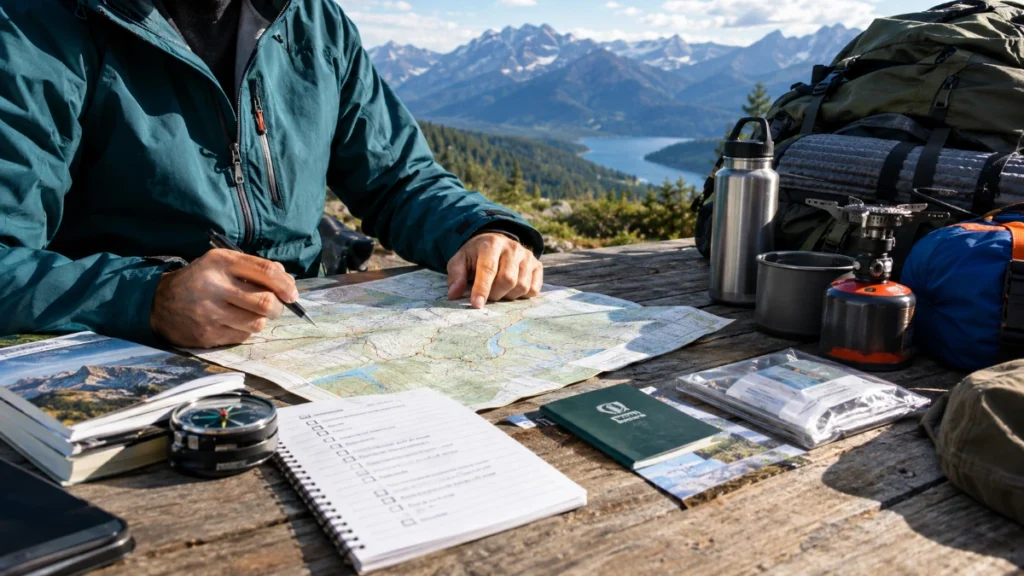
OutdoorCompass.net – Planning a backpacking trip isn’t just packing for a longer hike — it involves a planning phase that starts weeks before you ever hit the trail: choosing a route, checking permit requirements, and working out multi-day food and water logistics. This checklist walks through the process from early planning to the night before you leave.
Quick Checklist Summary
- ✅ Route chosen (short, familiar for a first trip)
- ✅ Permits or reservations checked and secured, if required
- ✅ Weather window checked for your full trip duration
- ✅ Rough daily itinerary planned
- ✅ Food and water needs calculated per day
- ✅ Overnight gear tested before the trip
- ✅ Detailed plan shared with someone not coming
- ✅ Full gear list packed and checked
Details on each phase below.
Take the checklist with you
A simple, print-ready checklist to help you plan your multi-day backpacking trip from permits to packing.
Weeks Before: Planning Phase
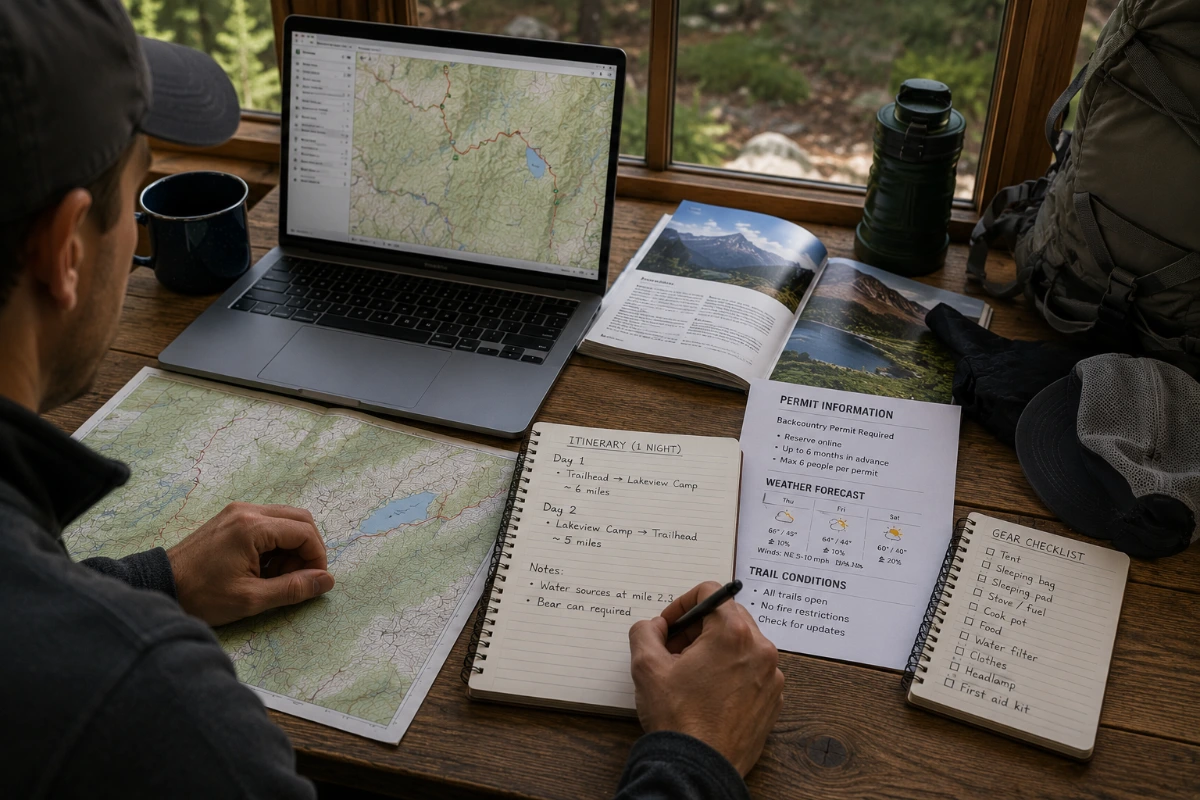
Choose your route. For a first backpacking trip, prioritize a short, well-documented route over an ambitious one — a single overnight on a familiar or well-traveled route is a sensible starting point.
Check permit and reservation requirements. Many backpacking areas require permits or campsite reservations for overnight stays, and requirements vary significantly by location, land management agency, and even by season. This needs to be checked directly with the specific park, forest, or trail authority for your destination — don’t assume either that a permit is required or that it isn’t without confirming.
Check the weather window for your full trip. Unlike a day hike, you’re now planning around multiple consecutive days, which is inherently harder to predict with confidence. Check forecasts as your trip approaches and have a sense of your backup plan if conditions look genuinely poor. Also check for relevant trail closures, fire restrictions, or local advisories before leaving.
Plan a rough daily itinerary. Even a simple plan — how far you’ll hike each day, roughly where you’ll camp — gives you a framework to work from and something concrete to share with whoever you tell about your trip.
Days Before: Logistics and Food Planning
Calculate food and water needs for the full trip. Work out your food per day, then multiply across your total trip length, accounting for some extra food in case of delays. Water planning depends on whether reliable water sources are available along the route and whether you’ll filter or treat water along the way — worth confirming which applies to your specific route.
Test your overnight gear before you go, not for the first time on the trail. Set up your tent at least once beforehand, check that your stove actually lights and your fuel supply is sufficient, and confirm your sleeping bag and pad are in good condition. This mirrors a mistake that costs hikers on single-day trips too — untested gear is far more consequential when you’re relying on it overnight, away from easy backup options.
The Night Before: Final Prep
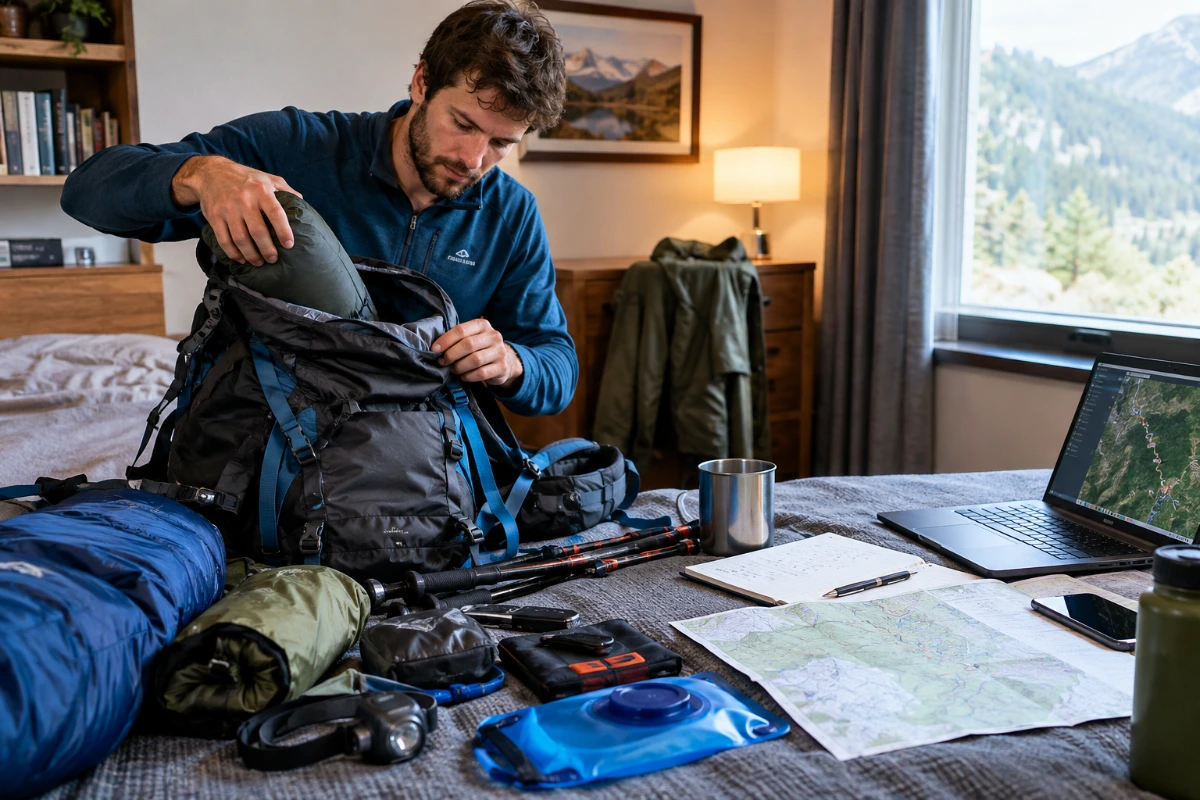
- Do a final full pack-through, checking your list against what’s actually in your bag.
- Review your itinerary one more time, including your planned camp locations.
- Share your detailed plan — route, itinerary, expected return date, and relevant emergency contact information — with someone not coming on the trip. This matters even more for backpacking than day hiking, since the consequences of something going wrong are generally more serious when you’re farther from help for longer.
Gear Checklist Overview
Your overnight-specific gear falls into a few core categories. This checklist covers what to plan for, not the full buying criteria — each category has its own detailed guide.
- Shelter (tent or equivalent)
- Sleep system (sleeping bag and pad appropriate for expected nighttime temperatures)
- Cooking system (stove, fuel, basic cookware)
- Water treatment (filter or treatment method, if relying on natural water sources)
- Backpack sized appropriately for your trip length and gear volume
- Day-hiking essentials still apply on top of this — footwear, layers, navigation, first aid, sun protection
On the Trail: Daily Routine Reminders
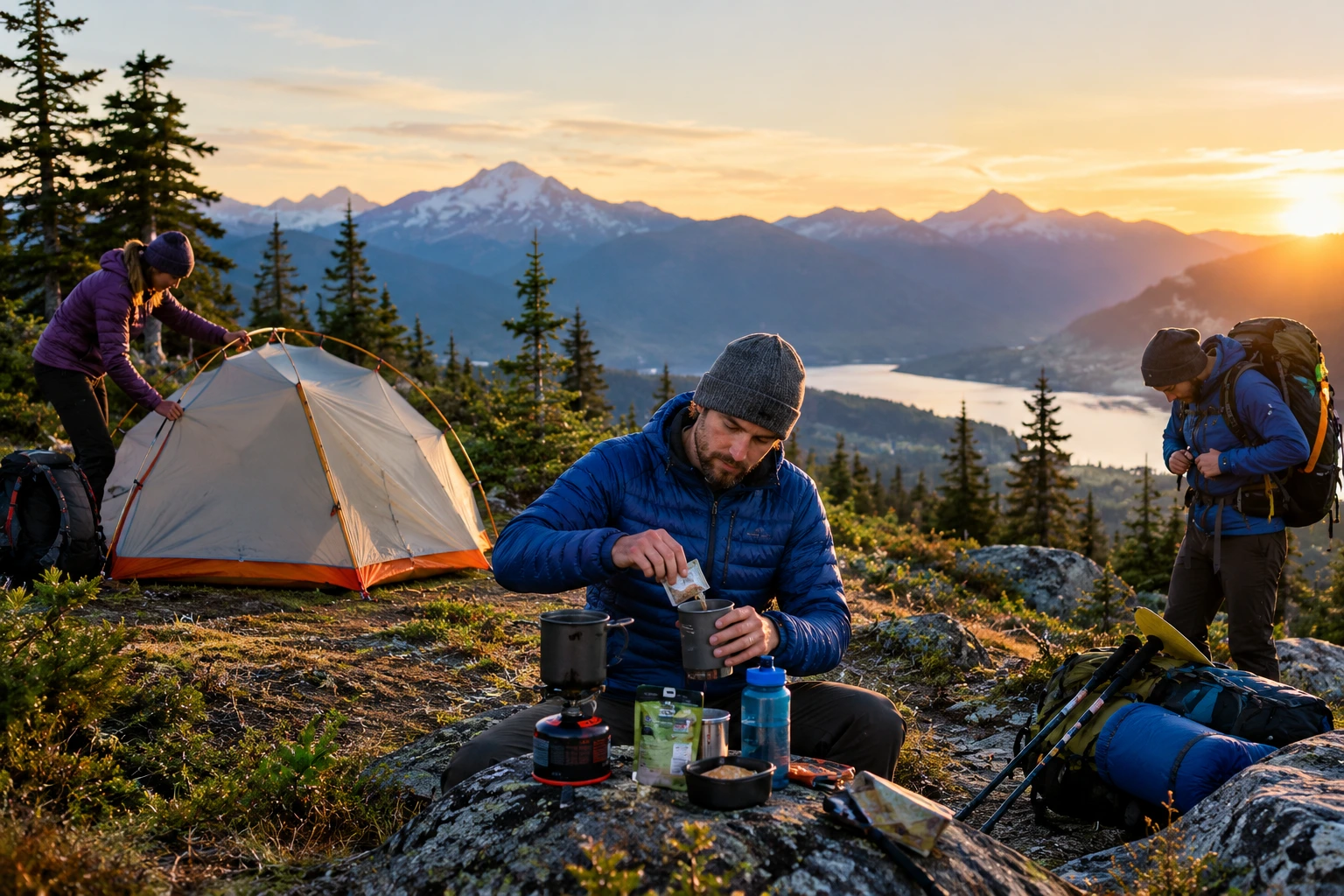
- Set up camp before it gets dark, rather than arriving at your camp spot right at dusk — finding a good site and setting up shelter is much easier with daylight to work with.
- Stick to a consistent food and water schedule each day, rather than letting it slide because you’re focused on hiking distance.
- Do a quick gear check each morning before breaking camp, so nothing gets left behind at a campsite.
Printable Checklist
Weeks Before
- Route chosen (short, familiar for a first trip)
- Permit/reservation requirements checked with the relevant authority
- Weather window being monitored
- Rough daily itinerary planned
Days Before
- Food calculated for full trip length, plus buffer
- Water plan confirmed (carry vs. filter from sources)
- Tent set up and checked
- Stove and fuel tested
- Sleeping bag and pad checked
Night Before
- Full gear check against packing list
- Itinerary reviewed one final time
- Detailed plan shared with someone not coming
On the Trail
- Camp set up before dark each day
- Food and water schedule maintained
- Morning gear check before breaking camp
Frequently Asked Questions
How far in advance should I start planning a backpacking trip?
For a first trip, a few weeks is a reasonable planning window. This gives you enough time to research your route, check permit requirements, and test your gear without rushing.
Do all backpacking trails require a permit?
No. However, many popular trails and destinations do require permits, and requirements vary by location and land management agency. Always check directly with the specific park, forest, or trail authority before your trip.
What’s actually different about this checklist compared to a day-hiking checklist?
The biggest differences are the planning phase and the overnight gear system. Backpacking requires additional planning for permits, multi-day food and water logistics, and weather conditions across several days. Your day-hiking checklist still provides the foundation underneath all of this.
What should I check the night before a backpacking trip?
Review your route and weather conditions, confirm permits and reservations, recheck essential gear, and pack according to your checklist. Make sure someone also has your trip plan and expected return information.
Should I test my backpacking gear before my first trip?
Yes. Set up your shelter, test your stove and fuel, check your sleep system, and become familiar with any equipment you haven’t used before. Testing gear at home gives you a chance to identify problems before you’re on the trail.
Planning Is Most of the Work
A well-prepared backpacking trip is won in the weeks beforehand more than on the trail itself. Route selection, permits, and tested gear reduce most of the risk before you ever take a step — leaving you to focus on the trip itself once you’re actually out there.
OutdoorCompas
Explore More. Pack Smarter.