OutdoorCompass.net – You don’t need to be an athlete to enjoy hiking, but a bit of targeted preparation makes a real difference — especially for anything beyond a short, flat trail. This isn’t a general “exercise more” guide. It’s a practical look at the specific kind of fitness hiking actually requires, and how to build it in the weeks before your first hike.
A quick note before starting: if you have an existing injury, a chronic health condition, or haven’t exercised in a long time, it’s worth checking with a healthcare provider before starting any new training routine, including the suggestions below.
Key Takeaway
Hiking fitness comes down to three things:
- Cardio endurance — the ability to keep moving steadily for a few hours.
- Leg strength, particularly for downhill sections, which stress muscles differently than climbing.
- Comfort carrying a loaded backpack, if your hike involves one.
How Much Training Do You Actually Need?
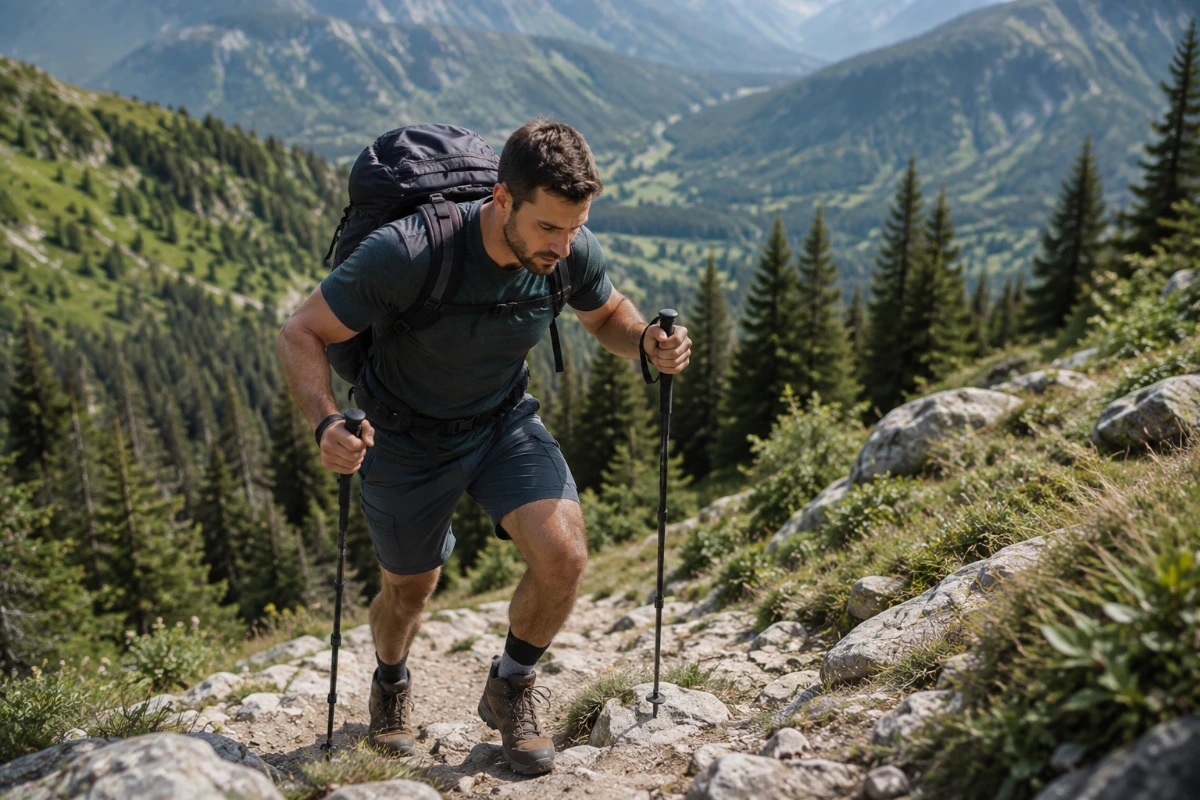
This depends heavily on the trail you’ve chosen. For a short, flat trail with minimal elevation gain, dedicated training may not be strictly necessary if you’re generally active. For anything with meaningful elevation gain or a longer distance, a few weeks of targeted preparation makes a noticeable difference in how the hike actually feels.
The trail difficulty guidance in the beginner’s hiking guide is a good starting point for gauging how much preparation your specific hike calls for.
Building Cardio Endurance
Regular walking is the most practical foundation, since it closely matches the movement pattern of hiking itself — more so than running, which uses a different stride and impact pattern.
A reasonable approach:
- Start with walks of 20–30 minutes, several times a week.
- Gradually increase duration before increasing intensity — getting comfortable walking for longer periods matters more early on than walking faster.
- Once duration feels comfortable, add hills or inclines where available, since sustained uphill effort is closer to what a trail actually demands than flat walking.
Building Leg Strength (Including for Downhill Sections)
Something that catches a lot of beginners off guard: the muscles used going downhill are different from the ones used climbing, and downhill sections are often what causes the most soreness after a first hike, not the uphill parts.
A few simple ways to build this without a gym:
- Stair climbing — walking up and down stairs repeatedly builds both the climbing and descending muscle groups.
- Incline walking — hills, if available, or an incline treadmill setting.
- Bodyweight squats and lunges — build general leg strength that supports both directions of a hike.
Start with a modest amount and increase gradually — the goal is building capacity over a few weeks, not pushing to soreness in a single session.
Training with a Loaded Backpack
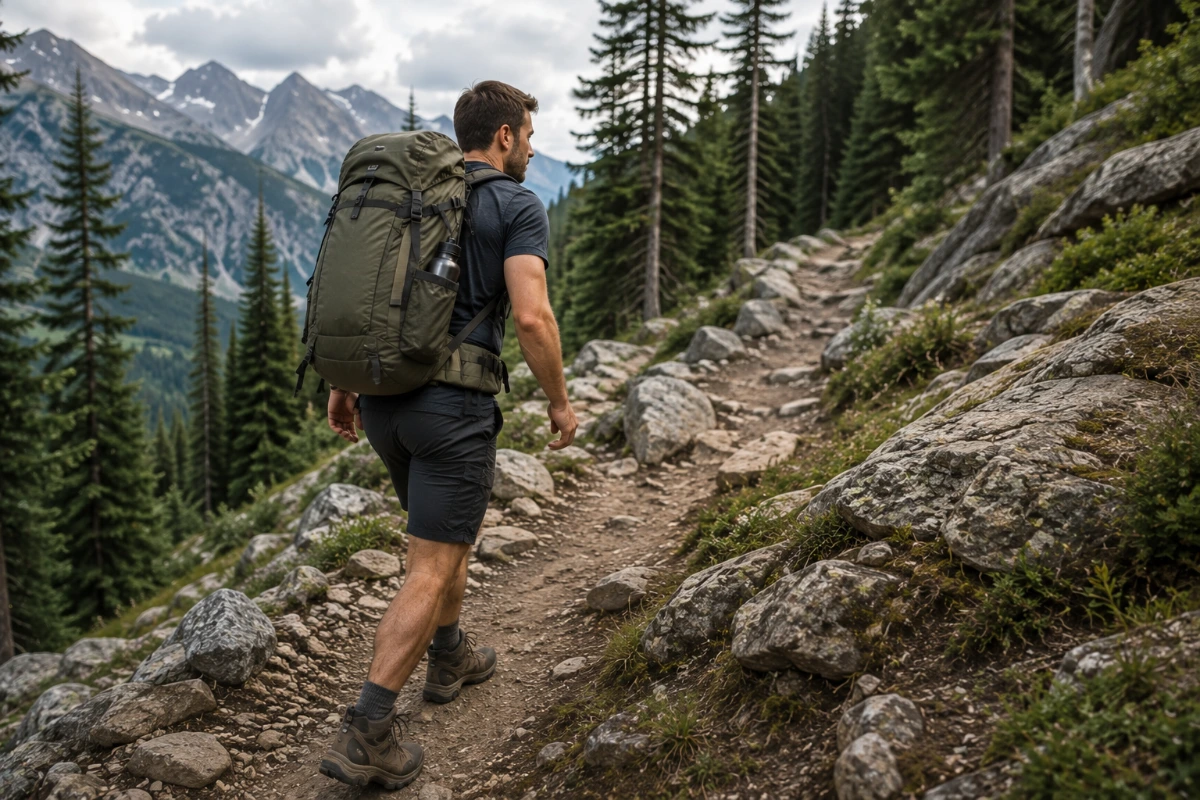
Carrying weight changes your balance and effort level more than most beginners expect, even with a relatively light pack. If your hike involves carrying a daypack with water, food, and layers, it’s worth training with some added weight rather than only training empty-handed.
A gradual approach:
- Start your training walks with a light pack (a few kilograms) rather than your full expected hiking weight.
- Increase the weight gradually over your training period, working toward roughly what you expect to carry on the actual hike.
- Pay attention to how your shoulders and hips feel with the pack on — this is also a good opportunity to adjust straps and fit before hike day, tying back to testing your gear in advance.
Sample 2–4 Week Beginner Training Timeline
This is a general starting framework, not a fixed program — adjust based on your current fitness level and how your body responds.
Weeks 1–2:
- 3–4 walks per week, 20–30 minutes, flat or gently inclined terrain.
- Add stairs or an incline walk once or twice a week if accessible.
Weeks 3–4:
- Extend walks to 45–60 minutes, at least once matching your expected hike duration if possible.
- Introduce a loaded backpack on 1–2 walks per week, starting light and increasing gradually.
- If your trail has significant elevation gain, prioritize hill or incline walking over flat walking during this period.
This timeline assumes a moderate beginner trail. For a very short, flat first hike, even the Weeks 1–2 routine is likely more than sufficient.
Listening to Your Body During Training
Some muscle soreness after new activity, especially after adding hills or a loaded pack, is a normal part of building fitness. This is different from sharp or localized pain, joint pain that doesn’t improve with rest, or pain that worsens rather than easing over a few days — those are signs to scale back and, if they persist, check in with a healthcare professional rather than pushing through.
This guide covers general fitness preparation only and isn’t a substitute for personalized medical or training advice, particularly if you have a pre-existing condition or injury.
Frequently Asked Questions
Do I need to go to a gym to prepare for hiking?
No — regular walking, stairs, and bodyweight exercises cover most of what beginner hiking fitness requires. A gym can help, particularly for strength training, but it isn’t necessary for a first hike on a moderate trail.
How long before my first hike should I start training?
Two to four weeks of consistent preparation is a reasonable window for most moderate beginner trails. For a short, flat trail, even a week or two of regular walking is often enough.
What if I still don’t feel physically ready as hike day approaches?
It’s reasonable to choose a shorter or flatter trail than originally planned rather than pushing through a hike your training didn’t fully prepare you for.
You can always work up to more difficult trails once you have a completed hike or two behind you.
Consistency Over Intensity
The goal isn’t to peak physically right before your hike — it’s building steady, manageable capacity over a few weeks. A modest, consistent routine of walking, some incline work, and a bit of practice with a loaded pack covers what most beginner trails actually demand.
OutdoorCompass
Explore More. Pack Smarter.