OutdoorCompass.net – Most hiking incidents aren’t caused by bad luck — they’re caused by preventable gaps in preparation: not checking the weather, misjudging distance, or pushing past the point where turning back made sense. Hiking safely isn’t about being fearful of the trail. It’s about knowing a handful of principles well enough that they become automatic.
This guide covers what actually matters for beginner safety, without turning a walk in nature into something to be afraid of.
Key Safety Principles
Simple habits that can prevent small problems from becoming serious situations on the trail.
Prepare Before You Leave
Most hiking risks can be reduced before you ever start walking.
Know Your Turnaround Time
Set a turnaround time and follow it, regardless of how far you’ve come.
Act on Early Warning Signs
Watch for changes in weather, dehydration, and fatigue — and act early, not late.
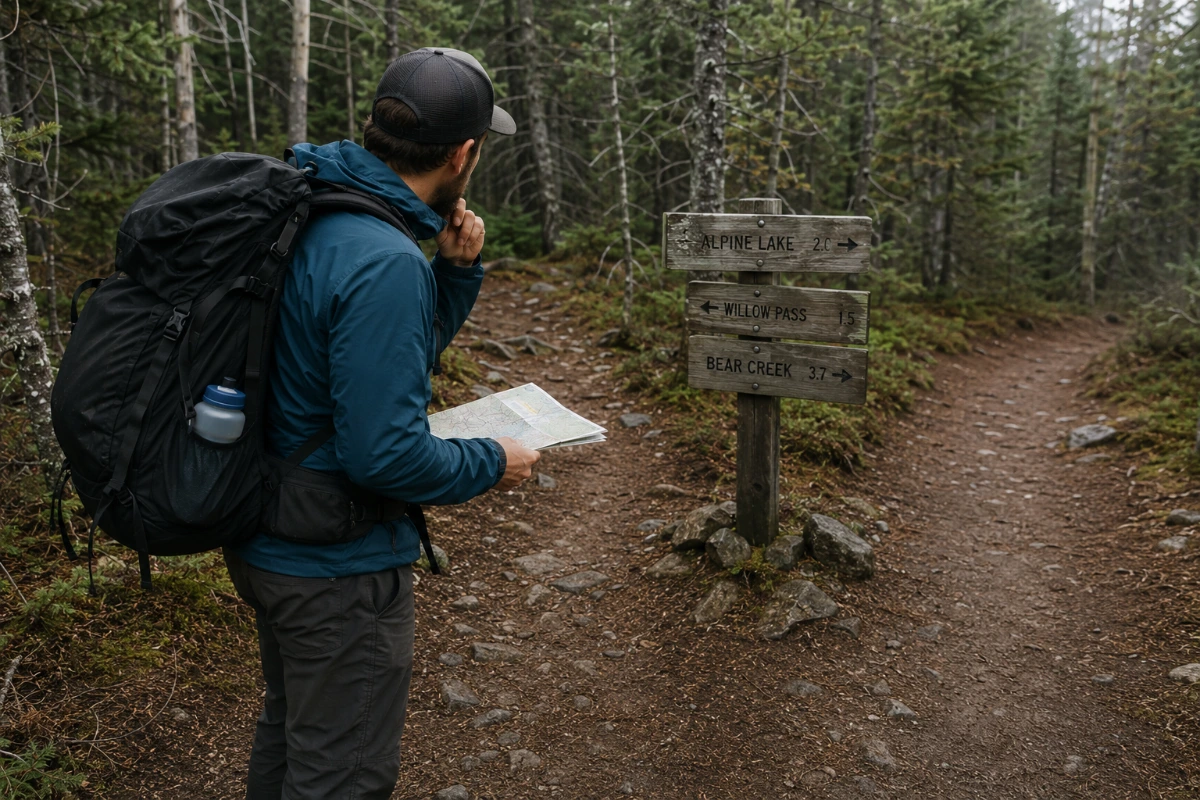
Stop If You’re Lost
If you think you’re lost, stop moving before you do anything else.
Tell Someone Your Plan
Share your hiking plan every time, even on short or familiar trails.
Before the Hike: Reducing Risk Early
Most hiking risk is reduced before you take a single step.
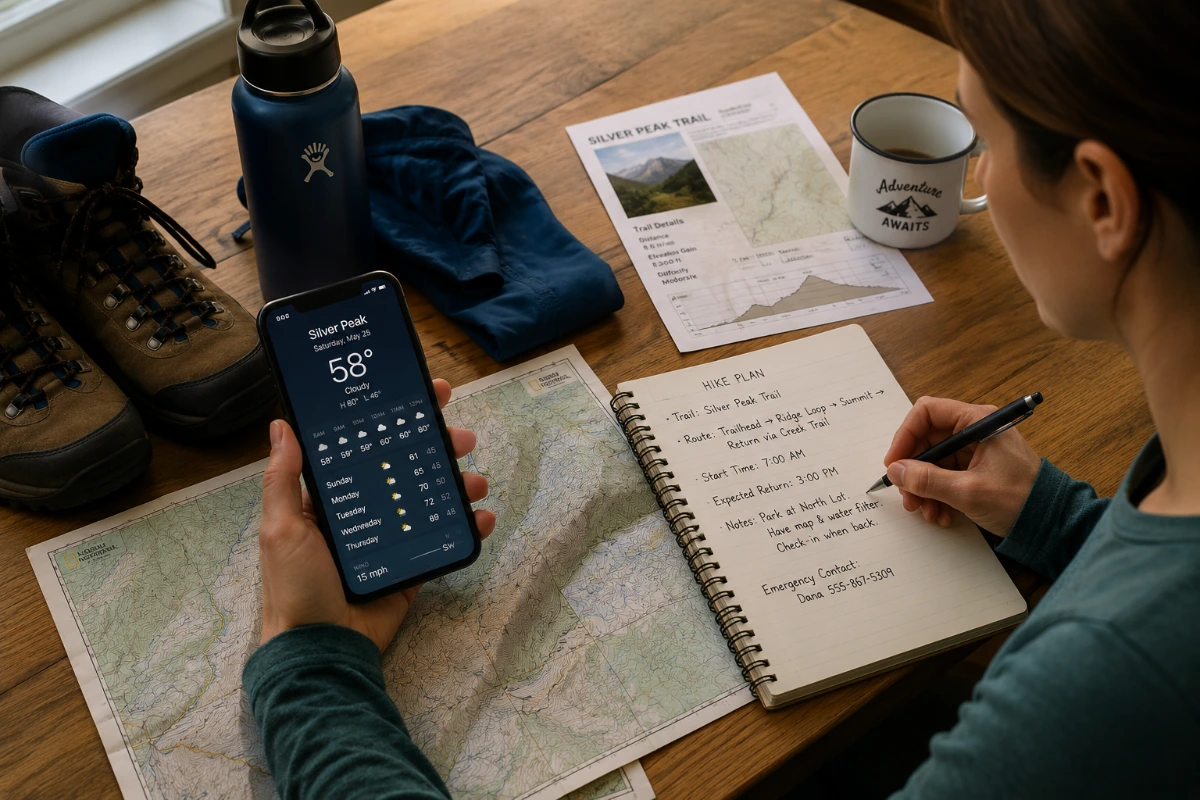
Check the Weather the Day of Your Hike
Beyond just checking for rain, look at wind forecasts and temperature swings, especially if you’ll gain elevation — conditions at a summit or ridge can be dramatically different from the trailhead.
Tell Someone Your Plan in Detail
Not just “I’m going hiking” — the specific trail name, your planned route, your start time, and your expected return time. This can make a significant difference if something goes wrong, because it gives others a clear idea of where you are and when to expect you back.
Be Honest About Your Fitness Level
A trail rated “moderate” for an experienced hiker can be genuinely difficult for a beginner. Match the trail to where you actually are, not where you’d like to be.
Weather-Related Risks
Weather is one of the more common reasons a hike goes from routine to risky. A few things worth watching for:
Sudden Temperature Drops
Especially with wind — this increases the risk of hypothermia even in weather that doesn’t feel dangerously cold.
Darkening Skies or Distant Thunder
Treat this as a signal to leave exposed ridges, summits, and open areas and seek appropriate shelter as soon as possible.
Fog or Low Visibility
If a trail relies on visual landmarks and visibility drops significantly, it’s often safer to turn back than to continue navigating blind.
If conditions clearly worsen partway through a hike, turning back is not a failure — it’s the correct call.
Wildlife Awareness
General principles apply across most hiking environments, regardless of what specific wildlife is present in your area:
Keep a respectful distance from any wildlife you encounter — don’t approach for a photo.
Never feed wildlife, even if it seems harmless. It changes animal behavior and can create risk for future hikers.
Store food securely and pack out all food scraps, since food smells can attract animals to the trail or campsite.
Specific wildlife risks vary a lot by region and trail, so it’s worth checking local trail resources or park information for anything specific to where you’re hiking.
Dehydration and Heat-Related Illness
Dehydration builds gradually, which is part of why it’s easy to underestimate on the trail. Early signs include thirst, dry mouth, and fatigue beyond what the hike difficulty would explain. Left unaddressed, it can progress toward heat exhaustion — symptoms can include heavy sweating, dizziness, nausea, and headache.
If you or someone you’re hiking with shows these signs, stop, rest in shade if available, and drink water. If symptoms are severe or don’t improve with rest and hydration — such as confusion, very heavy sweating stopping suddenly, or vomiting — this is a medical emergency and requires immediate attention, not just a rest break.
Common Injuries and Basic Response
This section covers general awareness only — it is not a substitute for a proper wilderness first aid course, which is worth taking if you hike regularly.
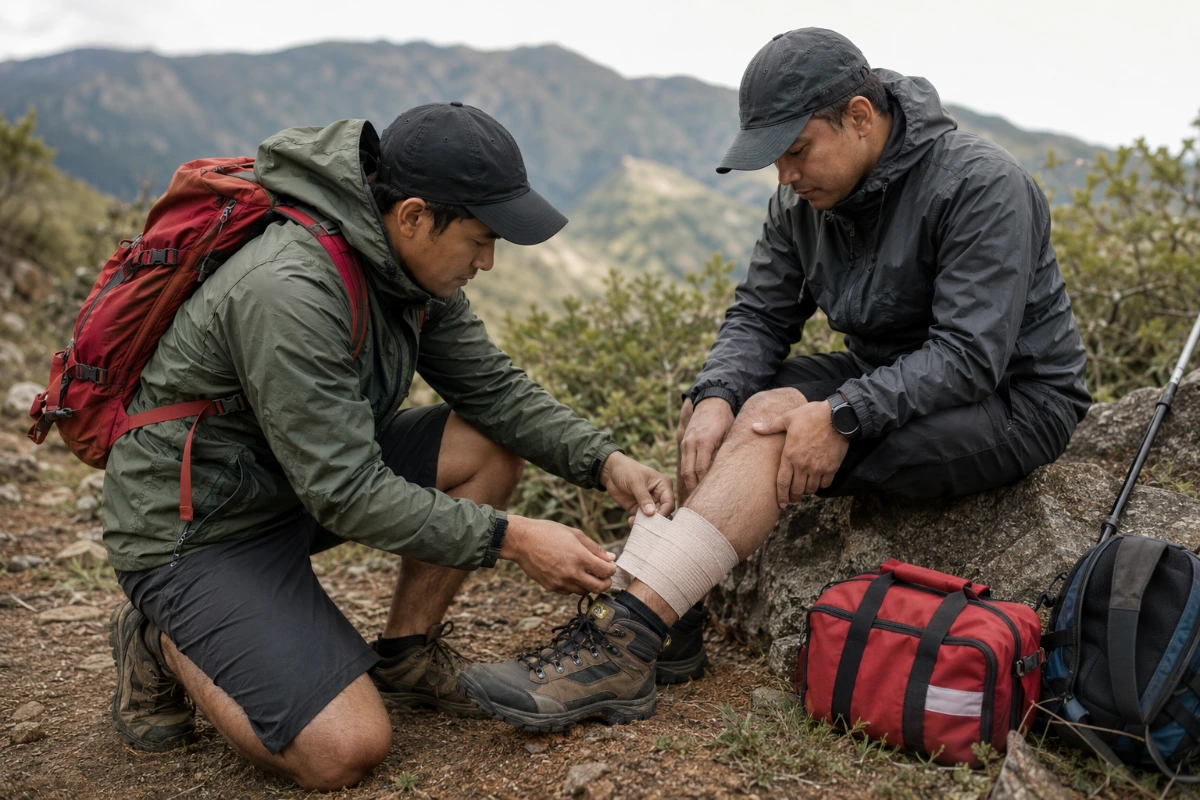
Blisters — usually caused by friction from ill-fitting footwear or wet socks. Address hot spots (areas of irritation) before they become full blisters by covering them with tape or a blister plaster as soon as you notice discomfort.
Minor sprains — rest, and avoid continuing to put weight on a joint that’s clearly swelling or painful. A minor ankle roll that still allows you to walk without significant pain is different from one that doesn’t — when in doubt, stop and assess rather than push through.
Cuts and scrapes — clean with water if available and cover with a bandage from your first aid kit.
For anything beyond minor injuries — a fall with lasting pain, a suspected fracture, chest pain, or difficulty breathing — this is beyond basic trail first aid, and you should seek emergency help rather than attempt to manage it yourself.
When to Turn Back
A turnaround time is a time you decide, before you start, by which you’ll begin heading back regardless of how far you’ve gotten. It matters because it’s much easier to make this decision clearly before you’re tired, invested in reaching a destination, or losing daylight — all of which make the decision harder in the moment.
A simple approach: estimate your total hike time, and plan to turn around no later than the halfway point of that estimate, adjusting for how you’re actually feeling and what conditions look like.
Hiking Alone vs. With Others

Hiking with others means there’s someone to help if something goes wrong, and generally more shared awareness of the trail and conditions. Hiking alone can still be reasonably safe on well-traveled, well-marked trails, but it raises the importance of a few things:
Telling someone your detailed plan becomes even more important.
Carrying a fully charged phone and, ideally, a portable charger.
Being more conservative about turnaround time and trail difficulty.
Neither approach is inherently right — it depends on the trail, your experience, and your comfort level.
Frequently Asked Questions
What should I do if I think I’m lost?
Stop moving first. Think back to the last point you were sure of your location, observe your surroundings for markers or landmarks, and plan a calm next step — usually retracing your route rather than continuing forward.
Is it safe to hike when it’s cloudy or the forecast looks uncertain?
Overcast weather alone isn’t necessarily a reason to cancel, but check for wind, temperature drops, and any storm warnings specifically, not just general “chance of rain.” If conditions look genuinely uncertain, especially for a first hike, it’s reasonable to reschedule.
How do I know when it’s time to turn back?
Set a turnaround time before you start, based on your estimated total hike time, and follow it even if you haven’t reached your destination. Also turn back early if weather worsens, you’re more fatigued than expected, or daylight is running out faster than planned.
Preparation, Not Fear
Hiking safety comes down to a short list of habits: check conditions, tell someone your plan, know your limits, and make decisions early rather than pushing through warning signs.
None of this requires advanced training or expensive gear — it requires paying attention and being willing to turn back when it’s the right call.