OutdoorCompass.net – Most hiking mistakes aren’t about missing gear or lacking experience — they’re small, avoidable decisions that seem reasonable in the moment. This list covers the mistakes that come up most often for beginners, including a few that don’t get much attention elsewhere, along with what to do instead.
Mistake #1: Choosing a Trail That’s Too Ambitious
It’s easy to pick a trail based on a striking photo of the viewpoint at the end, without registering that the climb to get there is what made the photo possible. Elevation gain — the total amount of uphill climbing — affects difficulty far more than distance alone.
Fix: Check elevation gain specifically, not just total distance, before choosing your first trail. A short trail with a steep climb can be harder than a longer, flatter one.
Mistake #2: Starting Too Late in the Day
This one gets far less attention than gear-related mistakes, but it causes real problems: starting a hike in the early afternoon without checking how much daylight is actually left, then ending up rushing the last stretch — or finishing it in the dark.
Fix: Work backward from sunset. Estimate your total hike time, add a buffer for breaks, and make sure your start time leaves enough daylight to finish comfortably.
Mistake #3: Underestimating Water Needs

The mistake usually isn’t “not bringing water” — it’s drinking reactively, only once thirst is already noticeable. By that point, mild dehydration has usually already started.
Fix: Drink on a rough schedule throughout the hike rather than waiting to feel thirsty. See the hydration section in What to Bring Hiking for specific quantity guidelines.
Mistake #4: Wearing Brand-New, Untested Footwear
A specific version of the footwear mistake that’s easy to overlook: buying new hiking shoes and wearing them for the first time on the actual hike. New footwear often needs a break-in period, and skipping it is one of the more common causes of blisters and discomfort on a first hike.
Fix: Wear new hiking shoes around the house or on short walks for at least a week or two before your hike, so any pressure points show up somewhere low-stakes.
Mistake #5: Not Telling Anyone Their Plan
This mistake doesn’t cause problems on a normal hike — it becomes serious only if something goes wrong, which is exactly why it’s easy to skip.
Fix: Share your specific route, start time, and expected return time with someone before every hike, even short or familiar ones. See Hiking Safety Tips for what details actually matter here.
Mistake #6: Ignoring Weather Changes Mid-Hike
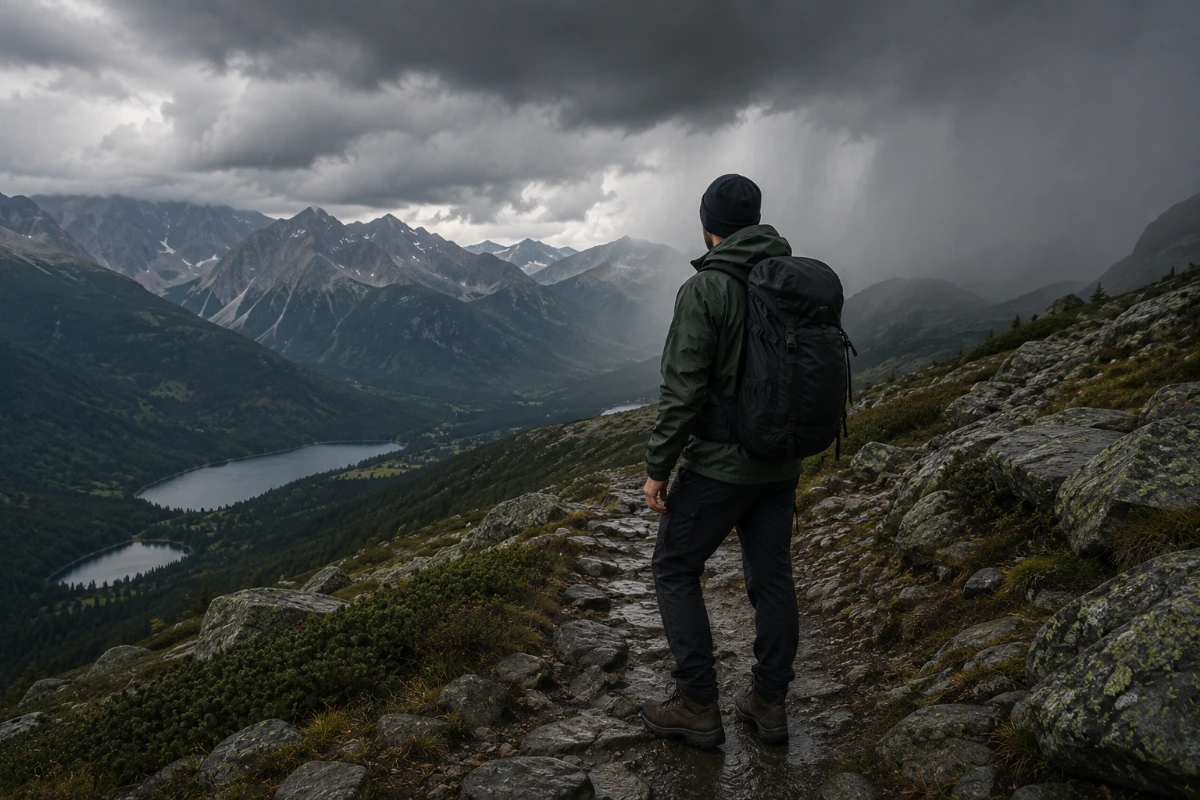
A common pattern: weather visibly shifts partway through a hike, but the hiker continues anyway, partly because turning back after investing time and effort feels like giving something up.
Fix: Treat a clear weather shift — darkening skies, sudden wind, dropping temperature — as a decision point, not something to push through. Turning back early is a normal part of hiking, not a failure.
Mistake #7: Overpacking or Underpacking Out of Uncertainty
Beginners tend toward one of two extremes: packing so much “just in case” that the extra weight becomes its own burden, or packing too little because they weren’t sure what actually mattered.
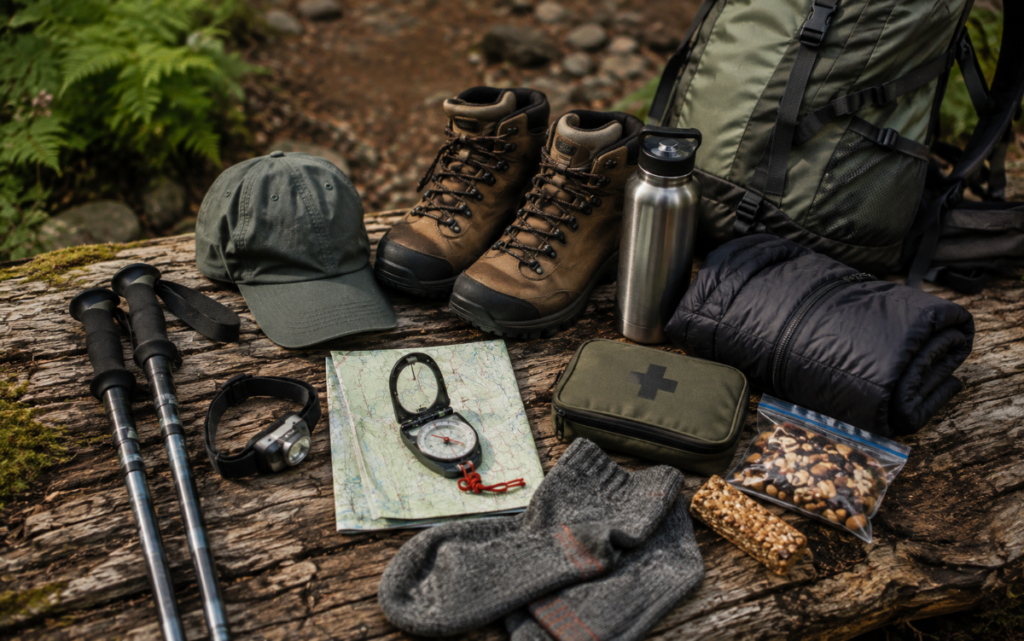
Fix: Use a specific list rather than guessing — What to Bring Hiking breaks down what’s actually necessary by category, so you’re not relying on instinct alone.
Mistake #8: Not Testing Gear Before the Trail
This is one of the more overlooked mistakes: bringing gear that’s never actually been used or checked. A backpack with straps that were never adjusted. A headlamp that hasn’t had its battery checked since it was bought. A rain jacket that turns out not to fit over a base layer.
Fix: Do a quick test of anything new — adjust your backpack straps at home, check that your headlamp works, try your full layering setup together — before the day of your hike, not during it.
Mistake #9: Skipping Sun Protection on Cloudy Days
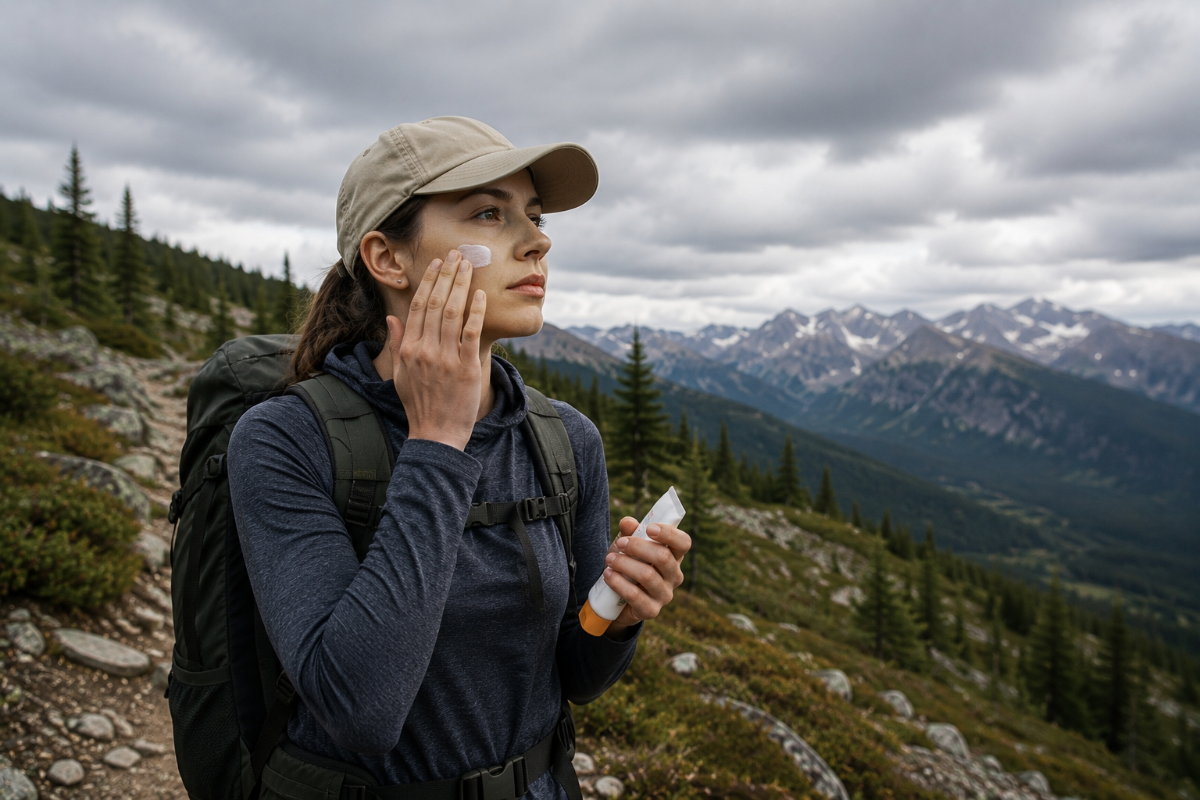
Overcast skies create a false sense that sun protection doesn’t matter. UV exposure doesn’t go away with cloud cover, and it’s often stronger at higher elevation regardless of visible sunlight.
Fix: Apply sunscreen and bring sun protection regardless of how sunny it looks, especially for hikes with elevation gain.
Mistake #10: Guessing at Trail Junctions Instead of Checking
At an unclear junction, it’s tempting to pick a direction based on a guess — “this looks right” — rather than pausing to actually confirm. This is one of the more common ways hikers end up off-route without immediately realizing it.
Fix: Treat any uncertainty at a junction as a reason to stop and check your map or app before continuing. See Basic Hiking Navigation for more on staying oriented.
Frequently Asked Questions
What’s the single mistake that leads to the most serious hiking incidents?
There isn’t a single verified statistic I can point to here without a reliable source, and the answer likely varies by region and trail type.
What’s consistent across most hiking safety guidance, though, is that combinations of small decisions — a late start, ignored weather, an unclear junction — tend to compound into more serious situations more often than any one dramatic mistake.
Are these mistakes different for solo hikers versus groups?
The mistakes themselves are largely the same, but the consequences tend to be more serious solo, since there’s no one else to help you reassess a bad decision in the moment.
Solo hikers benefit even more from strict turnaround times and detailed plans shared in advance.
Preparation Beats Experience
Almost every mistake on this list is preventable with a bit of planning, not years of hiking experience. If you’ve read through the rest of this beginner series — what to bring, safety basics, and navigation — you’ve likely already covered most of what leads to these mistakes in the first place.
OutdoorCompass
Explore More. Pack Smarter.